AI Agent Exams: Deployment Gating for Autonomous Agents

AI Agent Exams: Deployment Gating for Autonomous Agents
⚡ Quick Take
Summary: The AI industry is waking up to the reality that autonomous systems cannot be deployed on pure vibes, sparking a rapid shift toward mandatory, role-specific "AI Agent Exams" for digital labor.
What happened: A new discipline of deployment gating is emerging where enterprises require LLM-powered agents to pass rigorous, simulated tests—measuring tool-use accuracy, hallucination rates, and compliance—before touching live production data.
Why it matters now: As AI transitions from stateless chatbots to stateful, autonomous agents, the operational blast radius of a model hallucination expands exponentially, shifting the focus from general model intelligence to enterprise risk management.
Who is most affected: CTOs, enterprise risk leaders, and MLOps teams are forced to build these testing pipelines, while foundation model providers (OpenAI, Anthropic) and eval-tooling startups compete to provide the foundational metrics.
The under-reported angle: From what I've seen, we are witnessing the birth of "pre-employment testing" for digital workers, where an agent's ability to survive adversarial red-teaming and adhere to NIST AI frameworks matters more than its raw reasoning benchmarks on a leaderboard.
🧠 Deep Dive
The AI ecosystem is aggressively moving from conversational interfaces to autonomous, tool-calling agents capable of executing workflows. But as the autonomy of these systems scales, so does their capacity to fail catastrophically in production. Anecdotal warnings are flashing across the enterprise sector: executives deploying their most important AI agents are watching them fail basic business logic tasks, exposing a massive gap between a model's underlying capability and its real-world reliability. To survive this transition, the industry is inventing the "AI Agent Exam"—a highly structured, CI/CD-style testing gateway.
Have you noticed how frontier AI labs and enterprise buyers still evaluate models in entirely different ways? Researchers lean on generalized open-source benchmarks like AgentBench or OpenAI Evals to measure raw capabilities, such as basic web navigation or Python execution. Yet passing a generic benchmark does not prove an agent can safely handle PII, execute a financial trade without hallucinating, or respect internal compliance policies. Enterprises are realizing that general intelligence does not equal business competence.
To bridge this gap, organizations are adopting deployment gating strategies inspired by the frontier labs themselves. Just as Anthropic utilizes a "Responsible Scaling Policy" to gate the release of new models based on safety evaluations, companies are implementing risk-based thresholds for agent deployment. They are treating agent certification much like pre-employment testing for human workers. This involves role-specific rubrics where an autonomous customer support agent or financial analyst is graded not just on accuracy, but on tool-use reliability, latency, and cost per task.
Crucially, these exams go beyond functional correctness to include adversarial red-teaming. Because autonomous agents frequently interact with external web environments and untrusted user inputs, they are highly susceptible to prompt injections and data exfiltration traps. A robust AI Agent Exam subjects the system to jailbreak attempts within a secure sandbox. If the agent takes the bait and breaches protocol, it fails the exam. Only after consistently passing these incrementally harder, business-aligned tests is the agent permitted to transition from pilot to production.
This shift is deeply intertwined with impending AI regulations. Frameworks like the NIST AI Risk Management Framework (AI RMF) and ISO/IEC 42001 demand auditable trails of how AI systems are governed, mapped, and measured. The AI Agent Exam provides exactly this: a reproducible, mathematical proof of diligence. When an enterprise can show regulators and auditors a comprehensive scorecard of an agent's pre-deployment performance—complete with pass/fail thresholds tied directly to business KPIs—they transform a highly unpredictable AI pilot into a defensible, compliant infrastructure.
📊 Stakeholders & Impact
AI / LLM Providers
Impact: High
Insight: Pushes labs to optimize models not just for reasoning, but for reliable function-calling and strict instruction adherence to pass enterprise evals.
Enterprise CTOs & MLOps
Impact: High
Insight: Requires building entirely new testing harnesses and sandboxes to auto-grade agent tasks before and after deployment.
Risk & Compliance Teams
Impact: Significant
Insight: Provides an auditable mechanism to align AI agent behaviors with internal risk tolerances and external frameworks like the NIST AI RMF.
Eval & Tooling Startups
Impact: Very High
Insight: Creates a massive market opportunity for platforms that can automate agent testing, red-teaming, and continuous recertification.
✍️ About the analysis
This independent, research-based analysis synthesizes current AI evaluation methodologies—ranging from open-source technical benchmarks to enterprise risk frameworks—to provide technical leaders, CTOs, and AI product managers with a strategic view of deployment gating.
🔭 i10x Perspective
The emergence of the AI Agent Exam signals that the era of "vibes-based" AI deployment is officially over. Over the next five years, evaluation infrastructure will become the most critical bottleneck—and the most valuable moat in the AI economy. The organizations that figure out how to mathematically guarantee the safety and competence of their digital workforce won't just avoid regulatory penalties; they will be the only ones capable of safely unleashing autonomous agents at a global scale. Watch for "evals" to evolve from a niche engineering task into the standard HR department for the next generation of enterprise intelligence.
Related News
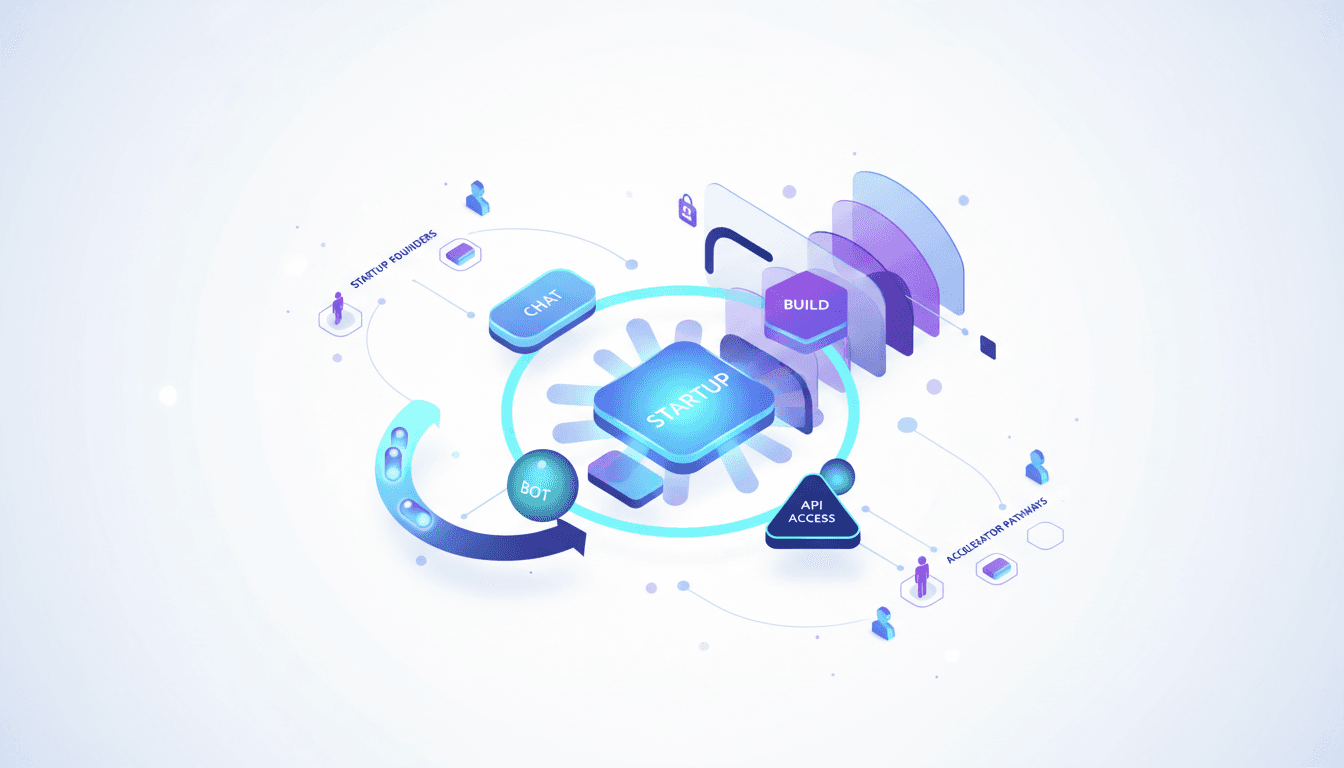
Grok for Startups: xAI Credit Program for Founders
xAI launches Grok for Startups with 6-12 months of unified credits for Grok, API, Build and Bot. Discover the 20/80 staged release to cut early burn rates and secure ecosystem access.
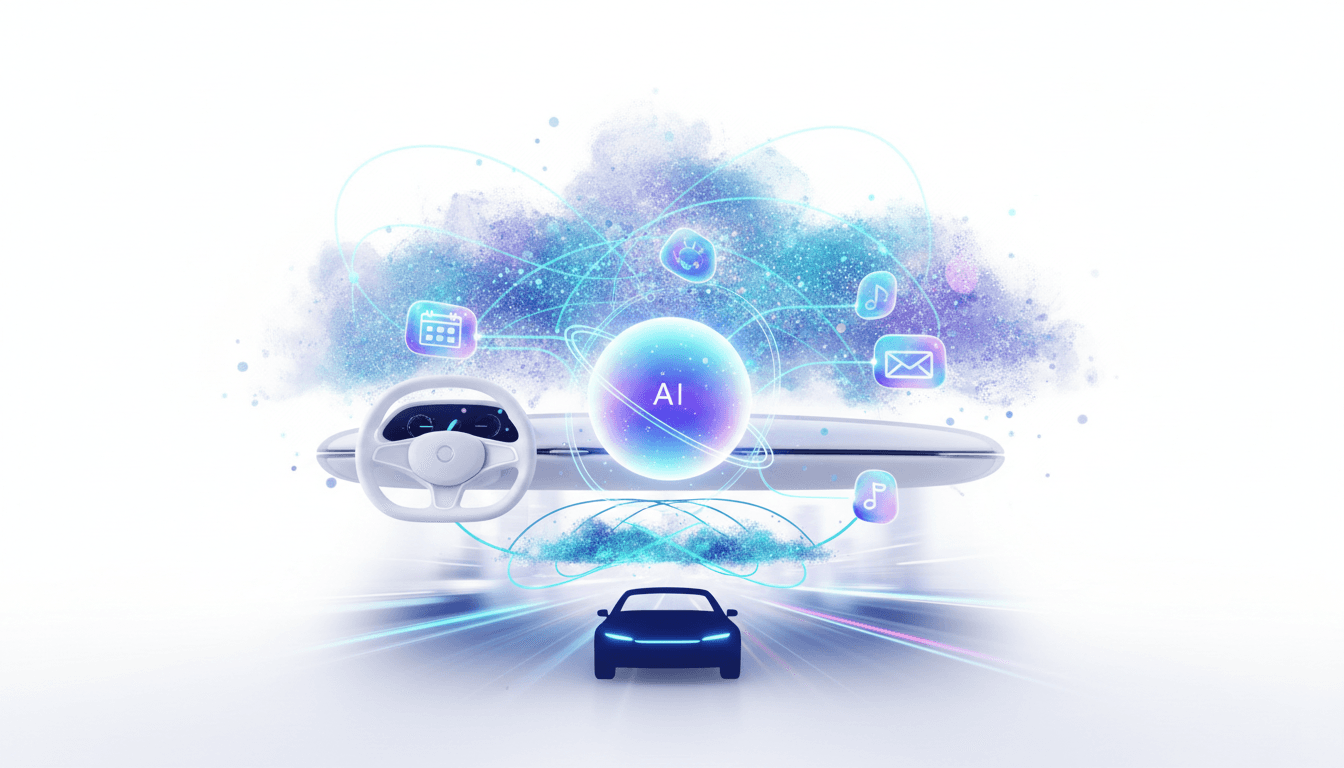
Gemini in Cars: Google’s Personal Intelligence for Vehicles
Google brings Gemini to Android Auto and cars with Google built-in, creating a context-aware AI agent with access to personal data. Explore the impact on automakers, drivers, and automotive AI.
Saluki 27B: Local AI Model Analysis & Hardware Guide
Saluki 27B by Underdog AI shrinks Qwen3.8-27B to 7.89 GB with 96% performance. Learn how this quantized model powers local tool-calling agents on 12GB GPUs. Explore the guide.