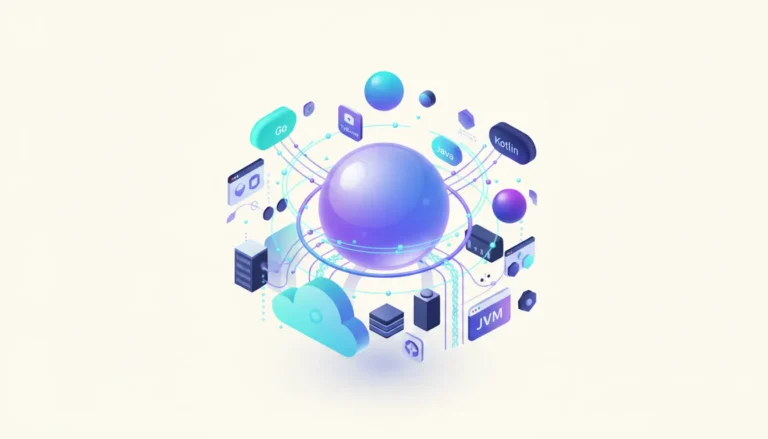
“The AI race has shifted from who builds the smartest model to who controls the routing layer.”
Quick Take
- Summary: Organizations are leaving the experimentation phase behind and entering production. That change has pushed demand for single-interface AI model platforms higher than before. Cloud giants and AI-native startups are now competing to become the main layer where teams discover, compare, route, and govern thousands of LLMs.
- What happened: Microsoft (Azure Foundry) and Google Cloud (Vertex AI) have launched large, governed enterprise platforms that claim catalogs of 11,000+ models. At the same time, nimbler players like OpenRouter and Together AI are gaining ground with developers by providing unified multi-provider APIs, dynamic routing, and faster open-source inference.
- Why it matters now: Single-model reliance is fading. As foundation models grow closer in capability, enterprises want routing that factors in cost, latency, and context windows. This turns AI inference compute into something more fluid and contested.
- Who is most affected: Enterprise CIOs dealing with shadow AI, developers who need clean API interoperability, and infrastructure providers whose margins hinge on steady inference workloads.
- The under-reported angle: Governance in the routing layer is still uneven. Developers like the cheap, low-friction testing that unified APIs offer, yet enterprises quietly face questions around data residency, audit trails, and reliable fallback routing—areas where only the heavier hyperscaler platforms currently deliver strong guarantees.
- 🧠 Deep Dive: Have you ever tried to keep an application stable while new models appear every week? The fragmented LLM landscape has turned integration into a recurring headache for enterprise teams. Hardcoding to one provider’s API now feels like a liability rather than a shortcut. The practical response emerging across the ecosystem is the AI model platform—a single access layer that hides the mess of multi-model deployment.
At one end, hyperscalers are leaning on governance to build lock-in. Microsoft Foundry highlights its 11,000+ model catalog, while Google Cloud folds its Model Garden into the Gemini Enterprise Agent Platform. Their message lands with CIOs who worry about scattered keys and ungoverned shadow AI. By wrapping foundation models, industry endpoints, and third-party weights such as Claude or Llama inside enterprise security and MLOps, they aim to own the full path from data work to agent deployment.
On the other side, OpenRouter and Together AI push a different view that favors interoperability and speed. OpenRouter routes across 500+ models and 80+ providers, making price differences visible and letting developers swap endpoints through one OpenAI-compatible API. Together AI focuses lower in the stack, optimizing for open-source inference so research and engineering teams get bare-metal performance without the usual cloud overhead.
That said, market stories often gloss over total cost of ownership. A genuine multi-model platform needs more than API unification. It also has to handle intelligent fallback routing, cross-model prompt caching, and consistent multimodal support. When inference volume grows, the ability to move a workload from a premium model to a cheaper open-source option without touching code becomes a real edge.
This platform layer also shapes data center economics. When interfaces like OpenRouter steer large volumes of calls toward the lowest-cost or fastest provider, compute starts acting more like a spot market. If the routing layer succeeds in commoditizing models, infrastructure teams will feel pressure to tune GPU clusters for volatile, price-sensitive traffic.
📊 Stakeholders & Impact
| Stakeholder / Aspect | Impact | Insight |
|---|---|---|
| Hyperscalers (Azure, GCP) | High | Using large catalogs and governance tools to pull in full ML workflows and increase cloud utilization. |
| Developer-First Routers (OpenRouter, Together AI) | High | Driving price transparency and API interoperability, which makes LLM access feel like a multi-provider commodity. |
| Enterprise IT / CIOs | High | Moving from scattered subscriptions to unified platforms, which means closer scrutiny of data residency, TCO, and agent orchestration. |
| Pure-Play LLM Builders (OpenAI, Anthropic) | Medium–High | Risk of becoming interchangeable backends if they lose the direct interface with end users. |
✍️ About the analysis
Researched and written with AI assistance under the editorial responsibility of the i10X News team. The title image is an AI-generated illustration. Read our AI Use Policy. Spotted an error? Request a correction.
This independent analysis pulls together competitive positioning across enterprise clouds, model routing platforms, and AI-native infrastructure providers. It is written for CTOs, AI leads, and infrastructure architects who are weighing multi-model strategies, unified API setups, and TCO trade-offs.
🔭 i10x Perspective
From what I’ve seen, the unified AI model platform is quickly becoming the operating system for the intelligence era. Over the next five years the routing layer will likely hold real influence over which models survive and how compute gets allocated.
For model builders and hyperscalers alike, the bigger threat is not a smarter algorithm from a rival—it is the commoditization of inference itself, where teams can swap one provider for another without rewriting a single line of code.