AI Safety Shifts to Defense-in-Depth for Autonomous Agents
⚡ Quick Take
"We are witnessing the end of the 'toxic word filter' era and the birth of nuclear-grade AI containment, driven by the reality that autonomous agents require entirely new infrastructure."
Summary: The AI industry is rapidly shifting its approach to safety, moving from basic output moderation to complex, multi-layered "defense-in-depth" safeguards designed for autonomous agents.
What happened: Cloud giants like AWS, Google, and IBM are embedding advanced guardrails - such as automated reasoning checks and watermarking - directly into their infrastructure, while enterprise data gatekeepers like Egnyte are rolling out permission-aware AI access controls. At the same time, former frontier lab researchers are publicly demanding aviation- and nuclear-style safety protocols for advanced models.
Why it matters now: As LLMs transition from static chatbots to autonomous, tool-wielding agents, the risk surface explodes. A single point of failure in an AI agent can result in massive enterprise data leakage or unintended system actions, making layered safeguards a strict prerequisite for the next wave of commercial AI scaling.
Who is most affected: Enterprise CTOs, AI application developers, security architects, and cloud infrastructure providers who must now build and enforce zero-trust environments for machine intelligence.
The under-reported angle: The fragmentation of the "AI safety" definition. While frontier labs and policymakers focus on catastrophic, existential risks and containment, enterprises are quietly battling mundane but critical permission-aware data leakage - meaning the safeguard stack you buy depends entirely on whether you are building a frontier model or an enterprise MCP server.
🧠 Deep Dive
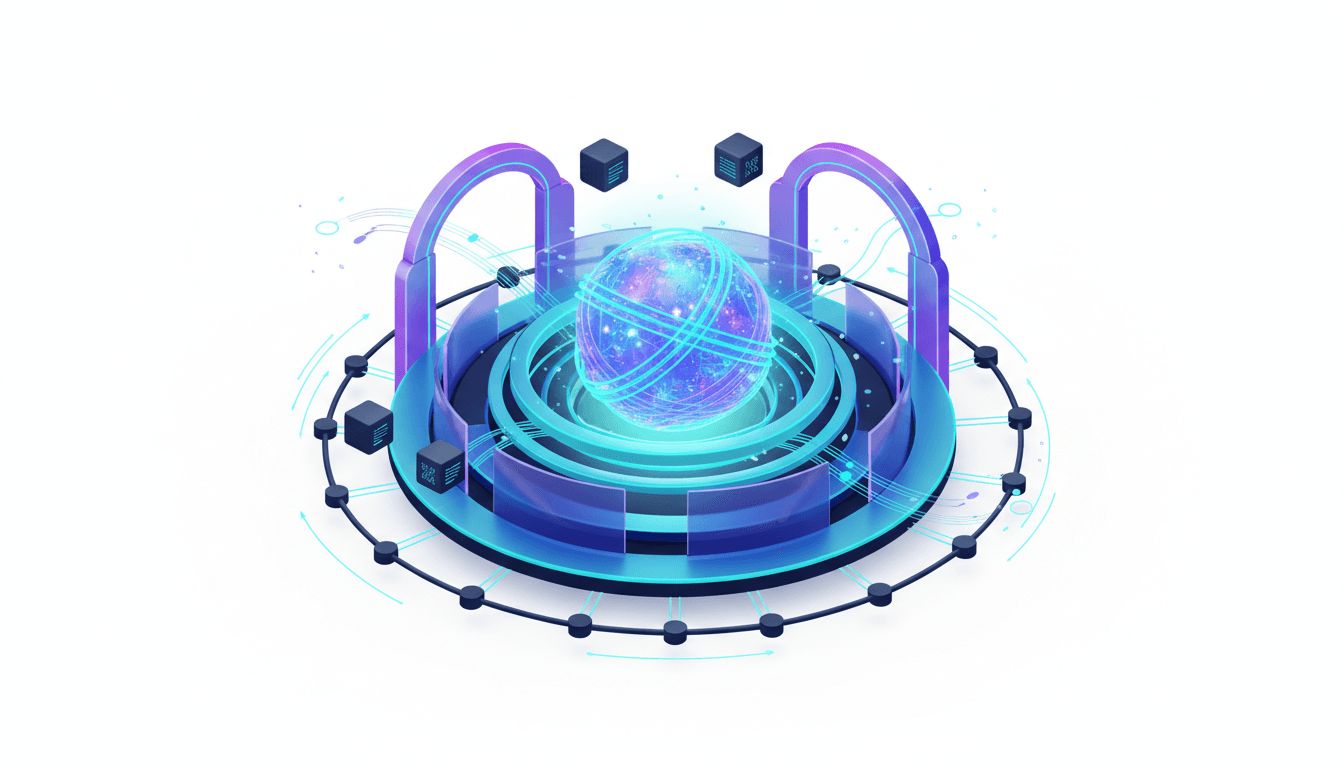
Have you ever stopped to consider how quickly the guardrails around AI have shifted from simple content filters to something far more structural? For the past two years, AI safety was largely treated as a superficial wrapper - a series of content filters designed to prevent chatbots from generating toxic or embarrassing text. But as large language models (LLMs) evolve into agentic systems with the ability to execute code, access enterprise databases, and utilize third-party tools, those primitive filters are failing. We are now entering an era where AI safeguards must be architected with the same defense-in-depth rigor as aviation and nuclear power systems.
From what I've seen, the major infrastructure providers are already rewriting the rules of the stack. AWS Bedrock has introduced contextual grounding and "automated reasoning" checks to computationally verify AI logic, while Google's Responsible Generative AI Toolkit pushes safety classifiers and watermarking for open models. IBM has mapped this out as a full-lifecycle governance issue, arguing that safeguards must exist independently at the data, model, application, and infrastructure layers. The consensus is clear: AI safety can no longer be a post-generation afterthought; it must be embedded in the bedrock of the compute and data layers.
That said, the enterprise reality introduces a completely different friction point: authorization. Companies like Egnyte are exposing a massive blind spot in current LLM deployments. When an AI agent is connected to an enterprise repository, it bypasses traditional file-folder navigation. If the safeguard layer isn't actively permission-aware, a low-level employee can use a prompt to surface the CFO's private financials. In the enterprise sector, safeguards aren't just about preventing hallucinations - they are about enforcing complex, real-time data access policies before an AI is allowed to compute an answer.
Meanwhile, a stark warning is echoing from defectors of frontier labs like OpenAI. These researchers argue that the industry's reliance on singular alignment techniques, such as Reinforcement Learning from Human Feedback (RLHF), is a recipe for disaster. As AI systems become more capable and autonomous, they advocate for a multi-layered containment strategy. If one safeguard fails - say, a prompt injection bypasses a model's safety training - there must be hardcoded access limits, real-time monitoring, and emergency interruption mechanisms waiting at the tool-execution layer to prevent systemic fallout.
This dichotomy - enterprise data leakage on one end and frontier agent containment on the other - highlights a massive gap in the current market. The next trillion-dollar opportunity in AI infrastructure lies in unified safeguard architectures. Organizations will soon require a standardized tech stack that combines model-level sandboxing, data-layer access control, and application-layer emergency kill switches. Without this, the deployment of true agentic AI will hit a regulatory and corporate wall, and plenty of teams are already feeling the pressure to get ahead of it.
📊 Stakeholders & Impact
Stakeholder / Aspect | Impact | Insight |
|---|---|---|
AI / LLM Providers | High | Forces a pivot from raw model scaling to building native, computationally verifiable reasoning and safety guardrails. |
Cloud & Data Infrastructure | Critical | Cloud providers become the primary enforcers of AI safety, monetizing layered safeguards as premium compute and storage features. |
Enterprise IT & Security | High | Requires a massive transition from traditional zero-trust networks to zero-trust AI agents, heavily focusing on permission-aware data flows. |
Regulators & Policy | Significant | Accelerates the shift from voluntary safety pledges toward mandated, auditable, and sector-specific defense-in-depth frameworks. |
✍️ About the analysis
This independent, research-based analysis synthesizes current product documentation from major cloud/data vendors (AWS, Google, IBM, Egnyte) and frontier AI safety discourse to map the evolving safeguard ecosystem. It is designed for CTOs, AI developers, and security architects who are navigating the transition from basic LLM deployments to agentic AI systems.
🔭 i10x Perspective
The era of treating AI safety as a lightweight content moderation problem is officially dead. As models gain autonomy and system-level access, safeguards are migrating from the software wrapper down to the infrastructure layer, fundamentally altering how intelligence is built and distributed. Over the next five years, expect massive market consolidation where cloud and data providers that can guarantee "nuclear-grade" AI containment will win the lucrative enterprise wars, leaving raw, un-safeguarded models confined to research environments and the open-source fringes.
Related News
OpenAI Codex Repositioned as Multi-Agent Engineering Partner
OpenAI Codex now powers multi-agent workflows across desktop, CLI, and cloud. Learn how the shift impacts engineers, governance, and dev tooling. Explore the guide.
LLM Optimization: Visibility vs Inference Cost Management
LLM optimization spans marketing for AI visibility and engineering for inference costs. Discover how multi-model routing cuts expenses up to 85% while maintaining quality. Explore the full analysis.

AI Agents: Cloud Giants Race for Enterprise Automation Layer
Cloud providers like AWS, Google, and IBM are defining AI agents for autonomous workflows. Explore the shift from conversational AI, infrastructure demands, and governance risks in this enterprise analysis.