LLM Optimization: Visibility vs Inference Cost Management
⚡ Quick Take
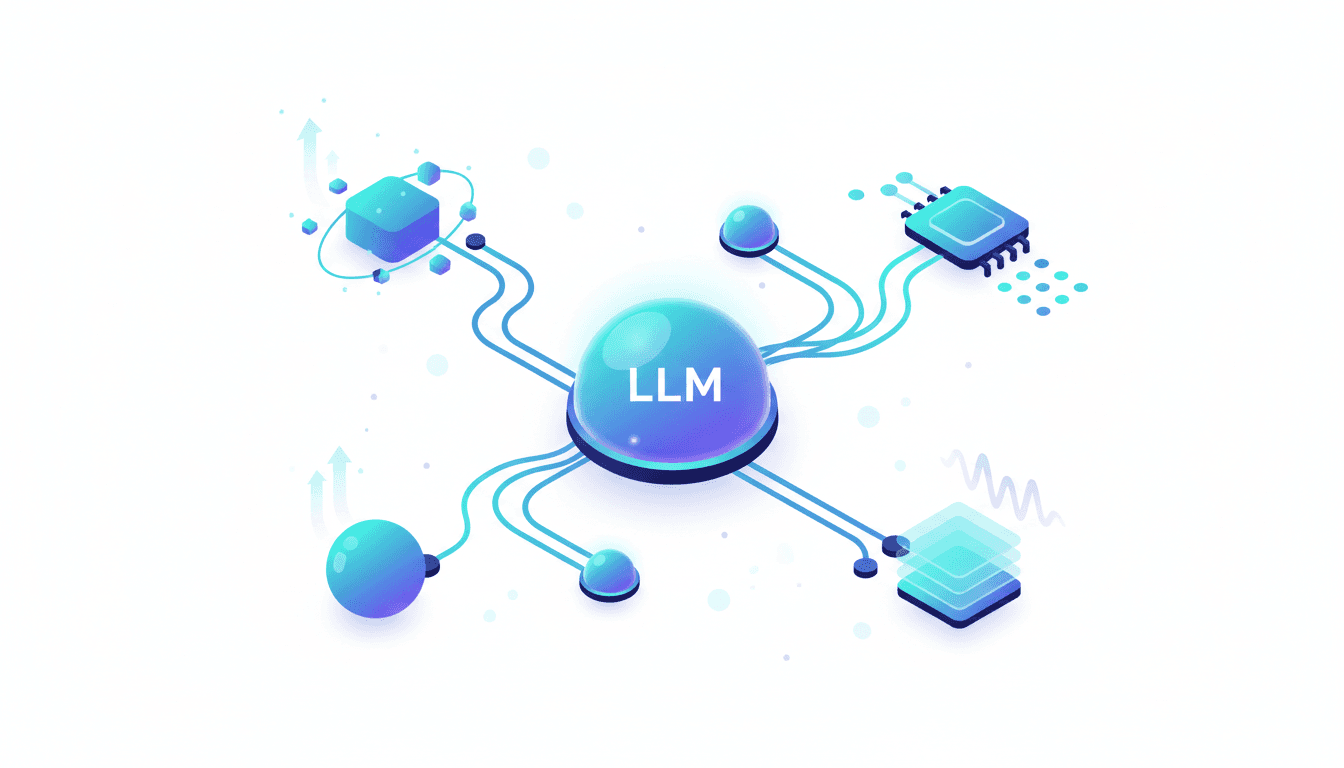
The idea of "LLM Optimization" is going through a real identity crisis at the moment. It has split into something of a turf war between marketers who want more visibility in AI answers and engineers who are staring down rising compute bills.
What happened is straightforward enough. One side sees LLMO as a fresh angle on SEO, with platforms pushing tactics to get brand mentions into AI Overviews. The other side, led by teams at OpenAI, Google Cloud, and Martian, treats it as a technical discipline around model routing, inference scaling, and prompt evaluation.
Why this matters now is simple. As AI moves from experiments into heavy production use, attention has turned to keeping margins intact and making sure content still shows up in an AI-first web.
The groups feeling it most are AI developers, cloud teams watching GPU spend, and marketing leads adapting to life after traditional search.
The under-reported angle, from what I've seen, is dynamic multi-model routing. Treating LLMs as interchangeable can cut API costs sharply without losing quality, and that lever often beats prompt tweaks or model shrinking alone.
🧠 Deep Dive
"LLM Optimization" is living a double life right now, and it highlights the two main pressure points in AI today: discovery and unit economics. Marketing agencies treat LLMO like the next evolution of search optimization. They focus on shaping content so models such as ChatGPT or Google's AI Overviews will reference their brands. Infrastructure teams, though, are fighting a different battle—keeping language models from eating through GPU budgets at an alarming rate.
On the infrastructure side, running AI in production is turning out to be costly. Engineers have moved beyond basic prompt work and into deeper inference tweaks. Providers like Google Cloud and companies like Mirantis are guiding teams toward continuous batching, INT4 quantization, and tensor parallelism. The real target is managing latency at the p90 and p95 levels, controlling the KV cache, and pushing GPU use high enough to reach a workable cost per outcome.
At the same time, the habit of sticking with one large model is fading. Data from routing platforms like Martian shows that locking in a single foundation model for every task no longer makes sense. Routing requests across a mix of open and closed models based on prompt complexity can deliver up to an 85% drop in API costs while holding quality steady. Optimization has shifted from fixing one model to orchestrating many.
Yet a noticeable gap still exists in how teams work. Plenty of groups reach for fine-tuning when adding RAG would supply the missing context, or they adjust prompts without first setting up a solid evaluation loop. OpenAI's guidance has stressed this point more lately: without a clear cycle of optimize, evaluate, and refine, it is hard to know whether a change truly helped or simply moved the problem elsewhere.
Both the marketing and technical angles on LLM optimization point to the same shift. AI is no longer a novelty. It is now expensive infrastructure that gets examined closely. Whether someone is adjusting semantic HTML for better crawler reach or an MLOps engineer is applying speculative decoding on an NVIDIA H100, the push is toward making AI sustainable at scale.
📊 Stakeholders & Impact
Stakeholder / Aspect | Impact | Insight |
|---|---|---|
AI / LLM Builders | High | Moving away from single-model setups toward gateways, evals, and RAG-first designs to manage variable inference costs. |
Infra & Cloud Providers | High | Growing demand for built-in tools like automatic batching, quantization, and tensor parallelism so enterprise workloads stay affordable. |
Marketers & SEOs | High | Need to redesign sites for AI crawlability and brand mentions, which changes core digital marketing approaches. |
AI Hardware Vendors | Medium | Software improvements such as routing and INT4 ease some pressure on GPU supply for now. |
✍️ About the analysis
This independent review pulls together the different goals around LLM optimization. It draws from technical docs by OpenAI and Google Cloud, routing benchmarks from Martian, and marketing data from sources like Semrush. The aim is to help CTOs, AI engineers, and product leads weigh the cost and performance tradeoffs that come with running AI in production.
🔭 i10x Perspective
The back-and-forth over "LLM Optimization" shows an industry stepping out of the hype phase and into the practical side of unit economics. Over the next five years, the most valuable infrastructure players may not be those training the biggest models. They will likely be the ones building the layers that route, cache, and serve models at lower cost. Once intelligence becomes a basic utility, the edge goes to the system that delivers the best cost per acceptable outcome.
Related News
OpenAI Codex Repositioned as Multi-Agent Engineering Partner
OpenAI Codex now powers multi-agent workflows across desktop, CLI, and cloud. Learn how the shift impacts engineers, governance, and dev tooling. Explore the guide.

AI Safety Shifts to Defense-in-Depth for Autonomous Agents
Cloud giants embed automated reasoning and watermarking into AI infrastructure as agents replace chatbots. Discover why zero-trust, permission-aware safeguards are now essential for enterprise deployment. Explore the guide.

AI Agents: Cloud Giants Race for Enterprise Automation Layer
Cloud providers like AWS, Google, and IBM are defining AI agents for autonomous workflows. Explore the shift from conversational AI, infrastructure demands, and governance risks in this enterprise analysis.