In a market saturated with AI “copilots,” Anthropic is signaling the next evolutionary step: the “Cowork Agent.” An executive’s recent bold claim that this new class of AI will be a bigger market than even powerful coding assistants like Claude Code marks a pivotal shift from task augmentation to autonomous workflow execution, forcing enterprises to rethink their entire AI strategy and infrastructure stack.
Quick Take
- Summary: An Anthropic executive has positioned the company’s “Cowork Agent” concept as a more significant and valuable enterprise tool than specialized coding assistants. This reframes the AI value proposition from providing suggestions within a single application to executing complex, multi-step business processes across an organization’s entire software ecosystem.
- What happened: From what I’ve seen in the latest reports, like those from Bloomberg, Anthropic’s leadership is laying out a vision where autonomous AI agents, built for general knowledge work, open up a much larger total addressable market than tools laser-focused on software development. It’s a narrative that lifts the conversation from just model smarts to full-blown, integrated agent systems.
- Why it matters now: Haven’t we all wondered when AI would stop just chattering and start actually getting things done? The industry is pushing past the “chatbot” and “copilot” days now – this is the dawn of the “agent” era, where AI steps up as an active player in business ops. Sure, it promises huge productivity boosts, but it also demands a fresh look at the infrastructure for orchestration, keeping tabs on everything, and setting boundaries.
- Who is most affected: Think about enterprise CTOs, Heads of AI/ML, and those business line owners – they’re the ones who’ll need to map out agentic workflows ahead. It shakes up procurement choices, tightens security setups, and even redefines what digital transformation really means, while MLOps and infrastructure folks scramble to build “AgentOps” platforms that can handle the load.
- The under-reported angle: But here’s the thing – while the big-picture business hype grabs the spotlight, we’re glossing over the nuts-and-bolts infrastructure and ops side. Rolling out autonomous agents without mishaps calls for a whole new stack: think agent lifecycle management with solid tool permissions, detailed observability for audits, and smart human-in-the-loop checks. These aren’t just tweaks to fine-tuning an LLM; they’re foundational hurdles.
Deep Dive
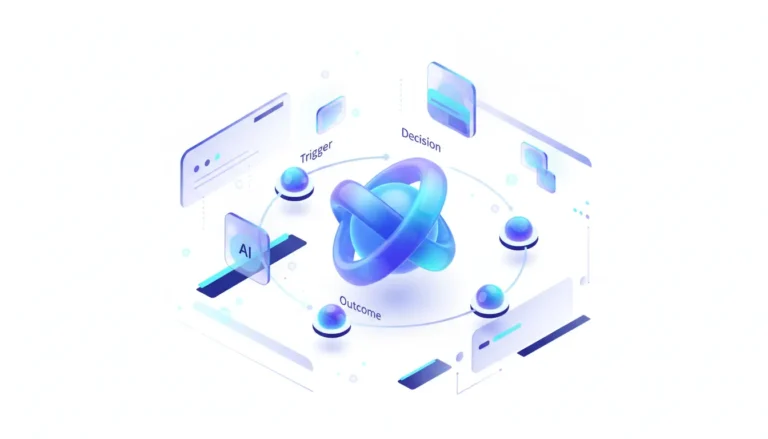
Have you ever paused to consider how the words we use for enterprise AI are quietly reshaping everything? Over the last couple of years, we’ve been stuck with “assistants” that respond to prompts and “copilots” that nudge you along in something like a code editor. Anthropic’s “Cowork Agent” idea? That’s a real jump ahead. It’s not merely about aiding with a quick function or email draft – no, this is an autonomous setup that plans and carries out multi-step jobs on its own, say, handling a new customer invoice by updating Salesforce, pinging the finance team on Slack, and logging issues in Jira. We’re crossing that line from humans steering the ship to AI taking the wheel.
And it’s not all riding on a beefier LLM, either. A solid Cowork Agent needs its own architecture tuned for independence – starting with a planning engine that breaks down big goals into bite-sized tasks. Key to it all is safe, controlled access to a toolkit of APIs for business apps, turning the AI from talker to doer, one that can pull from and push to the systems powering daily work. The tough part, really, isn’t the model; it’s the surrounding framework – handling memory, directing tool calls, and bouncing back from slip-ups without derailing everything.
Of course, even the sharpest agent is dead weight if it’s walled off in isolation. The real roadblock to making this stick in enterprises? Integration and oversight. While the lofty talks dwell on market upsides, the folks in the trenches are wrestling with practical headaches: How do you hand an AI agent access to ServiceNow without inviting disaster? What’s the play for auditing when it bounces between five systems for a single task? And those guardrails – how do they stop it from spinning into expensive dead ends? Tackling that means birthing “AgentOps,” a field zeroed in on watching over agents, locking down security, and managing their full lifecycles.
This shift, though, it demands we rethink ROI from the ground up. Agentic AI dangles the carrot of game-changing productivity, swallowing workflows that old-school RPA could barely touch. Yet the full price tag stretches way past just running the model – it folds in hefty spends on secure connections, monitoring setups that don’t miss a beat, and oversight loops with humans for compliance and risk. The players who come out on top? They won’t peddle the brainiest model alone; they’ll deliver the most secure, hands-on platform for these digital team members.
Stakeholders & Impact
| Stakeholder / Aspect | Impact | Insight |
|---|---|---|
| AI / LLM Providers | High | The fight heats up not over model scores like MMLU anymore, but on how well the agent platform delivers – reliable tool handling, smooth orchestration, built-in governance. It’s evolving from hawking “brains” to crafting “digital employees,” plain and simple. |
| Enterprise IT & Security | High | This throws a curveball at identity and access management for AI entities – non-humans included. New security setups are essential for API gates, data rules, and ironclad logs, all to keep things compliant and misuse-free. |
| MLOps & Infra Vendors | Significant | Suddenly, there’s a rush for “AgentOps” tools: orchestrators for agents, vector stores for lasting recall, tracing platforms to follow every move, and policy enforcers. A whole new shelf in the toolkit. |
| Knowledge Workers | Medium–High | Your day flips from hands-on doing to overseeing – setting agent targets, vetting plans, stepping in for curveballs. It’ll take real effort in training and adapting to make that smooth. |
About the analysis
Researched and written with AI assistance under the editorial responsibility of the i10X News team. The title image is an AI-generated illustration. Read our AI Use Policy. Spotted an error? Request a correction.
This is an independent i10x analysis based on market signals and our ongoing research into the architectural, operational, and strategic requirements for deploying agentic AI systems. It is written for technology leaders, enterprise architects, and AI product managers navigating the transition from model-centric to agent-centric AI infrastructure.
i10x Perspective
I’ve noticed how the pivot from “Copilot” to “Coworker” feels like the biggest strategic turn in AI since ChatGPT burst onto the scene – it’s wrapping up the early hype and diving into the gritty work of enterprise rollout. That focus sharpens not just on LLM firepower, but on the thorny details of making it all happen.
It carves out fresh battle lines, too. The contest spills beyond model makers like OpenAI, Google, and Anthropic – now enterprise heavyweights such as ServiceNow and UiPath are right in the mix. In the end, victory goes to whoever forges the most dependable OS for these autonomous agents, one that’s trusted for control and safety above all. Looking ahead, that push-pull between sky-high productivity and the ironclad demands of security? will define the next ten years.