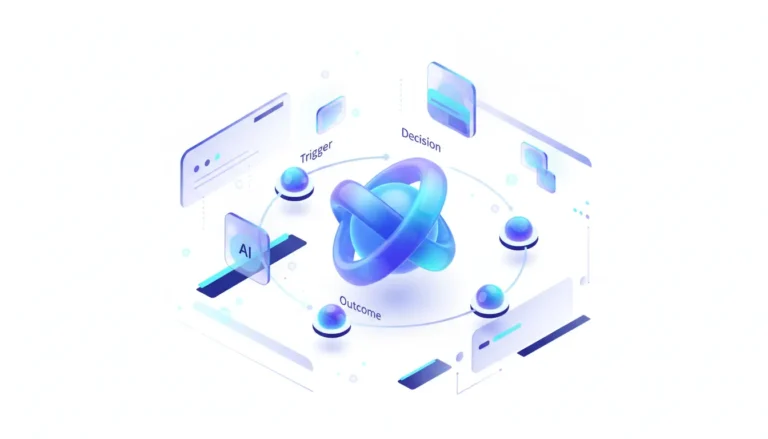
Anthropic has officially launched Project Glasswing, an initiative to build AI systems that can autonomously defend against AI-powered cyberattacks. This move signals a critical shift in the AI landscape: the arms race is no longer just about building bigger models, but about deploying intelligent, defensive agents to protect the software that runs our world.
Quick Take
- Summary: Anthropic, a leader in large language models, announced Project Glasswing, a dedicated effort to use AI for defensive cybersecurity. The project aims to counter the rising threat of attackers leveraging AI to discover and execute novel exploits against critical software, from cloud services to industrial control systems. I’ve noticed how these kinds of initiatives often start with big ideas – and this one feels like it could really change the game if it delivers.
- What happened: Instead of releasing a new LLM, Anthropic has unveiled a strategic security initiative. While the announcement is currently light on technical specifics, it frames Glasswing as a system designed to protect the software supply chain and runtime environments from sophisticated, AI-augmented threats. That said, the lack of details leaves a bit of room for speculation, doesn’t it?
- Why it matters now: Attackers are already using AI to accelerate vulnerability research and create polymorphic malware, rendering traditional, signature-based security tools increasingly obsolete. Project Glasswing represents a necessary pivot towards a new paradigm: AI-native defense, where autonomous systems are required to fight threats at machine speed. We’re weighing the upsides here – faster responses, smarter detection – but it’s clear we can’t stick to old habits.
- Who is most affected: CISOs, SecOps teams, and AppSec engineers are the primary audience. This initiative puts pressure on incumbent security vendors (EDR, RASP, CI/CD scanning tools) to prove their own AI capabilities and forces enterprises to consider a new category of defensive tooling. From what I’ve seen in the field, these teams are stretched thin already – anything that eases the load could be a real lifeline.
- The under-reported angle: The announcement is a statement of intent, but the real story lies in the unanswered questions. How will Glasswing be benchmarked against novel AI-generated attacks? What is the architecture behind its detection and response pipeline? And how will it integrate into existing security stacks without becoming another source of alert fatigue? This is less about a product launch and more about establishing the next frontier of cybersecurity: autonomous AI-on-AI warfare. Plenty of reasons to keep an eye on how this unfolds, really.
Deep Dive
Have you ever stopped to think about how the tools we build for efficiency might one day turn against us? The premise of Project Glasswing is a direct response to an uncomfortable reality: the same AI technology that builds copilots for developers also builds them for hackers. As AI models become masters of code, they can be weaponized to find zero-day vulnerabilities, automate complex attack chains, and craft sophisticated social engineering campaigns at an unprecedented scale. Traditional security, built on human analysts triaging alerts from rules-based systems, is fundamentally outmatched – it’s like bringing a knife to a gunfight, only the guns are getting smarter every day.
Anthropic’s move extends its core mission of AI safety from the model level to the systems level. While competitors focus on guardrails to prevent models from generating malicious code, Glasswing appears aimed at a harder problem: defending the entire software development lifecycle (SDLC) and runtime environments where that code operates. Using the language of the security world, this isn’t just about input filtering; it’s about a fusion of RASP (runtime application self-protection), software supply chain security, and AI-assisted threat intelligence. But here’s the thing – pulling all that together without creating more headaches? That’s the tricky part.
The key challenge – and the area where the initial announcement leaves the most significant gap – is evaluation. How do you prove a defensive AI is effective? Success can’t be measured by simply catching known threats from a static dataset. It requires a dynamic, adversarial process of “AI-assisted red teaming,” where offensive AI models are continuously pitted against the defensive system to find its blind spots. Without transparent benchmarks and a clear methodology for assessing performance against emergent threats, potential adopters will be left evaluating a black box. And that uncertainty? It tends to make folks tread carefully.
For the CISO, Glasswing represents both a promise and a predicament. The promise is a force multiplier for overwhelmed security teams – an autonomous agent that can detect and potentially neutralize threats before a human can even log in. The predicament is integration. The modern security stack is already a complex web of SIEMs, SOARs, EDRs, and cloud-native protection platforms. Glasswing’s success will depend not just on its intelligence, but on its ability to plug into this ecosystem, share context-rich data, and operate without generating an unmanageable deluge of false positives. It must become a trusted component of a zero-trust architecture, not just another noisy sensor. Reflecting on it, I wonder how many teams are ready for that kind of shift.
Stakeholders & Impact
| Stakeholder / Aspect | Impact | Insight |
|---|---|---|
| AI / LLM Providers | High | Anthropic re-brands “AI Safety” as a proactive, system-level defense capability, creating a new competitive vector against OpenAI and Google. This moves the conversation from model alignment to infrastructure resilience. |
| Cybersecurity Vendors | High | Puts traditional EDR, NDR, and RASP vendors on notice. They must now compete with a potentially more adaptive, AI-native defense system, accelerating the need for genuine AI/ML R&D over marketing claims. |
| CISOs & SecOps Teams | Medium-High | Offers a potential solution to the chronic talent shortage and the increasing speed of attacks. However, it introduces a new category of tool that requires rigorous evaluation for efficacy, limitations, and integration costs. |
| Regulators & Policy | Significant | Project Glasswing could become a blueprint for future cybersecurity standards (e.g., NIST, EU AI Act). It raises the bar for what constitutes “state-of-the-art” security for critical infrastructure powered by AI. |
About the analysis
Researched and written with AI assistance under the editorial responsibility of the i10X News team. The title image is an AI-generated illustration. Read our AI Use Policy. Spotted an error? Request a correction.
This is an i10x independent analysis based on Anthropic’s public announcement and an assessment of the existing gaps in the cybersecurity market. It synthesizes information for security leaders, CTOs, and infrastructure engineers trying to understand how the AI arms race will reshape their defensive strategies – something that’s been on my mind a lot lately, given how quickly things are evolving.
i10x Perspective
Project Glasswing is more than a security tool; it’s an admission that the age of human-led cybersecurity operations is ending. The future of infrastructure defense will be defined by autonomous AI agents fighting other AI agents in a perpetual, high-speed conflict across our networks and codebases. Anthropic is placing a bet that the company best positioned to build safe AI is also the best positioned to build its defenders. The critical, unanswered question is whether the asymmetric advantage in this new war will lie with the attacker or the defender – and honestly, that’s the kind of uncertainty that keeps you up at night.