Quick Take
Have you ever wondered what it takes to turn a glitchy AI experiment into something enterprises can actually rely on? Amazon Web Services (AWS) has unveiled a blueprint for building production-grade agentic AI, stacking its new managed services to solve the core problems of reliability and speed that plague open-source agent frameworks. From what I’ve seen in the field, this isn’t just a nice-to-have- it’s a strategic move to own the crucial orchestration layer of the AI stack, forcing developers to choose between the walled garden of a vertically integrated cloud and the flexible, but often fragile, open ecosystem.
Summary:
AWS released a detailed reference architecture demonstrating how to build a high-performance agentic AI assistant using its new primitives: Amazon Bedrock AgentCore for orchestration and the Amazon Nova Sonic 2.0 model for low-latency responses. This solution aims to move agentic AI from unreliable prototypes to dependable, enterprise-ready applications. You know, it’s one of those shifts that makes you think- finally, a path forward that feels solid.
What happened:
Instead of just launching a product, AWS published a technical walkthrough for a hyper-personalized movie assistant. The architecture combines AgentCore’s managed capabilities for planning, tool use, and error handling with Nova Sonic 2.0’s rapid, streaming inference, directly addressing the common developer pain points of complex orchestration and slow conversational UX. That said, it’s the kind of integration that could save teams weeks of headaches.
Why it matters now:
This signals the maturation of the AI market. The battle is shifting from just having the smartest LLM to having the most reliable and performant control plane that makes LLMs do useful work. AWS is making a play to commoditize this “agentic layer,” offering a managed alternative to popular but complex open-source frameworks like LangChain and AutoGen. And here’s the thing- timing like this doesn’t come around often in tech.
Who is most affected:
Developers building LLM applications, who now face a classic build-vs-buy decision for agent orchestration. Product teams in media, e-commerce, and SaaS are now getting a clearer path to embedding sophisticated agents. Finally, open-source agent frameworks are now in direct competition with a tightly integrated, heavily-marketed cloud solution. Plenty of reasons to pay attention, really.
The under-reported angle:
The true story isn’t the movie assistant; it’s the strategic showdown over the future of the agentic AI stack. AWS is betting that enterprises will pay a premium for reliability, speed, and reduced operational toil in a managed environment. The critical, unanswered questions revolve around vendor lock-in, total cost of ownership, and whether the performance of this closed stack can truly outperform the rapidly evolving, flexible open-source alternatives. It’s a tension that’s bound to play out in interesting ways.
Deep Dive
Ever felt like agentic AI is full of promise but trips over its own feet in the real world? Agentic AI—systems that can autonomously plan, use tools, and execute multi-step tasks—has been the holy grail for developers, but the reality is often brittle and unpredictable. Early experiments with open-source frameworks frequently result in “naive agents” that fail silently, hallucinate tool inputs, or get stuck in loops. This has largely confined agentic systems to the realm of prototypes, not production services. I’ve noticed how that frustration builds up, turn after turn- and now AWS is making a direct move to solve this, aiming to transform agentic AI from a chaotic art into a reliable engineering discipline.
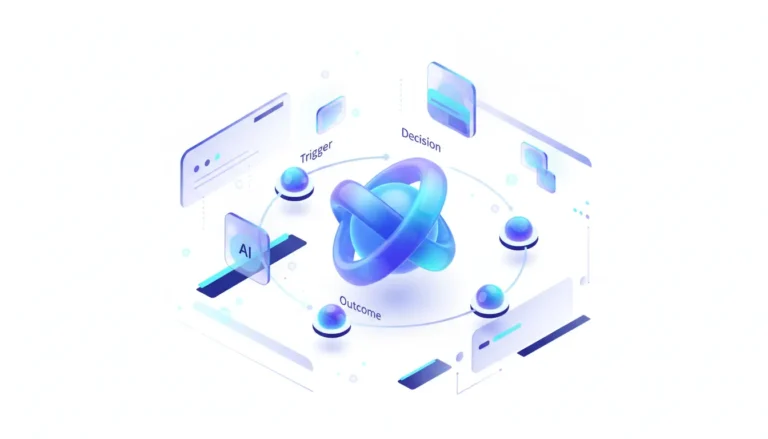
The company’s new reference architecture for a “movie assistant” is the first concrete example of its two-pronged strategy. First, it introduces Amazon Bedrock AgentCore, a managed orchestration engine designed to bring determinism to agentic workflows. By handling state management, tool invocation policies, and error retries, it abstracts away the complex control flow that developers struggle to build and maintain themselves. Second, it pairs this with Amazon Nova Sonic 2.0, a model purpose-built not for raw intelligence but for extreme speed. Its low-latency streaming capability is critical for the conversational user experience that agents demand, aiming to eliminate the awkward pauses that kill user engagement. Short and sweet, that speed- or lack of it- can make or break the whole interaction.
This isn’t just a technical demo; it’s a strategic land grab for the emerging “agent orchestration layer” of the AI stack. AWS is positioning AgentCore as the definitive answer to the unpredictability of frameworks like LangChain’s LangGraph or Microsoft’s AutoGen. The value proposition is clear: trade the infinite flexibility of open-source for the managed reliability and performance of a vertically integrated stack. AWS is betting that for enterprises, the cost of operational toil, debugging, and security risk far outweighs the benefits of a custom, open-source solution. Weighing those upsides, it starts to feel like a pragmatic choice.
However, the AWS blueprint intentionally glosses over the hardest parts, which are highlighted by gaps in the existing documentation. There’s no comparative benchmarking of AgentCore against LangGraph for an identical task, no worked-out cost models, and no ready-made evaluation harnesses for A/B testing agent performance. While AWS provides the primitives for guardrails and safety, implementing robust rights management, age-gating, and privacy compliance for a real-world media catalog remains a significant engineering challenge for the customer. AWS is selling the car, but the user still has to navigate, pay for gas, and get insurance- a reminder that no toolkit is ever plug-and-play.
Stakeholders & Impact
| Stakeholder / Aspect | Impact | Insight |
|---|---|---|
| AI/LLM Developers | High | Provides a managed, production-oriented alternative to open-source agent frameworks. This forces a trade-off between the control and flexibility of LangGraph/AutoGen and the speed-to-market and reliability of the AWS stack. It’s that push-pull I’ve seen in so many dev debates. |
| Media & Entertainment Companies | High | Offers a credible, low-latency path to building hyper-personalized conversational experiences that go beyond static recommendation carousels. The promise is increased engagement and reduced churn- a game-changer for holding attention in a crowded space. |
| AWS & Cloud Providers | Significant | Establishes a new battleground over the “agentic layer.” Success for AWS means deeper customer lock-in and higher consumption of its entire AI stack, from models (Bedrock) to data pipelines (Kinesis) and compute. That kind of ecosystem pull is hard to ignore. |
| Open-Source Ecosystem | Medium | Puts pressure on frameworks like LangChain and CrewAI to improve their out-of-the-box reliability, observability, and ease of deployment to compete with the seamless experience offered by a managed cloud service. The open world will adapt, as it always does- but it might take some catching up. |
About the analysis
Researched and written with AI assistance under the editorial responsibility of the i10X News team. The title image is an AI-generated illustration. Read our AI Use Policy. Spotted an error? Request a correction.
This i10x analysis is an independent interpretation based on publicly available AWS technical documentation, vendor-neutral explainers, and open-source project materials. It is written for AI product managers, architects, and engineering leaders evaluating the trade-offs between managed cloud services and open-source frameworks for building next-generation agentic applications. Drawing from those sources, it’s meant to spark the kind of discussion that leads to smarter decisions.
i10x Perspective
What if the real magic in AI isn’t the raw smarts, but how smoothly it all connects? The emergence of powerful agent orchestration stacks like AWS’s AgentCore signals a crucial turning point: the future of AI is less about the “brain” (the LLM) and more about the “central nervous system” that connects it to the real world. The primary competitive frontier is no longer just model-on-model benchmarks, but the reliability, speed, and safety of the entire system that allows models to execute complex tasks. From my vantage point, that’s where the lasting value lies.
This move by AWS pits the classic Silicon Valley playbook of vertical integration against the distributed, chaotic innovation of the open-source world. While OpenAI and Anthropic focus on building ever-more-powerful models, AWS is building the indispensable plumbing to make those models useful and controllable in the enterprise. The key tension to watch over the next three years is whether this integrated, high-control approach will stifle innovation or become the default standard for building AI that actually works. Either way, the future of AI is less about the “brain” (the LLM) and more about the “central nervous system” that connects it to the real world. It’s shaping up to be a fascinating ride.