Quick Take
Have you ever wondered if the real game-changer in AI isn’t just smarter models, but how they fit into the daily grind of work? As Anthropic’s Claude 3.5 Sonnet redefines benchmarks for speed and cost, the real story is shifting from raw model performance to enterprise-grade workflow integration. The introduction of Artifacts isn’t just a UI feature; it signals a move toward making LLMs active, auditable participants in software workflows, raising urgent questions about security, governance, and control that the market has yet to fully address.
Summary
Anthropic’s Claude model family, particularly the new Claude 3.5 Sonnet, has emerged as a top-tier competitor to OpenAI’s GPT-4o and Google’s Gemini 1.5 Pro, often leading on speed, cost-effectiveness, and specific reasoning tasks. This has moved the evaluation criteria for commercial buyers beyond simple benchmarks to focus on practical enterprise integration, safety, and governance. It’s a pivot that’s long overdue, really.
What happened
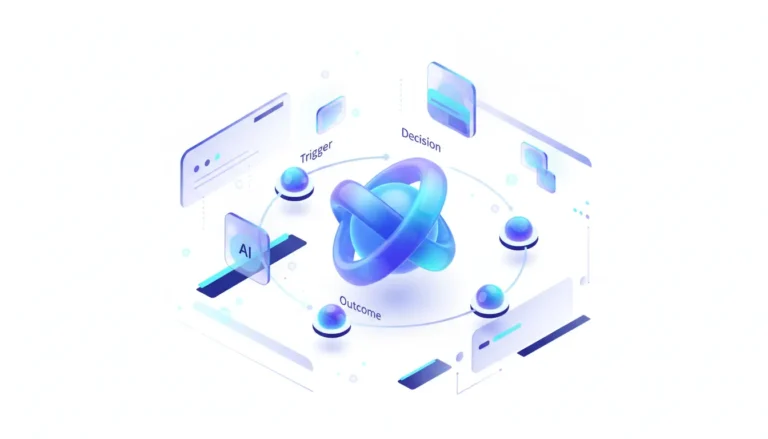
Anthropic has rapidly iterated its model lineup, culminating in Claude 3.5 Sonnet, which sets new performance standards. Alongside model improvements, the company introduced Artifacts, a feature that creates a live, editable workspace next to the chat, allowing users to modify and iterate on code, documents, and designs generated by the model. This functionally turns the AI from a passive answer-provider into an active collaborator in a workflow – something that feels like a natural next step, if you ask me.
Why it matters now
The LLM market is maturing past the “battle of the benchmarks.” The next competitive frontier is not just about a model’s intelligence but its ability to be safely embedded into complex business processes. Features like Artifacts, combined with powerful function calling and tool-use capabilities, position Claude as an engine for building semi-autonomous agents, making security and governance the primary concerns for enterprise adoption. That said, it’s forcing everyone to weigh the upsides against those hidden risks.
Who is most affected
Enterprise developers, security teams, and CTOs are most affected. They must now evaluate Claude not just as a text generator, but as a potential software actor that needs permissioning, auditing, and risk management. The pressure is on to move from experimental chatbots to production-grade, AI-driven applications with robust controls – and that’s no small shift.
The under-reported angle
While most coverage focuses on comparing Claude to ChatGPT or celebrating its benchmark wins, the critical conversation about how to safely govern agentic workflows is being missed. The claim of letting AI “access almost any software” via tool use demands a security-first framework for least-privilege access, audit logging, and blast-radius containment – a domain where official documentation and market analysis are still sparse, leaving plenty of room for uncertainty.
Deep Dive
Isn’t it fascinating how quickly the AI landscape evolves, pulling us from one obsession to the next? The large language model arms race has entered a new phase. For years, the narrative was dominated by a relentless climb up benchmark leaderboards – MMLU, HumanEval, GSM8K. While Anthropic’s Claude 3.5 Sonnet now sits at or near the top of many of these charts, often at a fraction of the cost of its rivals, its true significance lies elsewhere. The market is pivoting from evaluating passive intelligence to deploying active, integrated AI. The central question is no longer “How smart is the model?” but “How can I trust this model to do things for me?” From what I’ve seen in these shifts, it’s all about building that trust brick by brick.
This shift is embodied by Claude’s new “Artifacts” feature. On the surface, it’s a clever UX enhancement: a dedicated panel where code or text appears, ready to be edited and iterated upon. But its strategic implication is far deeper. It reframes the AI interaction from a simple Q&A turn to a persistent, stateful workspace. Combined with Anthropic’s focus on long context windows (200K+ tokens) and sophisticated function calling, Artifacts is a stepping stone toward AI-mediated software development and workflow automation. It hints at a future where the LLM is not just a consultant but a collaborator with its own tools and workspace – one that could change how teams create, if handled right.
This evolution brings the most critical and under-discussed topic in enterprise AI to the forefront: security and governance for agentic systems. Competitor analysis shows that vendors provide API docs and high-level safety principles like Constitutional AI, but they fall short of offering concrete architectural blueprints for secure tool use. Enterprises need answers to hard questions: How do you enforce least-privilege permissions when an LLM calls an internal API? How do you create an immutable audit trail for every action an AI agent takes? What are the incident response playbooks for a jailbroken model that has access to production systems? The current market is rich in capability but poor in operationalized governance, and that’s where the real work begins.
The opportunity for Anthropic – and the challenge for enterprise adopters – is to bridge this gap. Winning the next wave of enterprise adoption will require more than just a powerful model and a clean API. It will demand a comprehensive “implementation cookbook” that includes reference architectures for RAG, verifiable security patterns for tool use, and clear guidance on data residency and compliance (SOC 2, HIPAA, GDPR). While platforms like AWS Bedrock and Google Vertex AI provide a layer of this, the model providers who offer the most robust, security-first implementation patterns will build the deepest moats. It’s a race that’s just heating up.
Stakeholders & Impact
| Stakeholder / Aspect | Impact | Insight |
|---|---|---|
| Enterprise Buyers (CTOs, CPOs) | High | The decision is no longer just about model performance but the total cost of ownership, including the engineering effort to build secure, auditable, and compliant integrations. The “best” model is the one that minimizes integration risk – a point that often gets overlooked in the hype. |
| Developers & Engineers | High | The focus shifts from basic API calls to designing complex systems with function calling, RAG, and agentic orchestrators. They now need to think like security architects, implementing guardrails and evaluation harnesses for AI-driven workflows, which adds layers to their daily toolkit. |
| Anthropic & Competitors (OpenAI, Google) | High | The competitive battleground is moving from benchmarks to developer experience and enterprise-readiness. The key differentiators will be security frameworks, implementation playbooks, and transparent governance tools that accelerate time-to-production – elements that could tip the scales. |
| Regulators & Compliance Teams | Significant | The rise of agentic AI that can interact with other software systems presents a new paradigm for risk. They will demand greater transparency into AI decision-making, data handling, and the security protocols governing tool use, potentially leading to new compliance requirements down the line. |
About the analysis
Researched and written with AI assistance under the editorial responsibility of the i10X News team. The title image is an AI-generated illustration. Read our AI Use Policy. Spotted an error? Request a correction.
This i10x analysis is an independent interpretation based on a synthesis of official product documentation, technical reviews, and market coverage. Our findings are benchmarked against prevalent enterprise adoption challenges identified in security and integration patterns. This piece is written for engineering managers, product leaders, and CTOs evaluating LLMs for strategic, production-grade use cases – drawing from patterns I’ve observed in the field.
i10x Perspective
What does it mean when AI stops being a sidekick and starts driving the workflow? The evolution of Anthropic’s Claude signals a critical inflection point for the AI industry: the era of the LLM as a workflow engine has begun. The competitive landscape is no longer defined solely by raw intelligence but by the trust and control an enterprise can exert over that intelligence when it starts to act. I’ve noticed how this tension keeps surfacing in discussions – it’s the quiet undercurrent shaping decisions.
The future doesn’t belong to the model with the highest benchmark score, but to the ecosystem that can prove its agents are not only capable but also controllable, auditable, and secure. The most significant unresolved tension for the next five years is the widening gap between the explosive growth in AI’s agentic capabilities and the lagging development of enterprise-grade frameworks to govern them. The companies that solve this governance puzzle will define the next generation of software, leaving the rest to catch up.