Quick Take
- Summary: The AI agent landscape is rapidly maturing from experimental developer frameworks into a two-tiered ecosystem: hyperscalers supplying the orchestration infrastructure, and vertical players deploying hyper-specialized autonomous digital workers.
- What happened: Major cloud and AI providers—OpenAI, AWS Bedrock, Google Vertex, and Azure—have effectively standardized their agent API offerings around tool calling, memory management, and enterprise governance. At the same time vertical applications are hitting the market, highlighted by GreenCore Solutions (GSC) announcing an Asia-Pacific joint venture to deploy autonomous procurement agents powered by a proprietary Consumer Packaged Goods (CPG) knowledge graph.
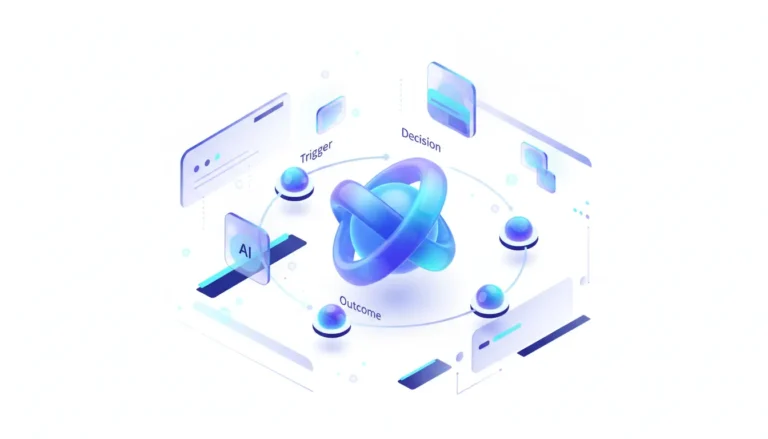
- Why it matters now: AI is moving from single-turn, conversational retrieval (chatbots) to multi-step, autonomous execution (agents). As LLMs get wired directly into enterprise backends like SAP Ariba and Coupa to handle tasks like RFx automation and supplier risk, the industry bottleneck shifts from model reasoning to secure integration, auditability, and data structure.
- Who is most affected: Platform engineering leads evaluating cloud ecosystems, MLOps teams pivoting toward “AgentOps,” and operational executives (like CPOs) who are suddenly tasked with managing a digital workforce.
- The under-reported angle: The true unlock for autonomous enterprise agents isn’t just a smarter LLM; it’s the unglamorous fusion of highly structured data primitives—like CPG ontologies and knowledge graphs—paired with strict Human-in-the-Loop (HITL) compliance workflows to prevent catastrophic edge cases.
Deep Dive
Have you noticed how quickly the conversation around AI agents has moved past the early experiments? If you look at the current documentation from OpenAI, AWS, Google Cloud, and Azure, a clear consensus has formed: building an AI agent is no longer a fringe computer science problem, it is a managed enterprise service. The hyperscalers are racing to commoditize the orchestration layer. Bedrock, Vertex AI, and Azure AI Agent Service are pushing hard into “governance-first” deployments—wrapping agent behaviors in IAM integrations, managed guardrails, and SOC-2 compliance. Meanwhile, open-source frameworks like LangChain have established the dominant cognitive architectures, popularizing ReAct (Reasoning and Acting) and Plan-and-Execute patterns. The message from the infrastructure layer is clear: the scaffolding is ready.
But the most disruptive action is happening one layer up, where generic agent capabilities are being hammered into highly specific, verticalized workflows. Taking GSC’s recent Asia-Pacific rollout as a bellwether, we are seeing the rise of the “domain-expert agent.” Instead of asking a generic LLM to “help with supply chain,” companies are deploying localized procurement agents capable of executing complex 3-way matching, parsing regional tax compliance (like APAC e-invoicing), and automating entire supplier sourcing cycles.
Beneath these high-value vertical agents lies a critical missing link: the enterprise knowledge graph. Current market coverage heavily indexes on tool calling and APIs, but ignores how agents maintain accuracy across massive, fragmented datasets. In the case of CPG procurement, an LLM alone cannot safely negotiate a contract. It requires a rigid knowledge graph mapping SKUs to ingredients, ESG scores, and bill-of-materials data. This structured ontology provides the deterministic grounding that prevents a probabilistic LLM from hallucinating a supplier order.
This transition from chatbots to buyer’s aides is forcing the creation of a new discipline: AgentOps. When an AI can independently query an ERP, draft an RFx, evaluate a supplier, and route a decision for approval, standard MLOps is insufficient. Enterprise architecture teams are now scrambling to implement strict Segregation of Duties (SoD) controls, offline testing simulators, and fallback/rollback plans for autonomous actions. You can no longer just test an LLM’s output; you must evaluate its entire chain of executed software actions.
From what I’ve seen, the real test will come when these systems hit edge cases that no amount of model scale can anticipate. Ultimately, we are witnessing the collision of the AI race with legacy enterprise middleware. As cloud providers battle over the safest hosting environment, the true winners will be the organizations that successfully map complex internal data structures into schemas that agents can read, understand, and act upon. The agentic era is less about artificial general intelligence, and far more about applied, autonomous workflows.
Stakeholders & Impact
| Stakeholder / Aspect | Impact | Insight |
|---|---|---|
| AI / Cloud Providers | High | Battling for the “Agent Control Plane.” Capturing immense compute premiums as multi-step agent planning (ReAct) inherently requires far more API calls than standard inference. |
| Platform & IT Teams | High | Forced to migrate from MLOps to AgentOps. Must build secure API gateways and granular RBAC (Role-Based Access Control) to prevent agents from taking destructive actions in production systems. |
| Ops & Procurement Leaders | High | Moving from software buyers to digital workforce managers. Replacing static ERP macros with adaptable, autonomous agents capable of realizing hard ROI in cycle-time reduction and tail-spend capture. |
| SaaS & ERP Vendors | Significant | Legacy systems (SAP, Oracle, Ivalua) must pivot to become “agent-friendly” with highly reliable, stateless APIs, or risk being bypassed by intelligent abstraction layers entirely. |
About the analysis
Researched and written with AI assistance under the editorial responsibility of the i10X News team. The title image is an AI-generated illustration. Read our AI Use Policy. Spotted an error? Request a correction.
This analysis synthesizes official technical documentation from leading AI infrastructure providers (OpenAI, AWS, Google, Azure, LangChain) alongside recent commercial market signals, such as GreenCore Solutions’ CPG agent expansion. It is tailored for CTOs, platform architects, and engineering managers tasked with responsibly deploying multi-step autonomous AI workflows in highly regulated enterprise environments.
i10x Perspective
The rapid standardization of agentic APIs across all major cloud platforms signals that the foundational “tool-calling” problem has been solved; the next frontier is managing multi-agent collaboration at scale. As models become cheaper and faster, the competitive moat will shift away from the LLMs themselves toward the proprietary knowledge graphs and integration pipelines that ground them. Over the next five years, observers should watch the friction between AI providers striving for full autonomy and regulatory frameworks demanding absolute explainability—the winners will be the platforms that perfect the Human-in-the-Loop handoff.