Quick Take
The frontier of AI development has moved past the chat box and onto the desktop. With generalized UI automation now baked into base models, the traditional Robotic Process Automation (RPA) industry is facing an existential clock.
Summary: Google is rolling out native “computer use” capabilities for its Gemini 3.5 Flash model, allowing the AI to directly orchestrate cross-app and web workflows on a user’s screen safely and autonomously.
What happened: Through a new developer preview, Gemini 3.5 Flash can now act as an OS-level agent – navigating desktop environments, moving cursors, reading screens, and clicking through software interfaces to execute multi-step tasks that traditionally required manual human input.
Why it matters now: This marks a pivotal escalation in the immediate AI infrastructure race. Following Anthropic’s introduction of similar features for Claude, Google’s move firmly establishes “Agentic UI control” as standard table stakes for frontier LLMs, radically shifting focus from generative text toward autonomous task execution.
Who is most affected: AI developers aiming to bypass brittle API integrations, enterprise operations teams looking to automate repetitive workflows, and legacy RPA vendors who suddenly find their core business models commoditized by foundational AI.
The under-reported angle: Most coverage focuses on the visual novelty of an AI clicking a mouse, but the real breakthrough lies in the governance architecture. Built-in primitives like explicit permission matrices, user-in-the-loop breakpoints, and audit logging are the stealth features that actually make this deployable in risk-averse enterprise environments.
Deep Dive
Have you ever tried wiring two enterprise tools together only to watch the integration snap the first time a UI changes? Google’s release of native “computer use” for Gemini 3.5 Flash signals a fundamental shift in how developers will build software automations over the next decade. Instead of spending weeks stringing together rigid APIs to connect disparate enterprise tools, developers can now instruct an LLM to navigate the digital workspace exactly as a human would. Gemini processes what’s on the screen via its multimodal context window, determines the necessary UI elements, and virtually clicks, types, and slides its way to task completion.
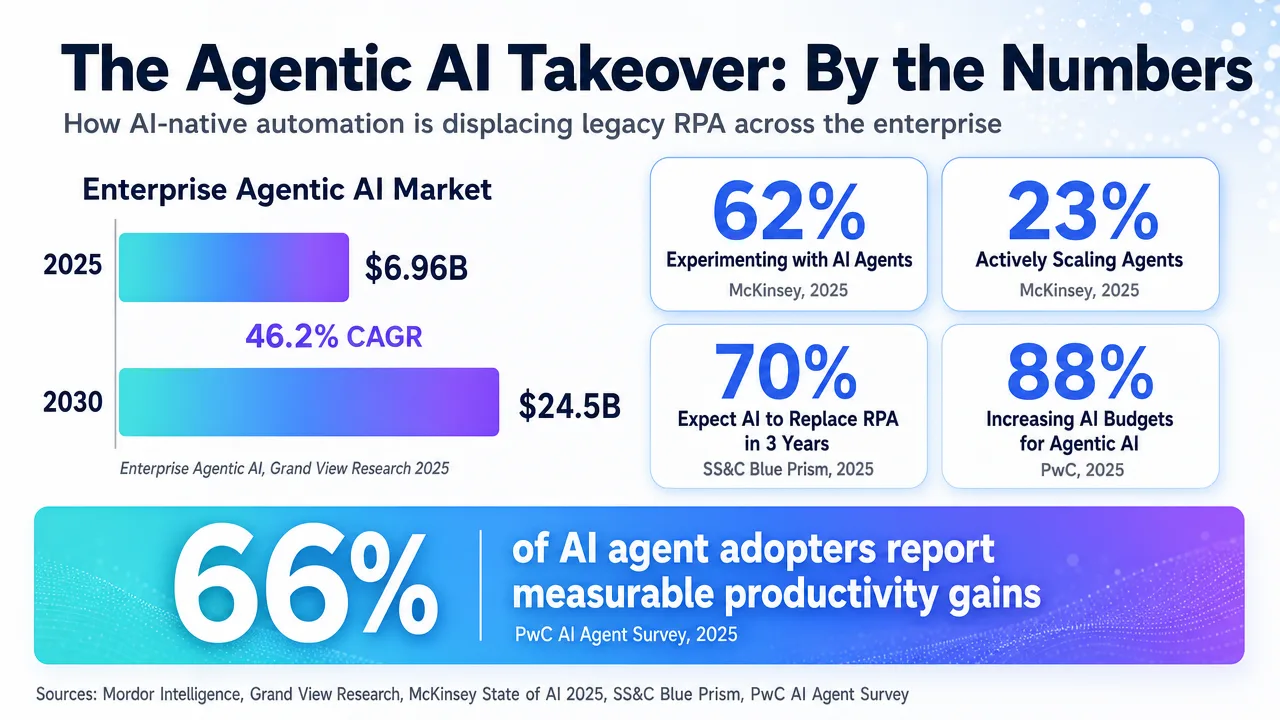
From what I’ve seen, mainstream tech coverage has largely framed this as a consumer productivity hack or a generalized “hands-free” assistant. That said, looking through the lens of enterprise infrastructure, this is a direct assault on the traditional Robotic Process Automation sector. Legacy RPA relies on deterministic, easily broken scripts that fail the moment a button moves or a website updates. Gemini 3.5 Flash introduces probabilistic robustness: if the UI shifts, the model “sees” the change and adapts on the fly.
Yet the primary friction point preventing widespread adoption of generalized AI agents isn’t intelligence – it’s compliance. Handing over desktop control to an LLM introduces severe security threat models, ranging from data exfiltration to unintended destructive actions. Google is attempting to solve this “trust gap” by embedding safety primitives directly into the architecture. By forcing user-in-the-loop consent flows and scoping specific application access via advanced Role-Based Access Control (RBAC), Google is providing the enterprise deployment blueprints that Chief Information Security Officers (CISOs) demand.
What’s currently missing from the conversation – and what operations teams must rapidly figure out – is the reliability playbook. While the capability is native, these models still occasionally hallucinate pathways or get stuck in UI loop-states. Developers evaluating Gemini’s computer use must heavily invest in observability and evaluation harnesses, designing fallback patterns, rate-limiting protocols, and strict logging of agent actions. As this capability moves from preview to General Availability, the winners won’t be those who build the coolest agents, but those who build the safest, most auditable agentic architectures.
Stakeholders & Impact
| Stakeholder / Aspect | Impact | Insight |
|---|---|---|
| AI Developers | High | Unlocks rapid prototyping. Replaces thousands of lines of integration code with simple UI automation primitives. |
| Enterprise Ops & IT | High | Shifts automation strategy from rigid legacy frameworks to flexible LLMs, demanding new risk-assessment and compliance checklists. |
| Traditional RPA Vendors | Critical | Existential threat. Vendors must augment their stacks with foundation models or risk irrelevance as UI automation commoditizes. |
| Security & Compliance | Significant | Forces a rewrite of data access and network governance, necessitating robust audit logs and strict “human-in-the-loop” gating. |
About the analysis
Researched and written with AI assistance under the editorial responsibility of the i10X News team. The title image is an AI-generated illustration. Read our AI Use Policy. Spotted an error? Request a correction.
This independent, research-based analysis synthesizes current technical disclosures, developer documentation, and market reactions to deliver a strategic overview. It is designed for CTOs, AI engineers, and enterprise leaders evaluating the integration of autonomous agents into secure corporate environments.
i10x Perspective
The introduction of computer use in Gemini 3.5 Flash is not just a feature update; it is a preview of exactly how the operating systems of the future will function. As models from Google, Anthropic, and OpenAI master human-designed Graphical User Interfaces (GUIs), the competitive moat shifts away from algorithmic reasoning toward ecosystem lock-in and seamless cross-platform orchestration.
Over the next five years, expect a paradox: as AI gets better at using interfaces built for human eyes, software companies will begin designing hidden, highly optimized interfaces built specifically for AI agents to navigate faster, quietly obsoleting the concept of “screentime” as we know it.