Quick Take
- Summary: France’s Mistral has quietly expanded its enterprise footprint by launching Mistral OCR 4, a highly capable, self-hosted Document AI engine designed to run entirely on private servers.
- What happened: Reenforcing its commitment to data sovereignty, Mistral released a locally deployable OCR engine supporting 170 languages that challenges the dominant, cloud-dependent managed APIs of major hyperscalers.
- Why it matters now: Data privacy and inference costs are the biggest bottlenecks for enterprise AI adoption. By allowing companies to run high-accuracy document extraction locally, Mistral drastically lowers the Total Cost of Ownership (TCO) while bypassing GDPR and HIPAA compliance hurdles entirely.
- Who is most affected: Regulated industries (finance, healthcare, legal), IT infrastructure teams managing air-gapped systems, and incumbent cloud providers like AWS (Textract), Google (Document AI), and Microsoft (Azure Form Recognizer) whose high margins are directly targeted.
- The under-reported angle: OCR is no longer just about digitizing paper; it is the vital ingestion funnel for enterprise RAG (Retrieval-Augmented Generation). Whoever controls the document parsing layer locally dictates how efficiently data feeds into localized LLMs.
Deep Dive
Have you ever stopped to think how much enterprise AI still hinges on something so mundane as parsing a PDF? Mistral is best known for its lean, open-weight LLMs, but with Mistral OCR 4, the company is zeroing in on the connective tissue of enterprise AI: document ingestion. While the hype tends to circle around chatty agents, the day-to-day reality involves invoices, healthcare records, and unstructured forms. Mistral OCR 4 positions itself as a lower-cost, self-hosted alternative to the pricey cloud APIs that dominate today.
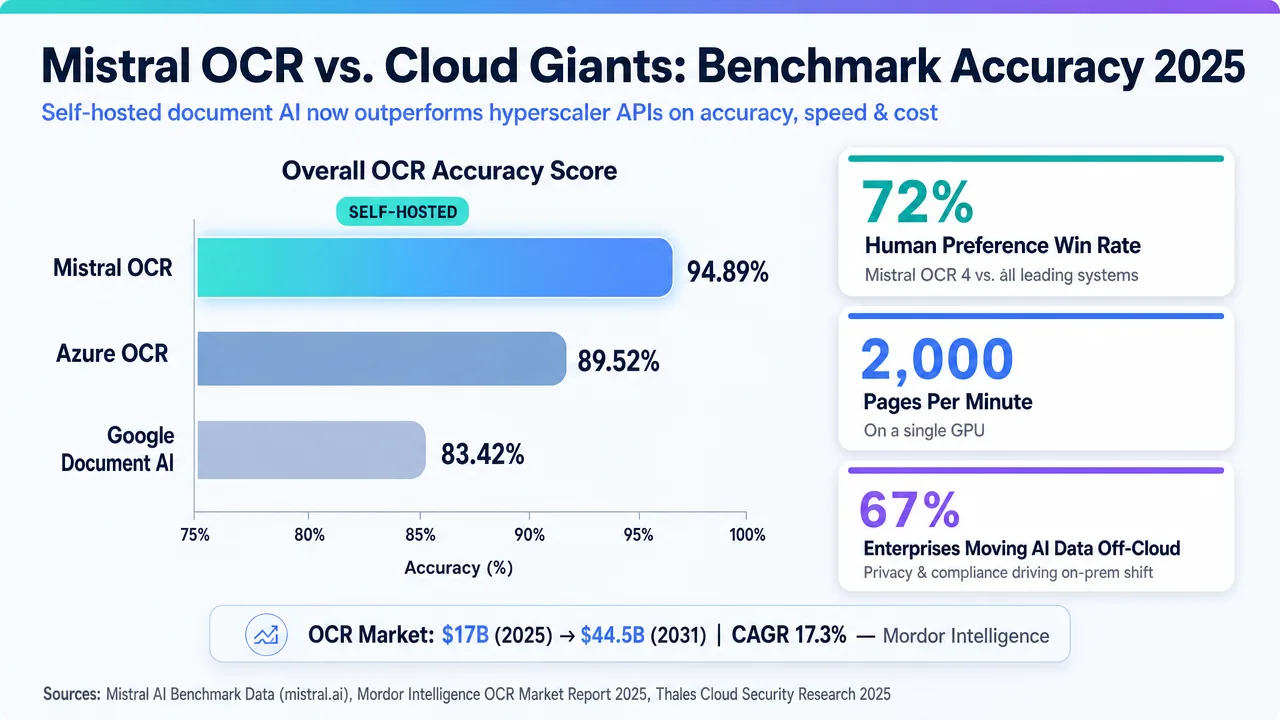
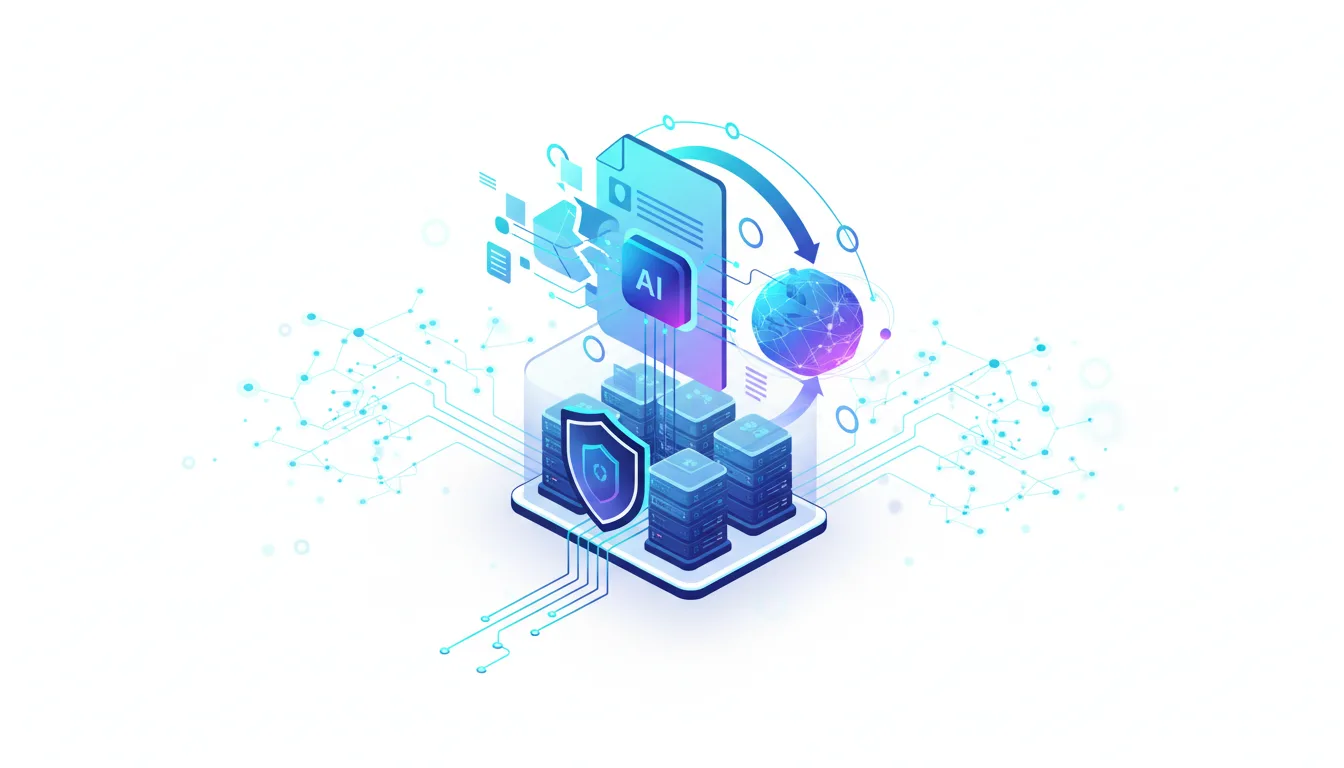
The pain point is straightforward. Hyperscale OCR solutions hit enterprises twice-over – first through recurring API fees, then again through data-privacy choke points. For regulated sectors, shipping sensitive files to an external endpoint is rarely an option. Mistral’s air-gapped, sovereign route keeps everything inside the organization’s own perimeter, cutting external latency and removing any chance of leakage.
Support for 170 languages out of the box opens global long-tail scenarios without an internet connection. Yet the real test isn’t breadth of languages – it’s how well the model handles layout analysis, table extraction, and key-value mapping. Developers comparing it with Tesseract or PaddleOCR still need clearer benchmarks on those structural tasks before they can trust it as a reliable feeder for localized LLMs.
On the infrastructure side, the shift moves teams from juggling API keys to provisioning actual compute. One gap in current discussion is the hardware matrix: what CPU/GPU and VRAM footprint works for high-availability Kubernetes clusters versus lighter edge deployments? Enterprises leaving cloud APIs behind will want solid TCO models to weigh upfront silicon spend against long-term savings from dropping cloud dependency.
From what I’ve seen, Mistral OCR 4 functions as a core piece in any sovereign enterprise toolkit. Paired with on-prem foundation models, it lets organizations close the loop on fully private RAG pipelines. It marks a shift from pure model-building toward the messier work of MLOps and secure data flows – and that push is what actually moves on-prem AI closer to practical scale.
Stakeholders & Impact
| Stakeholder / Aspect | Impact | Insight |
|---|---|---|
| Enterprise IT & Compliance | High | Achieves native GDPR/HIPAA compliance via air-gapped deployment, eliminating third-party data processor risks. |
| Cloud Providers (AWS, GCP, MSFT) | Threat | Risks commoditizing their high-margin Document AI APIs by offering a highly capable, self-hosted alternative. |
| AI Developers & MLOps | High | Shifts focus to deployment architecture (Docker, K8s, edge nodes) and local hardware provisioning for seamless RAG ingestion. |
| SMBs & Regulated Industries | Medium–High | Democratizes high-accuracy, 170-language extraction at a fraction of hyperscaler TCO without sacrificing proprietary data. |
About the analysis
Researched and written with AI assistance under the editorial responsibility of the i10X News team. The title image is an AI-generated illustration. Read our AI Use Policy. Spotted an error? Request a correction.
This independent, research-based analysis tracks the shifting dynamics between hyperscaler cloud dependencies and localized AI infrastructure. It is designed for CTOs, IT architects, and engineering leaders evaluating the cost, compliance, and infrastructure requirements of modern enterprise AI data pipelines.
i10x Perspective
Mistral OCR 4 shows that the next phase of the AI contest isn’t solely about who fields the strongest foundation model. It’s also about who owns the entire connective layer enterprises actually rely on. While hyperscalers keep pushing for cloud lock-in, Mistral is handing teams modular, sovereign components instead. Over the next five years the split will likely widen – between organizations that rent their intelligence and extraction from the cloud, and those that keep both secured and scaled at the edge.