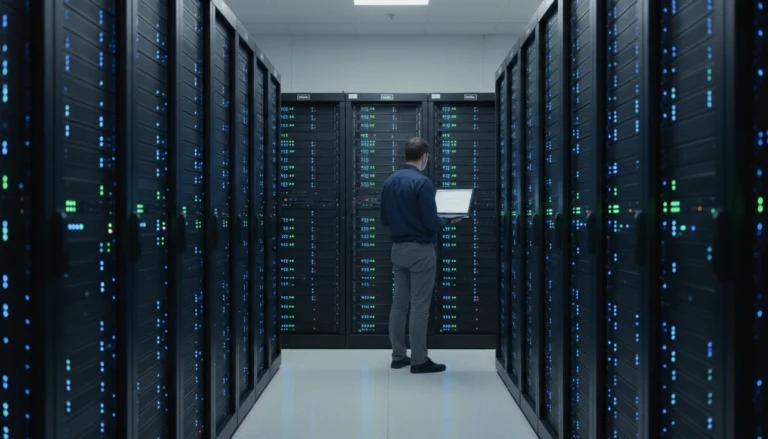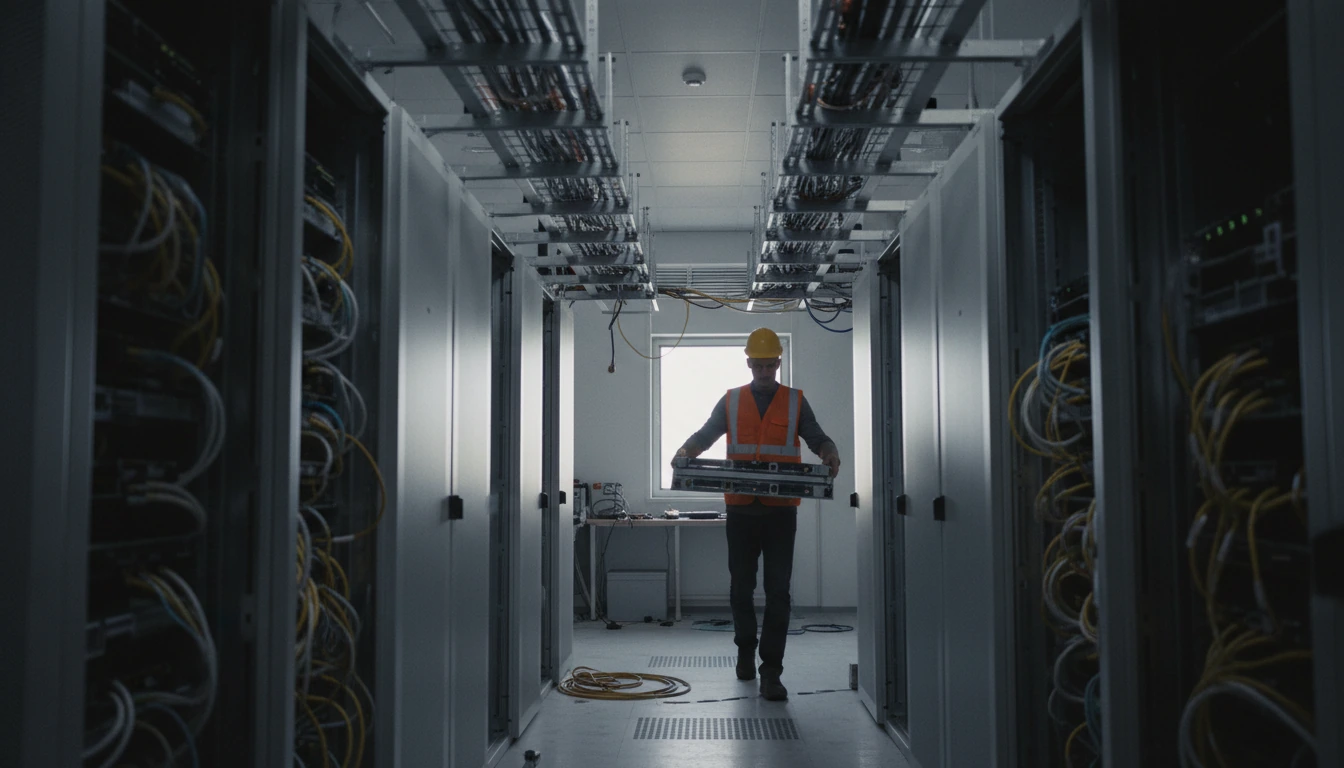
Marlowe, a startup founded in May by former Microsoft AI leaders Dan Lewis (CEO) and Kutta Srinivasan (CTO), has raised a $277 million seed round to design, build and run inference data centers on chips other than Nvidia’s, according to Marlowe’s launch post from November 23. Accel led the round, as the firm confirms in its investment note, joined by Bessemer, Altimeter, Atreides, Eclipse and others, plus angels such as Aaron Levie, Dara Khosrowshahi and Henry Kravis. Marlowe starts with Etched and AMD hardware and says its first site goes live in December 2026.
The pitch: match the chip to the job
Marlowe argues that most data centers were built for training and that inference is a set of different markets: a voice assistant that must answer in under a second, a coding agent working through a large codebase, an analyst summarizing a 500 page filing. Each has different needs for latency, model size and input to output ratio. By tuning chips, networking, power and software together for each class of workload, the company claims a durable two to three times advantage in performance, availability, resiliency and cost over setups that optimize each layer separately.
The partner quotes in the announcement give the timeline. Etched says the first inference clusters with Marlowe come this year. AMD says Marlowe will deploy its new Helios rack systems next year.
How big this seed is
Marlowe has told reporters the round values it at $1.15 billion; that figure is not in its own post. If it is the post-money value, investors bought roughly 24% of the company in one round, a large stake for a seed, but logical for a business that has to buy hardware and build sites before it earns revenue.
In our AI Funding Index, $277 million would be the fifth largest of the eleven seed rounds we track, counting Embo’s $110 million robotics seed from the same day. Among compute and infrastructure companies only Unconventional AI ($475 million) raised a larger seed. At $1.15 billion, Marlowe would also enter our AI Unicorns List near the bottom, between Wabi ($1.2 billion) and Daytona and Town ($1 billion each).
The real bottleneck is software
The most important line in Marlowe’s post is that a chip alone cannot produce tokens. New silicon needs compilers, serving software and fleet tooling before it reaches its potential, and that gap is why so many alternative chips sit underused. The day before, Amazon made the same point with money when it bought Decart’s optimization stack and team to make its own Trainium chips faster. Investors are now paying for the layer between chip and customer, not just for chips. Our funding data shows how much capital the alternative chip camp has raised recently: Etched $700 million at a $21 billion valuation in August, Tenstorrent $1.5 billion and FuriosaAI $620 million in October, Fractile $720 million in November.
What inference buyers should ask
For AI application companies that get pitched non-Nvidia capacity, by Marlowe or anyone else, five questions help:
- Model support: which models run today, and how quickly new open weight releases are supported.
- Your workload, your numbers: price per million tokens and latency measured on your own traffic, not on a vendor benchmark.
- Exit path: how hard it is to move the workload back to a GPU cloud if needed.
- Capacity timing: which site and which chip generation your capacity runs on, given that the AMD systems only arrive next year.
- Billing: Marlowe writes that value will come from outcomes rather than tokens, so ask exactly what you would be billed for.
Open questions
- Marlowe says it has customers but does not name them, nor the locations of its sites.
- The two to three times advantage is a claim without a published benchmark.
- Whether Nvidia hardware will ever be part of the mix is left open.
i10x Perspective
Marlowe is betting that the inference market will split by workload, the way cloud computing split into many specialized services. We think that is likely, because inference costs, not training costs, now decide whether many AI products make money. The risk is execution: building data centers is slow, and each new Nvidia generation raises the bar alternative chips have to clear. For buyers the main gain is negotiating power. Even if you never move a workload, a credible second supplier makes GPU cloud prices easier to push down.