Memory-Optimized AI Inference: KV Cache and Prompt Caching
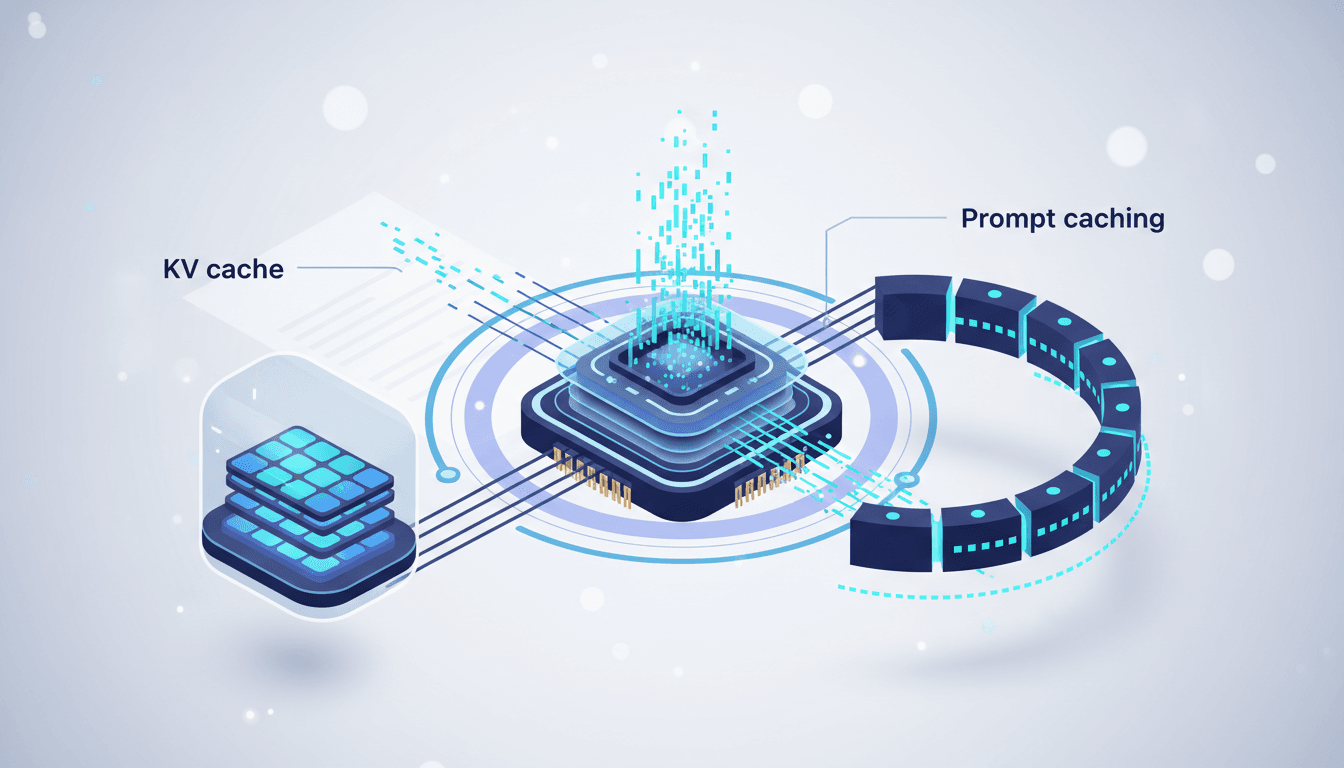
The Shift to Memory-Optimized AI Inference
⚡ Quick Take
- Summary: The economics of AI inference are shifting fast. The industry is moving away from raw compute muscle and toward memory optimization, especially through smarter caching layers.
- What happened: Providers like Anthropic and Google Vertex, plus frameworks such as vLLM, are rolling out dual-layered memory optimizations. On the low end sits KV Caching for token generation. At the API level comes Prompt Caching for large, reusable system contexts.
- Why it matters now: Models now handle 1M+ token contexts, and autonomous agents keep feeding the same massive system prompts and RAG documents back into LLMs. Recomputing that data on every request simply does not scale.
- Who is most affected: Engineering leaders, AI application developers, and FinOps teams who juggle latency SLOs, GPU VRAM limits, and API billing.
- The under-reported angle: Caching is quietly turning LLM APIs from stateless black boxes into stateful infrastructure. The competitive edge is moving from base model intelligence to cache-hit rates and VRAM management.
🧠 Deep Dive
Have you ever watched inference costs climb because the same long context gets processed again and again? The real bottleneck is memory, not compute. Every time an LLM generates a token, it normally re-reads the entire preceding sequence. When teams pack in heavy instruction sets, few-shot examples, and large RAG documents, both latency and spend rise sharply. The industry's response splits into two complementary approaches: KV (Key-Value) Cache and Prompt Caching.
At the infrastructure layer, KV Cache does the heavy lifting. It stores the mathematical representations (past_key_values) of earlier tokens in GPU memory. Instead of recalculating massive matrices across the full context window, the model only processes the newest token and pulls the rest from cache. Early versions of this approach suffered from severe fragmentation. Frameworks like vLLM changed that with PagedAttention, which splits the cache into manageable blocks. The result was a practical jump in throughput without constant out-of-memory failures.
At the commercial layer, Prompt Caching has become the clearest FinOps lever. Google Vertex AI, Anthropic, and Together AI now expose this at the API level. Developers can mark large static prefixes, such as a 50-page legal document or an agentic tool schema, for one-time processing. Subsequent queries that reuse the same prefix skip the initial work entirely. The provider simply reuses the pre-computed KV states, cutting both latency and per-token charges by as much as 60 percent.
That said, the operational side is less tidy than the marketing suggests. Teams still lack shared playbooks for maximizing cache hits. It requires strict prompt canonicalization and careful separation of static and dynamic parts. Slip a unique string before the cached RAG block and the entire optimization collapses. Security questions also surface quickly. Storing tenant-specific context in shared VRAM or provider caches creates fresh data-leakage risks if keys collide. In practice, Prompt Caching pushes developers to treat long-context LLMs more like stateful systems than magic oracles.
📊 Stakeholders & Impact
Stakeholder / Aspect | Impact | Insight |
|---|---|---|
AI / LLM Providers | High | Caching architectures (like PagedAttention) are now the primary differentiator for inference margins and API pricing wars. |
App Developers & Engineering | High | Must redesign prompt architectures to isolate static context from dynamic user input to trigger cache hits and meet latency SLOs. |
FinOps & SRE Teams | High | ROI on AI features now heavily depends on observability, cache TTL (Time To Live) tuning, and eviction monitoring. |
Security & Compliance | Medium | Long-lived cached contexts introduce new attack vectors (cache poisoning) and require strict data segregation for enterprise use. |
✍️ About the analysis
This independent, research-based analysis draws from technical documentation, API specs, and benchmark data across Anthropic, Google, Together AI, vLLM, and Hugging Face. It aims to give engineering leaders, CTOs, and AI product teams a practical framework for weighing latency and cost trade-offs in production LLM deployments.
🔭 i10x Perspective
The spread of KV and Prompt Caching effectively ends the era of stateless AI calls. We are heading toward a model where intelligence is co-located with memory and where cached context becomes a first-class operational concern.
We are heading toward a model where Intelligence VRAM is treated like cloud storage, leased and managed rather than spun up fresh each time. In the next three to five years, expect major providers to wrap this in "Serverless AI Context" offerings. The lock-in will no longer hinge on which model is smartest, but on which provider can store and retrieve agentic memory the fastest.
Related News

LLM Medical Prognosis Limits: Why Models Fail Survival Forecasts
Benchmarks show LLMs excel at extracting data from records but struggle with calibrated long-term risk estimates. Discover why prediction drift blocks clinical use and how hybrid pipelines are emerging. Explore the guide.

Shadow AI Risks: Securing Developer Endpoints in LLM Workflows
Enterprises secure production AI but overlook Shadow AI risks from unvetted developer tools and personal LLM keys. Discover how AI Bills of Materials and full-lifecycle controls close the gap.

Grok for Startups: xAI Credit Program for Founders
xAI launches Grok for Startups with 6-12 months of unified credits for Grok, API, Build and Bot. Discover the 20/80 staged release to cut early burn rates and secure ecosystem access.