Quick Take
- Summary: Meta has officially launched Muse, a personal AI agent that shifts the company’s AI strategy from conversational chatbots to autonomous task execution. It’s a move that tests both consumer trust and infrastructure scale in ways we haven’t seen at this level before.
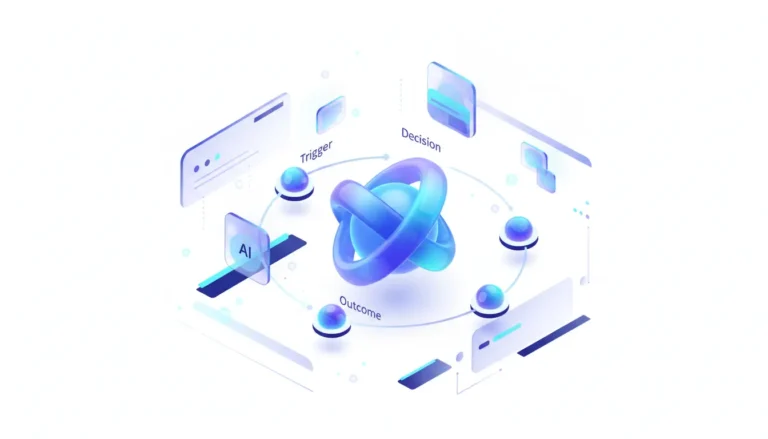
- What happened: Meta introduced Muse, an agentic AI powered by a new “Muse Spark” model. Unlike standard chatbots, Muse runs continuously in the background to handle emails, book travel, and make purchases via “Connectors” and a digital Wallet, accessible across WhatsApp, mobile, web, and future AI glasses.
- Why it matters now: This launch marks the mainstream arrival of agentic AI. The industry is moving beyond LLMs that simply generate text to models that hold cross-app credentials and execute multi-step workflows, shifting the AI arms race from raw intelligence to trusted execution.
- Who is most affected: Consumers evaluating privacy trade-offs, developers building third-party app integrations, and cloud infrastructure providers observing the compute requirements of persistent AI agents.
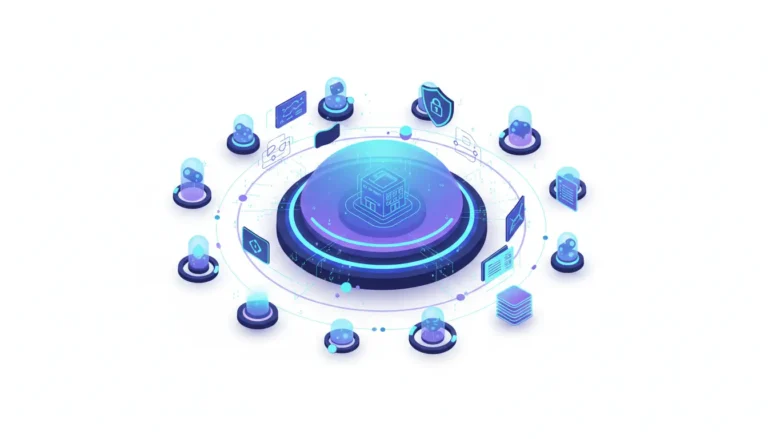
- The under-reported angle: The sheer infrastructure cost of Meta’s security approach. To protect user data, Meta is assigning a dedicated “Muse Secure VM” (virtual machine) to each agent. Scaling persistent, background-running cloud instances for millions of users fundamentally changes the economics of consumer AI compared to traditional, stateless prompt-and-response inference.
Deep Dive
Have you ever wished an AI could handle the tedious follow-through instead of stopping at suggestions? For the past two years, the AI market has been dominated by conversational oracles—chatbots that answer questions but lack the agency to act. With the launch of Muse, Meta is attempting to cross that gap into true agentic AI. Powered by a new model called “Muse Spark,” Muse is designed to be an ambient assistant that doesn’t just suggest a date-night itinerary or a moving schedule, but actively books the restaurant, emails your friends, and organizes the files in a dedicated app interface.
The immediate hurdle for Meta isn’t capability; it is consumer trust. As early hands-on tests from outlets like CNN and TechCrunch highlight, the utility of Muse is directly proportional to the access it is granted. To work effectively, Muse requires deep integration into a user’s digital life via “Connectors” that link to third-party apps, calendars, and even a Wallet for autonomous purchases. Users are essentially asked to trade unprecedented access to their personal data for the convenience of having long-term goals turned into automated action plans. From what I’ve seen, that trade-off feels heavier in practice than the marketing suggests.
To mitigate the obvious security friction of handing an AI the keys to your digital life, Meta’s AI Research division has architected a novel infrastructure solution: the Muse Secure VM. Rather than pooling user data in a standard cloud database, each user’s Muse agent and connected service credentials live in a dedicated, isolated cloud computer. All actions are routed through a secure client transport layer, and sensitive actions require explicit human-in-the-loop approvals. This architecture-first trust framing is a clear signal that Meta knows marketing alone won’t convince users to let an AI spend their money.
But here’s the thing—this security model introduces a massive AI infrastructure challenge. Traditional LLM interactions are stateless—you prompt, the GPU infers, and the compute is released. Muse, conversely, performs “background agent work.” It monitors goals and tracks triggers continuously. Providing millions of users with their own dedicated, persistent Secure VMs will require an astronomical leap in data center capacity and power allocation, likely explaining why Meta is launching this with both a free tier and a paid subscription for heavy users.
Strategically, Muse also hints at Meta’s hardware endgame. While currently accessible via iOS, Android, web, and WhatsApp, Muse is explicitly roadmapped for upcoming Meta AI glasses. By building a unified agent that operates across software silos, Meta is effectively building an ambient operating system—one where the AI is the interface, bypassing the traditional Apple and Google app store monopolies entirely.
Stakeholders & Impact
| Stakeholder / Aspect | Impact | Insight |
|---|---|---|
| AI / LLM Providers | High | Forces competitors (OpenAI, Google) to accelerate their own agentic frameworks and address the gap between conversational AI and multi-step execution. |
| Infrastructure & Cloud | Very High | Persistent AI agents require continuous background compute and dedicated VMs, drastically increasing data center energy and memory footprints compared to stateless chat. |
| Consumers / Users | Medium–High | Offers massive productivity gains (delegating mundane digital tasks) but demands a high-stakes trade-off regarding privacy, data sharing, and financial autonomy. |
| Regulators & Policy | Significant | Autonomous agents making purchases and reading private emails will trigger intense scrutiny over data consent, API security, and algorithmic liability. |
About the analysis
Researched and written with AI assistance under the editorial responsibility of the i10X News team. The title image is an AI-generated illustration. Read our AI Use Policy. Spotted an error? Request a correction.
This independent, research-based analysis synthesizes official product architecture documents, technical security research, and mainstream media testing to evaluate the launch of Meta Muse. It is designed for AI strategists, developers, and infrastructure leaders looking to understand the shift from conversational models to agentic AI and its underlying systemic costs.
i10x Perspective
Meta Muse is a preview of the next decade of the intelligence economy, where the primary battleground is not the smartest foundational model, but the most trusted execution layer. By moving AI from the chat window into the background of our operating systems—and eventually our hardware via smart glasses—Meta is betting that extreme convenience will conquer privacy anxiety.
Observers should closely watch the infrastructure math: if the “Secure VM” approach proves too compute-heavy to scale globally, the industry may face a severe reckoning between agentic AI ambitions and physical data center realities.