Moonshot AI launches Kimi K2.5 — open-source multimodal model for visual coding and agent-swarm orchestration
Summary
Moonshot AI has launched Kimi K2.5, an open-source multimodal AI model engineered specifically for visual coding, tool use, and agent-swarm orchestration.
What happened
The model release introduces native capabilities for ingesting complex diagrams or UI screenshots and converting them directly into functional code, while providing built-in routing primitives to coordinate multiple AI agents working in tandem.
Why it matters now
The AI industry is pivoting hard from passive chatbots to autonomous, action-taking agents. Kimi K2.5 gives developers a powerful, open-weights alternative to orchestrate multi-agent workflows without paying the steep API premiums or facing the vendor lock-in of closed models like GPT-4o.
Who is most affected
AI engineers, MLOps teams, and enterprise developers who need to run code-generating, multimodal agents on their own infrastructure, as well as AI infrastructure providers hosting open-source deployments.
The under-reported angle
While the flashy UI-to-code demos capture the hype, the real story is the infrastructure stress test K2.5 represents. Deploying code-executing agent swarms locally forces an immediate, industry-wide reckoning with sandbox security, tool-permissioning, and VRAM economics.
Deep Dive
Have you ever tried stitching together an AI agent only to hit a wall the moment the task grew even slightly complex? The release of Moonshot AI’s Kimi K2.5 marks a clear shift in the open-source landscape, moving from simple text generation toward native multimodal action.
Most coverage on Hugging Face and GitHub treats K2.5 as just another strong open model, yet its architecture points to a narrower goal: fixing the brittleness that still plagues today’s agents, especially around visual coding and multi-agent coordination.
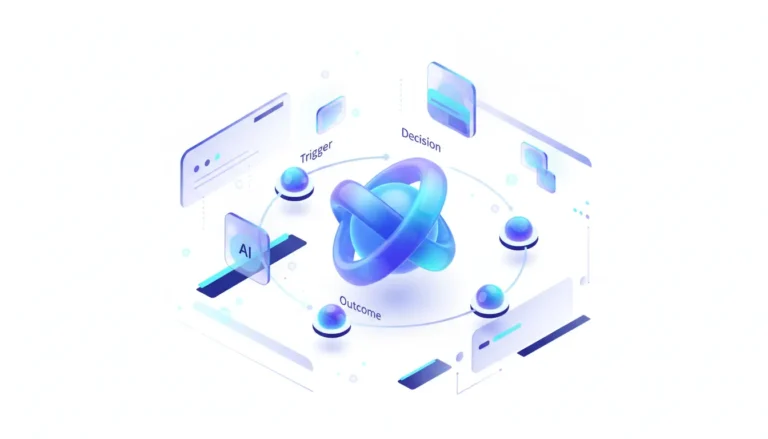
From what I’ve seen, developers often reach a point where single-agent setups simply cannot keep context straight across steps. Kimi K2.5 tries to address this with built-in support for “agent swarms” — networks of agents that can hand off work, share context, and check one another’s output. Picture one agent reading a system diagram, another writing the matching code, and a third running tests. By tuning the model for these hand-offs, Moonshot is nudging the field toward more standardized autonomous pipelines.
That said, the bigger obstacle is rarely discussed. To cut prototyping time the way the model promises, teams need deployment patterns that go well beyond the quick-start notebooks. Running these swarms at any real scale calls for careful VRAM budgeting, smart batching, and frameworks such as vLLM or Triton. The distance between a working demo and a reliable production setup remains wide.
This gap leads straight to the thornier issue of governance. Because K2.5 can both write and execute code, organizations now face an urgent need for practical security patterns: contained environments, narrowly scoped tool access, and clear audit trails. Without them, the risk of unintended actions grows quickly.
In short, Kimi K2.5 pushes the enterprise stack to absorb more responsibility. It takes orchestration techniques once limited to closed models and places them in open weights, shifting the performance and safety burden onto the teams that actually run the systems.
Stakeholders & Impact
AI / LLM Providers
Impact: High. Insight: Puts downward pressure on closed-source API pricing by offering robust, open-weights multi-agent and visual coding alternatives.
Enterprise Developers
Impact: High. Insight: Enables localized, private orchestration of agent swarms, but requires significant upskilling in quantization and throughput tuning.
Infra & Cloud Vendors
Impact: Medium–High. Insight: Drives demand for flexible GPU compute optimized for frameworks like vLLM and Triton to support continuous multi-agent inference.
Security & DevOps
Impact: Significant. Insight: Forces the immediate adoption of strict sandboxing and tool-permission governance for code-executing, autonomous AI workflows.
About the analysis
Researched and written with AI assistance under the editorial responsibility of the i10X News team. The title image is an AI-generated illustration. Read our AI Use Policy. Spotted an error? Request a correction.
This independent, research-based analysis synthesizes data across official model repositories, Hugging Face documentation, and developer communities. It is designed for CTOs, AI engineers, and ML product leaders evaluating the infrastructure and security requirements of transitioning to open-source, multi-agent AI systems.
i10x Perspective
Kimi K2.5 signals how quickly agentic features are becoming table stakes. Once open-weights models can reliably manage swarms and visual-coding pipelines at the edge, the advantages once held by closed providers start to narrow. Over the next five years the decisive edge will likely come less from raw model size and more from the surrounding infrastructure — who can deliver dependable sandboxing, efficient routing across agents, and affordable local inference. The models themselves are spreading; the real contest now is governing them safely.