Moonshot AI’s Kimi K3: Million-Token Context and Open-Weights Disruption
⚡ Quick Take
While Western markets fixate on incremental reasoning bumps, Moonshot AI’s Kimi K3 is commoditizing the million-token context window—shifting the AI arms race from sheer capability to brute-force context economics and open-weight infrastructure.
Summary: China’s Moonshot AI has introduced Kimi K3, an aggressively priced, high-parameter large language model natively touting a 1-million-token context window and a planned open weights release. Positioned directly against current and next-generation OpenAI benchmarks, K3 prioritizes massive document ingestion and budget-friendly inference for enterprise deployments.
What happened: Moonshot AI rolled out Kimi K3, targeting the enterprise and developer markets with a compelling trinity: ultra-low token pricing, a gargantuan context window, and an eventual transition to open weights. Early industry comparisons are already benchmarking it against the capabilities of incoming “GPT-5.6” class models, focusing heavily on its long-context latency and retrieval accuracy.
Why it matters now: K3 challenges the dominant Western LLM paradigm by making million-token processing economically viable. This puts real pressure on the existing reliance on complex Retrieval-Augmented Generation (RAG) pipelines, allowing developers to dump entire codebases or data rooms directly into the prompt without blowing through inference budgets.
Who is most affected: Enterprise software architects, AI infrastructure leaders, and developers building data-intensive applications (legal, finance, auditing) who are looking to drastically lower their Total Cost of Ownership (TCO) and avoid vendor lock-in with closed-weight providers.
The under-reported angle: The true disruptor isn’t just the context length; it’s the pending open weights strategy. By allowing companies to deploy Kimi K3 entirely on-premise or within private VPCs, Moonshot AI is weaponizing data sovereignty against OpenAI and Anthropic’s API-only moats.
🧠 Deep Dive
Have you ever wondered why so many teams still stitch together elaborate RAG systems when bigger context windows keep getting promised? The media is currently captured by a narrow, binary question: Can Kimi K3 beat OpenAI? But reading Moonshot AI’s latest release as merely another leaderboard attempt misses the larger infrastructural shift. Kimi K3 represents a calculated attack on the unit economics of AI deployment. By targeting inference costs, massive context lengths, and deployment sovereignty, Moonshot is attempting to flank Western AI giants where they are most rigid.
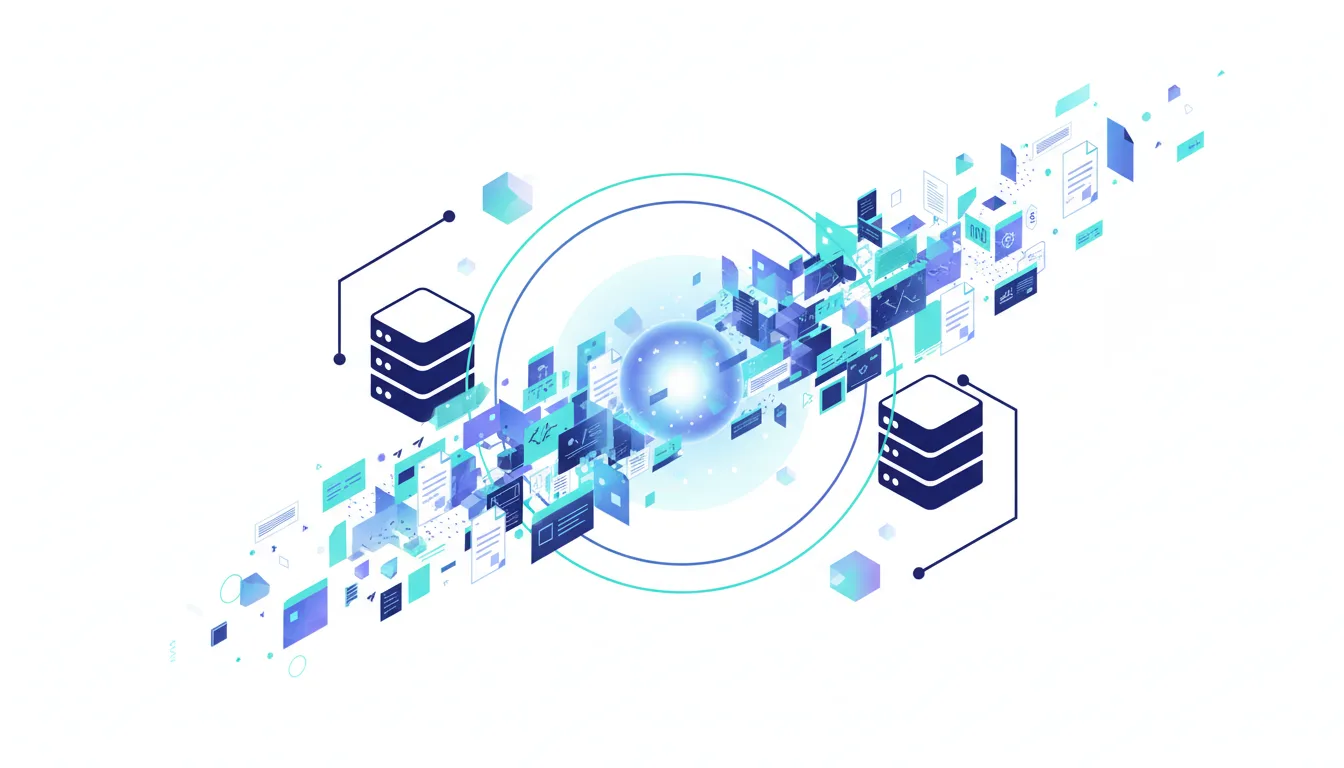
At the core of K3’s value proposition is its heavily scrutinized 1-million-token context window. For the past two years, developers have been forced to build intricate, fragile Retrieval-Augmented Generation (RAG) pipelines—chunking text and using vector databases to bypass strict context limits. K3 offers a brute-force alternative: drop an entire corporate financial history, a massive codebase, or dozens of legal contracts directly into the prompt. From what I’ve seen, the real question now centers on trade-offs—how does K3’s attention mechanism hold up under long-context load? Latency spikes and “needle-in-a-haystack” (NIAH) retrieval degradation remain the silent killers of giant context windows, and independent benchmarks evaluating these failure modes across Chinese and English sets will ultimately define K3’s actual enterprise readiness.
Complicating the landscape is Kimi’s aggressive cost structure. With inference pricing drastically undercutting top-tier proprietary models, K3 alters the Total Cost of Ownership (TCO) equation for startups and procurement officers. A new class of TCO modeling is emerging, where developers weigh the compute costs of indexing and maintaining vector databases against the outright cheap API calls of dropping raw data into K3. If the performance delta between K3 and top-tier OpenAI models stays negligible for basic summarization and data extraction, K3 will likely siphon off massive volumes of “good-enough” enterprise workloads.
Furthermore, Kimi K3’s roadmap introduces a real risk for closed-ecosystem players: the promise of open weights. The enterprise sector is increasingly wary of vendor lock-in, shadow data residency issues, and unpredictable pricing hikes. An open-weights release means K3 can be ported into private, air-gapped infrastructure. This isn’t just about open-source goodwill; it’s a strategic deployment play. A high-parameter, 1M-context model that can live on your own bare-metal servers or private cloud changes the game for highly regulated industries like finance, healthcare, and government contracting.
Yet, significant gaps in the discourse remain. While PR materials boast readiness, enterprise buyers require more than marketing. The ecosystem currently lacks standardized cross-lingual benchmarks (like MT-Bench or LongBench) that trace K3’s quality drop-off between its native Chinese and its English outputs. Additionally, until the explicit licensing rules of K3’s open-weights release are clarified, AI operations teams face a guessing game regarding commercial restrictions. Kimi K3 proves that the frontier of AI is no longer just about who builds the smartest model, but who builds the most economically deployable one.
📊 Stakeholders & Impact
| Stakeholder / Aspect | Impact | Insight |
|---|---|---|
| AI / LLM Providers | High | Forces competitors to rethink compute margins; cheap, massive context heavily pressures OpenAI/Anthropic API pricing. |
| Enterprise AI Architects | High | Potential to simplify AI pipelines by deprecating complex vector/RAG systems in favor of long-context prompting. |
| Infra & Cloud Vendors | Medium–High | An open-weights release will drive demand for private GPU clusters and on-premise compute optimization. |
| Regulators & Compliance | Significant | Localized deployments of a highly capable model sidestep cross-border data transfer issues, smoothing enterprise procurement. |
✍️ About the analysis
Researched and written with AI assistance under the editorial responsibility of the i10X News team. The title image is an AI-generated illustration. Read our AI Use Policy. Spotted an error? Request a correction.
This independent, research-based analysis synthesizes current market positioning, search intent, and structural content gaps surrounding Moonshot AI’s Kimi K3. It is designed for CTOs, AI developers, and enterprise procurement leaders looking to understand the infrastructural trade-offs between Western proprietary APIs and emerging, highly scalable, open-weight alternatives.
🔭 i10x Perspective
Kimi K3 signals a maturation phase in the LLM ecosystem where the competitive moat shifts away from purely qualitative “vibes” toward hard deployment economics. If an enterprise can run a million-token-context model securely on its own infrastructure at a fraction of the cost, the allure of an incrementally smarter, but closed and expensive, API fades. Observers over the next few years must watch this tension closely: Western giants are fighting a margin game on reasoning capability, while international challengers are attacking the ecosystem through volume, integration, and infrastructure sovereignty.