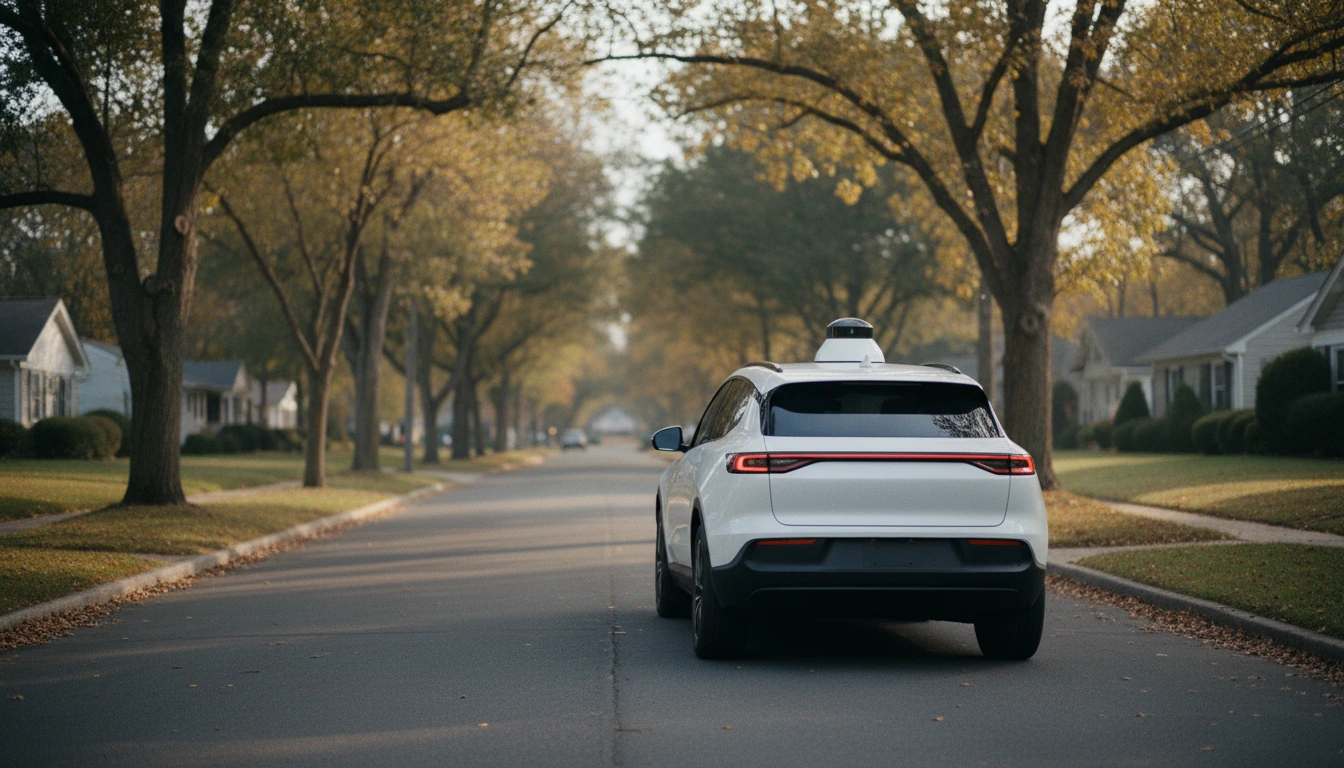
Nuro, Lucid and Uber have started testing Lucid Gravity robotaxis with nobody in the driver’s seat on public roads in Palo Alto, Mountain View, Los Altos and Sunnyvale, the three companies announced on November 24. Rides for employees are due to start soon. The public service in the Uber app is now expected in the first quarter of 2027, which quietly moves a launch the partners had promised for 2026.
How the target moved
The program has shifted twice since it was first announced. Here is the record from the companies’ own releases.
| Date | What the partners said | Source |
|---|---|---|
| July 17, 2025 | First launch in a major US city “next year”; 20,000 or more Lucid vehicles over six years | Uber, Lucid and Nuro release |
| June 17, 2026 | Bay Area launch “later this year”, Houston in mid-2027; nearly 100 test vehicles in California and Texas; at least 35,000 vehicles globally | Houston release |
| November 24, 2026 | Driverless testing in four Bay Area cities; more than 100 vehicles delivered; public launch expected in Q1 2027 | Driverless testing release |
Compiled by i10X from the companies’ press releases. The 75% increase in the fleet minimum is our calculation.
By our count, the minimum fleet commitment has grown by 75%, from 20,000 to 35,000 vehicles, while the first launch has slipped by at least one quarter. Lucid says it has now delivered more than 100 updated vehicles for the driverless phase, roughly the size of the whole supervised test fleet across California and Texas in June.
What the permits actually allow
The California DMV’s permit holder list shows the limits of this phase. Nuro’s driverless testing permit, which names the Lucid Gravity, covers Santa Clara and San Mateo Counties at any time of day, on dry or wet roads with light rain and light to moderate fog, at speeds up to 45 mph. Six companies hold a driverless testing permit in California: AutoMo USA, Nuro, Tensor Auto, Waymo, WeRide and Zoox. Tesla’s robotaxi unit appears only on the list for testing with a safety driver, as of the DMV’s November 17 update.
Testing is not the same as selling rides. The release names a CPUC drivered pilot permit, which allows passengers with a safety operator on board. Charging the public for rides without a driver requires further approvals, and the companies have not said which permits they will hold at launch. The DMV’s deployment list does include a Nuro entry for the same two counties, limited to 25 to 35 mph, but the page does not say which vehicle it covers.
Where it fits in Uber’s robotaxi lineup
Uber is building a network of autonomy partners rather than one fleet. Since November 16, Zoox robotaxis can be booked through Uber in Las Vegas, with Los Angeles planned for next year. The Lucid and Nuro vehicles are different in one important respect: Uber and its fleet partners will own and operate them, so Uber carries the asset and the utilisation risk. Tesla, meanwhile, is planning a Cybercab plant at Giga Berlin for 2029 and still tests in California with a safety driver.
What to watch if you live or work in the test area
- Collision reports. Driverless test operators must report crashes to the DMV, which publishes the reports. They will be the first independent signal of how this phase goes.
- Speed and weather limits. The permit stops at 45 mph and does not cover heavier rain or dense fog, so expect the driverless cars to sit out some bad weather days.
- Expansion. More Bay Area cities are planned for next year, and Houston follows later in 2027.
Open questions
The companies did not say how many of the 100 plus vehicles run without a driver, did not publish disengagement or safety statistics for the supervised phase, and gave no fares. Nuro’s Safety Case Framework is described in general terms only.
i10x Perspective
Removing the safety driver is the step that separates serious robotaxi programs from demos, and Nuro now sits in a small group of six in California. But the more telling number is the date. A launch promised for 2026 is now a Q1 2027 target, and that is with the biggest fleet commitment in the program’s history behind it. We expect Uber to keep hedging with several autonomy partners, and the first quarter of 2027 to be a soft launch for employees and a limited public group in four cities, not a broad Bay Area service.