Summary
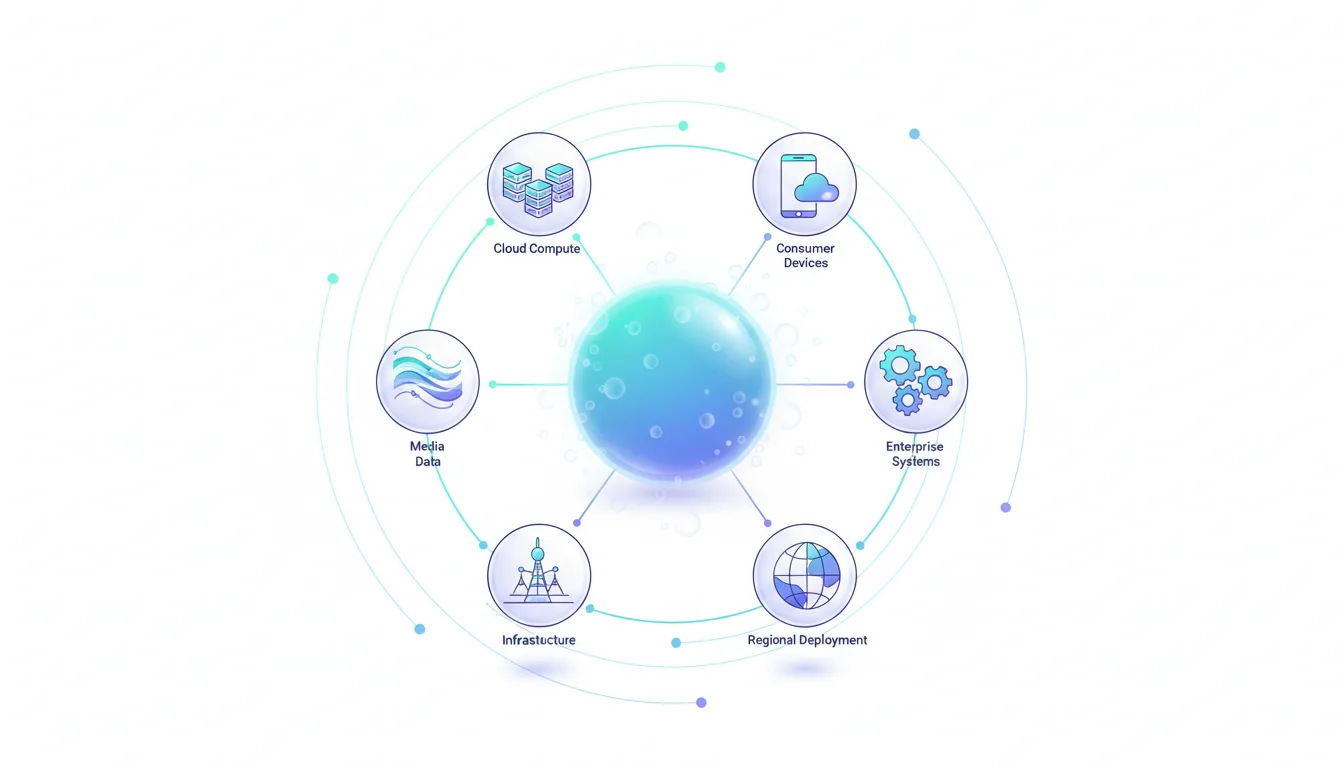
OpenAI has been quietly stitching together a web of alliances that stretch from cloud providers like Microsoft to consumer platforms such as Apple, data deals with Reddit and News Corp, and resellers including PwC. What used to look like straightforward API access has grown into something more layered.
What happened
Over the past year the company moved past simply handing out model access. It now maintains several distinct partnership tracks: tight cloud integration, embedding in consumer operating systems, licensing media content, and enterprise reselling through established firms.
Why it matters now
Taken together, these moves point to a deliberate effort to become the default layer for AI capabilities. The goal appears to be securing both fresh training data and broad distribution channels before open-source alternatives or competing models narrow the window.
Who is most affected
CIOs, technology vendors, and media executives now face practical choices about whether to license data directly, purchase through a reseller, or commit to Azure-based deployments.
The under-reported angle
The variety of these arrangements is creating real friction inside enterprises. Teams are trying to sort out governance, pricing, and legal differences between Azure OpenAI Service, direct APIs, and reseller options, and the lack of clear comparisons is slowing decisions.
Deep Dive
Have you ever watched a handful of separate announcements suddenly form a larger pattern once you lay them side by side? That is what happens when you line up the recent deals with Apple, PwC, Reddit, News Corp, U Mobile, and Microsoft. On their own they read like ordinary press releases. Together they sketch the outlines of what some are calling the OpenAI Industrial Complex.
OpenAI is no longer simply selling inference. It is exchanging brand access, compute commitments, and strategic positioning to strengthen its position in an intelligence-driven market. The company is assembling an ecosystem that reaches from silicon to end-user devices.
One of the most important threads running through these partnerships is the push for high-quality, current training data. Agreements with Reddit, News Corp, and others go beyond settling copyright concerns. They create steady pipelines that keep models from growing stale while also reducing legal exposure that could otherwise stall progress.
Distribution is being approached from multiple angles at once. The Apple integration offers consumer reach with privacy considerations built in. PwC supplies an enterprise sales channel that can reach more conservative organizations. Regional players such as U Mobile are extending similar capabilities into specific markets. The result is a set of models that could become the default intelligence layer across many industries and regions.
That said, the speed of this expansion has left a noticeable gap: enterprises still lack straightforward guidance on how the various routes compare. A CIO weighing options must ask whether Azure OpenAI better satisfies data-residency rules, whether a reseller bundle reduces integration effort, or whether a direct agreement offers more flexibility. Clear reference material on SLAs, compliance, and indemnification is still thin.
Every one of these channels ultimately funnels usage back to the underlying infrastructure. Queries that originate on iOS, through PwC workflows, or from licensed content all increase demand on data-center capacity and power. While OpenAI assembles the commercial relationships, the physical systems, chiefly Microsoft’s clusters and regional grids, carry the growing load.
Stakeholders & Impact
- Data & Media Publishers — Impact: High — Insight: Turning legacy IP and real-time feeds into API revenue streams, while managing the risk of long-term traffic cannibalization.
- Enterprise IT & CIOs — Impact: High — Insight: Facing fragmented procurement paths; must urgently map the governance and SLA differences between Azure, Direct APIs, and Resellers.
- Cloud & Infrastructure — Impact: Massive — Insight: Every endpoint and reseller partnership dramatically scales inference demand, testing the limits of compute availability and grid capacity.
- Competitors (Google, Anthropic) — Impact: High — Insight: Forced to aggressively match OpenAI’s ecosystem lock-in, sparking a bidding war for enterprise channels and exclusive data rights.
About the analysis
Researched and written with AI assistance under the editorial responsibility of the i10X News team. The title image is an AI-generated illustration. Read our AI Use Policy. Spotted an error? Request a correction.
This independent review draws on recent vendor announcements, licensing agreements, and enterprise integrations. It is intended for CTOs, business-development leads, and infrastructure planners who need to chart a course through the shifting LLM partnership landscape.
i10x Perspective
OpenAI is applying a familiar platform strategy: securing premium data sources on one side and broad distribution on the other in an effort to make bypassing the ecosystem commercially unattractive. Over the next several years the central enterprise concern may shift from model performance to vendor dependence. As these connections deepen, the open question is whether the market settles on OpenAI as the default intelligence utility or whether open-weight alternatives and hyperscaler options trigger a broader unbundling.