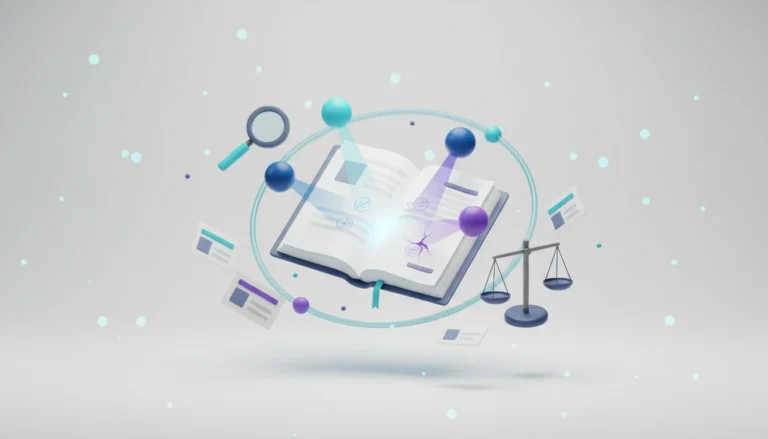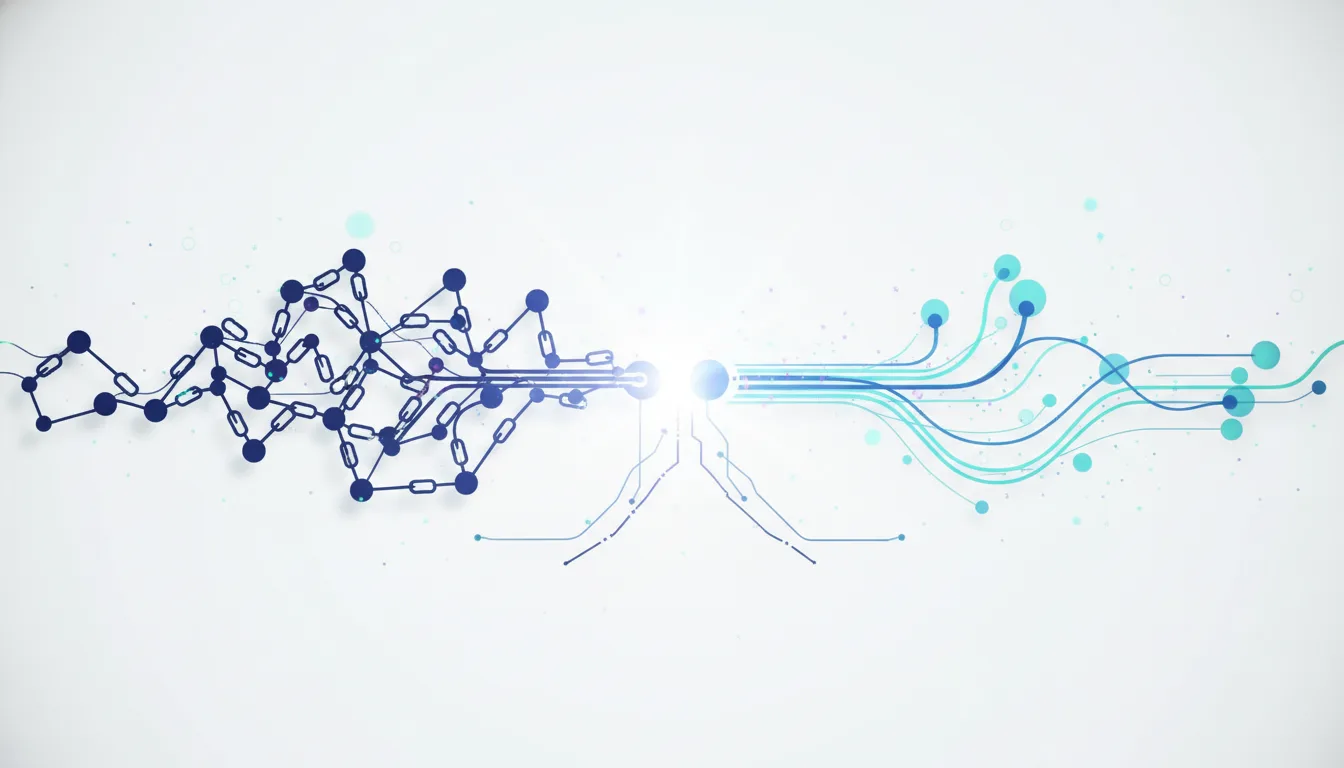
The “Perplexity vs. Google” showdown is more than a product comparison; it’s the first major battle between two fundamentally different internet architectures. It’s a conflict between Google’s established “indexed web” of links and ads and Perplexity’s emerging “synthesized web” of direct, AI-generated answers. This isn’t about which tool will win, but how user workflows will fracture and recombine for a new era of information retrieval.
Quick Take
- Summary: Have you ever wondered if the way we search is about to split into two very different paths? Perplexity AI is aggressively positioning itself as an “answer engine,” challenging Google’s dominance not by replacing it wholesale, but by offering a specialized tool for synthesis and research. This is forcing a strategic split in user behavior, with workflows dividing between broad discovery (Google) and deep, focused understanding (Perplexity) – a shift that’s already starting to feel inevitable, really.
- What happened: Lately, I’ve been seeing a wave of hands-on reviews and user testimonials that pit Perplexity directly against Google Search. They consistently find Perplexity excels at providing concise, cited summaries for complex queries, effectively eliminating the need to open multiple tabs. Google, meanwhile, retains its lead in local search, real-time news, and product shopping where its vast, real-world index is paramount – strengths that aren’t going away anytime soon.
- Why it matters now: But here’s the thing – this competition is the primary case study for the clash between the traditional link-based internet economy and the future of AI-driven information access. It puts immense pressure on Google’s core ad-revenue model and forces critical questions about the value of publisher content when it’s abstracted away into an AI summary. The outcome will redefine the economics of online information, and that’s worth pausing to consider.
- Who is most affected: Knowledge workers, students, and researchers are the primary beneficiaries, gaining a powerful tool to accelerate synthesis. Google is directly threatened, forced to rush its own competing solutions like AI Overviews, potentially cannibalizing its own business. The most vulnerable stakeholders are online publishers, whose referral traffic – the lifeblood of their business model – is at risk, leaving them to navigate some tough choices ahead.
- The under-reported angle: Most comparisons focus on the user experience but miss the critical infrastructure tension. Perplexity’s model is inherently reliant on the very open web ecosystem of publishers it threatens to disrupt. The real question isn’t whether Perplexity can provide a good answer, but whether the “synthesized web” can survive long-term if it starves the “indexed web” of the traffic and revenue needed to create new knowledge – a delicate balance, if ever there was one.
Deep Dive
Ever feel like searching the web is a bit like digging through a cluttered attic – full of treasures, but so much dust in between? The core of the Perplexity vs. Google debate lies in a philosophical shift from a directory to a synthesizer. For two decades, Google has operated as the world’s most dominant directory, organizing links and selling proximity to user intent. Its value is in pointing you elsewhere. Perplexity, built on LLMs, inverts this model. It consumes the “elsewhere” and presents a finished, synthesized product – the answer itself, decorated with citations. This addresses a key user pain point identified across all analyses: the cognitive load of sifting through ads, SEO-optimized fluff, and multiple sources to construct a single answer, something that’s always felt a tad exhausting to me.
This move from discovery to synthesis creates a clear performance divide. For complex research, technical troubleshooting, or academic queries, Perplexity’s ability to generate a cited narrative from multiple sources is a clear workflow accelerator. Features like “Focus” (which narrows searches to sources like Academic papers or Reddit) and conversational follow-ups transform search from a static query-response into a dynamic dialogue. Google, with its powerful search operators and deep index, is still a raw discovery engine, but it requires the user to perform the final step of synthesis – that extra effort that can make all the difference in a busy day.
Trust and accuracy remain the central battleground. While competitors praise Perplexity’s prominent citations as a solution to AI’s “black box” problem, this very feature highlights a paradox. The citations are both a tool for user verification and a constant reminder of the engine’s reliance on the traditional web content it is layering over. This puts it in direct conflict with Google’s long-standing E-E-A-T (Experience, Expertise, Authoritativeness, Trustworthiness) framework, where trust is derived from the domain and author reputation – signals that answer engines risk obscuring. The risk of hallucination is present in both systems, but the burden of verification shifts from “is this website credible?” to “did the AI interpret this credible website correctly?” – a subtle but important pivot.
Beyond the user, the most significant impact is on the digital economy. The rise of answer engines poses an existential threat to the ad-supported publishing model that has funded the web’s content for years. If users get their answer without clicking through, referral traffic plummets, and the incentive for creators to publish high-quality, free-to-access information diminishes. This raises critical, unanswered questions about content licensing, the interpretation of robots.txt directives by AI crawlers, and whether a sustainable economic model exists where AI synthesizers and human creators can coexist. Perplexity’s success may inadvertently create the very content desert that would render its own engine useless in the future – a thought that lingers, doesn’t it?
Stakeholders & Impact
| Stakeholder | Impact | Insight |
|---|---|---|
| AI/LLM Providers | High | The competition shifts from pure model capability (e.g., Gemini vs. GPT-4) to product-market fit. The best search product wrapper, integrating synthesis, citation, and focus, will define the leader in this category. |
| Web Publishers & Creators | Existential | Business models based on ad revenue from search referral traffic are directly threatened. The value of their content is being consumed and re-packaged, often without a compensating click. |
| Knowledge Workers & Developers | High | A massive productivity unlock is possible by offloading synthesis tasks. This requires new skills in verification and prompt engineering, shifting the workflow from searching to interrogating an AI. |
| High | Faces the classic “Innovator’s Dilemma.” Its primary revenue source (search ads) is challenged by a more efficient user experience that it is now forced to replicate with AI Overviews, risking self-disruption. | |
| General Users | Medium | Gains faster answers for some queries but may lose the serendipity of discovery. Faces a less visible but significant trade-off between immediate convenience and the long-term health of the information ecosystem. |
About the analysis
Researched and written with AI assistance under the editorial responsibility of the i10X News team. The title image is an AI-generated illustration. Read our AI Use Policy. Spotted an error? Request a correction.
This analysis is an independent synthesis produced by i10x, based on a review of technical deep-dives, feature comparisons, and publisher impact studies. It’s written for developers, product strategists, and business leaders who need to understand the architectural shifts and systemic risks behind the AI search revolution – insights drawn from piecing together the bigger picture.
i10x Perspective
What if the way we access knowledge is quietly splitting down the middle? The Perplexity-Google rivalry isn’t a battle for a feature; it’s a battle for the default entry point to the internet. We are witnessing the bifurcation of information access into two distinct modes: brute-force discovery (the indexed web) and precision synthesis (the synthesized web).
This trend signals a future where intelligence isn’t just about finding data but about structuring it on demand. The most critical tension to watch is the economic feedback loop. If answer engines fail to establish a symbiotic relationship with content creators, they risk poisoning their own well. In 10 years, the most valuable information may no longer reside on the open web, but be locked behind paywalls or within proprietary datasets, starving the very AI models that depend on a rich, public internet – a cycle we can’t afford to ignore.