Summary: Project Astra is moving past the stage of a striking I/O demo and into something that actually shifts how teams ship work.
- What happened: After Google DeepMind showed Astra—a real-time agent that keeps audio and visual context across long stretches—developers began sharing concrete examples of faster iteration. The conversation has shifted from research prototypes to agents that sit inside actual workflows.
- Why it matters now: The industry is leaving text-only chatbots behind and moving toward agents that stay grounded in voice, vision, and code at the same time. The contest with OpenAI’s GPT-4o now centers on who can keep latency low while the model reasons across multiple streams without dropping context.
- Who is most affected: AI developers, enterprise CTOs, and product managers feel the pressure first. They are the ones re-examining tech stacks, compute budgets, and release schedules as agentic tools compress timelines.
- The under-reported angle: Most coverage stays on the polished demos. The harder part for companies is the integration work that rarely makes headlines: security policies, deciding when to run inference at the edge versus in the cloud, and building ROI models that hold up beyond the initial excitement.
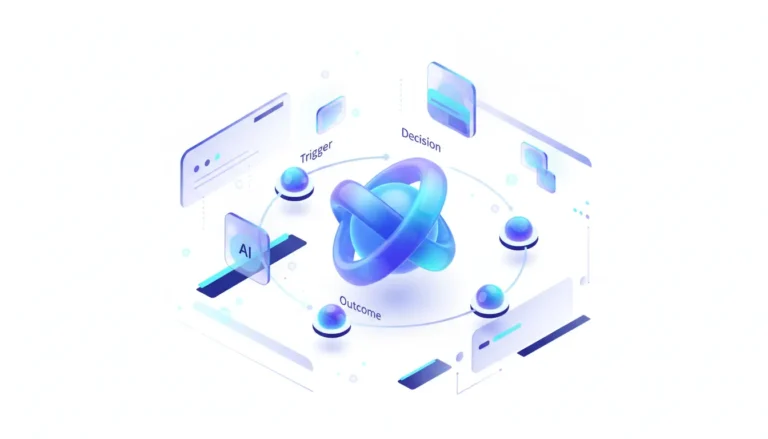
- 🧠 Deep Dive: Project Astra is changing what it feels like to build with AI. What started as a DeepMind research project on audio-visual grounding and memory over time has quickly become a practical question for teams shipping products. The talk of six-month accelerations is not just marketing; it reflects developers who now treat the agent as a persistent collaborator rather than a prompt-response tool.
Coverage still splits along familiar lines. Official updates emphasize seamless multimodal performance, while independent voices focus on how smaller teams can keep up. What tends to get less attention is the operational reality: turning a demo into a reliable 20–40 percent drop in task time means fixing infrastructure and process issues that are anything but glamorous.
The main constraint is not raw reasoning ability. It is the cost and complexity of running continuous multimodal perception. Streaming video, screen context, and audio at once requires serious compute, which pushes teams to weigh cloud inference against on-device processing. One path risks latency and data exposure; the other limits model size. From what I’ve seen, most organizations are still figuring out where the line actually sits for their use cases.
Governance adds another layer. Persistent agents that can see and hear inside a codebase need clear rules around data handling, access controls, and compliance before they can be rolled out broadly. As Astra competes with GPT-4o and Claude, the deciding factor will likely be which ecosystem can deliver measurable gains while fitting into existing security and toolchain requirements.
📊 Stakeholders & Impact
| Stakeholder / Aspect | Impact | Insight |
|---|---|---|
| AI / LLM Providers | High | Real-time multimodal agents push inference pipelines to prioritize low latency and cross-modal grounding over text-only scaling. |
| Enterprise CTOs & IT | High | The productivity upside must be balanced against data-privacy, SOC2, and governance demands that come with always-on agents. |
| AI Developers & PMs | High | Work becomes more parallel once an agent can hold persistent context across code, voice, and visuals without repeated prompting. |
| Infrastructure & Cloud | Significant | Demand rises for edge capacity that can handle continuous multimodal streams without driving up centralized cloud costs. |
✍️ About the analysis
Researched and written with AI assistance under the editorial responsibility of the i10X News team. The title image is an AI-generated illustration. Read our AI Use Policy. Spotted an error? Request a correction.
This analysis draws on developer reports, DeepMind materials, and current market discussion to outline the practical effects of these agents. It is written for the teams that have to make the transition from standalone assistants to integrated agent workflows.
🔭 i10x Perspective
Project Astra signals the end of the narrow, context-blind chatbot as a default tool. As infrastructure adapts to streaming multimodal input, the advantage for AI companies will move from raw model performance to how well the system integrates and runs efficiently at the edge. Over the next several years the split will be clear between organizations that use these agents to shorten development cycles and those held back by the combined weight of compliance, latency, and compute demands, with the ability to integrate and run efficiently at the edge as the most critical differentiator.