Perplexity is starting a research lab with an ambitious goal: an AI system that can do science on its own. On 16 November 2026, the company launched Perplexity Frontier Research, an effort to build what it calls “an automatic research scientist,” backed by more than 10,000 GPUs and led by machine learning researcher Andrew Gordon Wilson. Perplexity says it will publish papers, models, data and benchmarks openly.
Quick Take
- The mission: “Creating an automated scientist that can perform insightful research, and putting it in the hands of everyone.”
- Compute: more than 10,000 GPUs supporting the research effort.
- Six research areas: multi-agent orchestration, pre-training, continual learning, reinforcement learning, systems, and frontier evaluations that measure discovery.
- Open by default: Perplexity says it will release papers, open-weight models, data and benchmarks. Listed releases already include its Decider v1.2 (27B) model and the WANDR benchmark.
- Hiring: research roles in San Francisco, Palo Alto, New York and London, with a priority application deadline of 5 December, plus a research fellowship.
In plain English
Perplexity is best known as an AI search engine. Now it wants to build AI that can do the full cycle of research: ask a good question, read what is known, come up with a hypothesis, test it and learn from the result. It is putting serious computing power behind the idea and says it will share what it builds so others can use it.
What happened
On its new research site, Perplexity frames research as “a cyclical process” of asking questions, gathering knowledge, forming hypotheses, running experiments and updating. “Historically, the research loop has run inside a handful of institutions, at the speed of a few people,” the company writes. “We think it can run inside software, for anyone.”
Perplexity says the lab will focus particularly on pre-training, continual learning and reinforcement learning, “unified by multi-agent orchestration.” Its systems work includes SPACE, an isolated runtime meant to let long-running agents pause and resume while keeping credentials and the host outside the agent’s control.
How it is meant to work
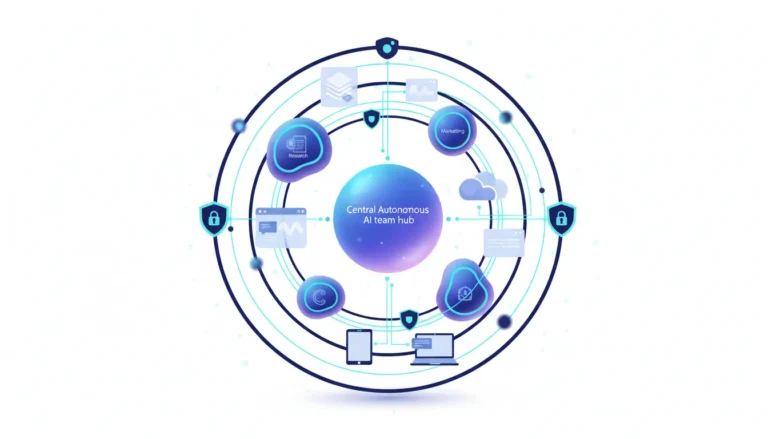
Perplexity describes a multi-agent system in which some agents “search wide across thousands of sources, some will go deep on one thread, others will propose experiments, others still will critique and hypothesize.” It says the system should know what it does not know, seek out new understanding and remember what it learns.
A central theme is evaluation. Perplexity argues current benchmarks blur reasoning and memorization, and wants new tests that check whether a system produces “scientifically interpretable insights,” not just accurate predictions. Its earlier WANDR benchmark for research agents is part of that line of work.
Why it matters
For Perplexity, this is a move from product company to frontier research lab. Until now it has mostly built on top of other companies’ models; open-weight pre-training and RL at this scale put it closer to the labs it competes with.
For researchers, a commitment to open papers, weights and benchmarks adds another well-funded source of open AI research.
For the AI-for-science race, Perplexity joins a crowded field of automated-research efforts, including NVIDIA’s just-launched Nemotron for Science.
What’s still open
- Which open models Perplexity will pre-train first, and on what timeline.
- How “discovery” will be measured, and whether any results will be independently verified.
- How the lab’s work will reach Perplexity’s consumer product, which the company calls “the most challenging test of all.”
Sources
- Perplexity, “Introducing Perplexity Frontier Research,” 16 November 2026
- Perplexity Frontier Research website, research.perplexity.ai
i10x Perspective
“An automatic research scientist” is a big promise, and many labs are chasing it. What sets Perplexity apart is its starting point: search. Research is mostly finding the right information and noticing what is missing, and that is exactly what Perplexity has spent years optimizing. The open-release pledge is the part to hold it to. More on our Perplexity company page.