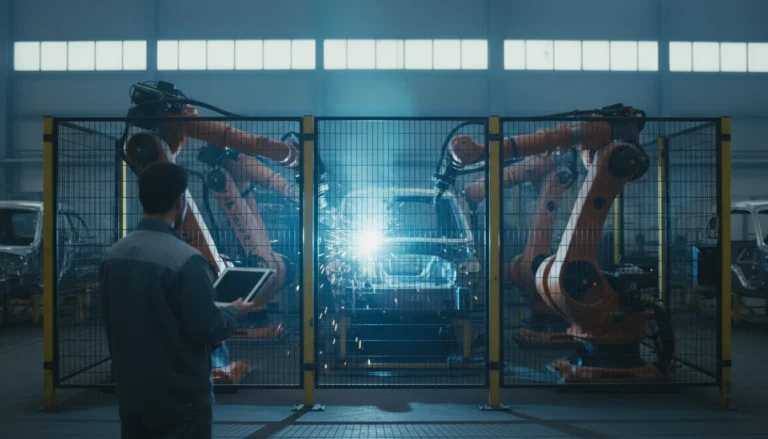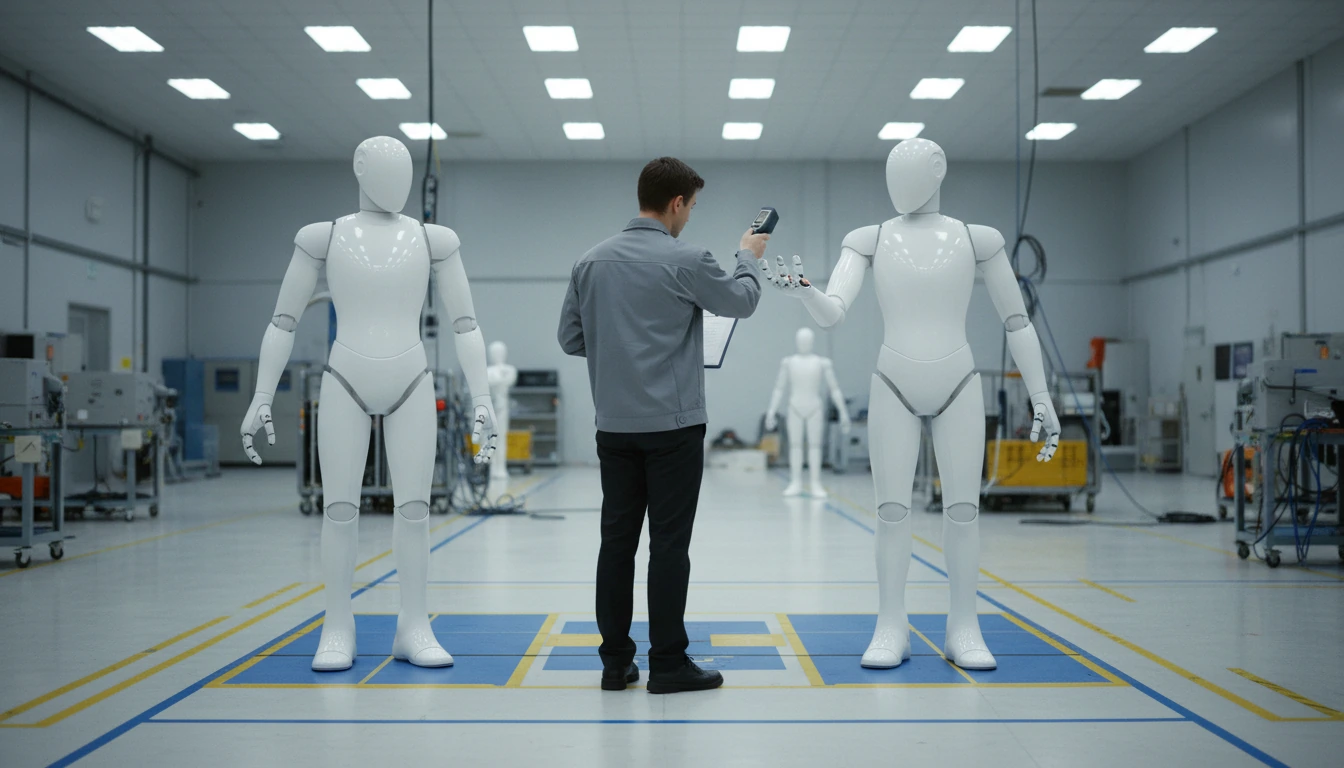
China’s Ministry of Industry and Information Technology (MIIT) has published five industry standards for humanoid robots, effective immediately. They define how to grade a robot’s intelligence on a scale from L0 to L5, set technical rules for integrated joints and dexterous hands, and lay down requirements for robot training facilities and the management of robot training data.
Quick Take
- What: Five humanoid robot standards, published as part of MIIT Announcement No. 30 of 2026 on November 16 and in force from the date of publication.
- Intelligence grading: A framework from L0 to L5 across four dimensions: perception and cognition, decision-making and learning, execution, and collaboration and interaction.
- Components: Specifications for electrically driven integrated joints in the torso and legs, and for dexterous hands from design to delivery.
- Training: Rules for building robot training facilities and for managing training data across its whole life cycle, from collection to deletion.
- Who: The standards fall under MIIT’s technical committee for humanoid robots and embodied AI (MIIT/TC8).
In plain English
Today every humanoid robot maker describes its machines in its own terms, which makes them hard to compare. These standards give China’s industry a shared yardstick. There is a level system for how smart a robot is, common test rules for key parts like hands and joints, and rules for how training data is collected, labelled, stored and protected.
What happened
MIIT approved 274 industry standards in Announcement No. 30 of 2026, dated November 10 and published on November 16, among them a standard on technical requirements for embodied AI data generation systems. The technical committee MIIT/TC8 said five of them cover humanoid robots: intelligence capability grading, electrically driven integrated joints, dexterous hands for humanoid robots and embodied AI, training facility construction, and training data management.
According to the committee, the grading standard is meant to give a basis for product development, testing, procurement and matching robots to use cases. The joint standard sets interfaces, performance indicators and test methods so companies and test labs can compare products. The dexterous hand standard covers design, testing, evaluation and delivery and is meant to address inconsistent interfaces and slow system integration.
The training facility standard defines functional zones, layout, equipment, data collection, networks and safety, so that data collection, model training, simulation and real-robot testing connect. The training data standard covers collection, preprocessing, labelling, quality assessment, storage, transfer, use and deletion, and aims to unify data formats, labelling rules and quality methods while strengthening data security, privacy and traceability.
Background
China has made humanoid robots an industrial priority, and its companies are moving from demos to deployments, such as ROBOTERA’s robots sorting parcels for China Post. The committee says it will next work on rolling out the standards and linking them with testing and certification, training platforms and data ecosystems.
Why it matters
Standards shape markets. A national L0 to L5 scale could become the way Chinese buyers compare humanoids, much like autonomy levels did for self-driving cars. Shared rules for training data and training facilities also address the biggest bottleneck in robot AI, reliable real-world data, and could make data easier to pool and trade across companies.
What’s still open
- Exactly what a robot must show to reach each level from L0 to L5.
- Whether foreign robot makers selling in China will adopt the scale.
- How testing and certification against the standards will work in practice.
About the analysis
Researched and written with AI assistance under the editorial responsibility of the i10X News team. The title image is an AI-generated image. Read our AI Use Policy. Spotted an error? Request a correction.
This independent i10x analysis is based on MIIT’s official announcement and on information released by the MIIT humanoid robot and embodied AI standardization committee.
Sources (plain text, no links):
- Ministry of Industry and Information Technology of the People’s Republic of China: Announcement No. 30 of 2026 (published November 16, 2026)
- MIIT/TC8 standardization technical committee for humanoid robots and embodied AI: statement on the five humanoid robot standards (November 17, 2026)
i10x Perspective
While others debate humanoid hype, China is writing the rulebook. A common grading scale could speed up procurement and give Chinese makers a home-court advantage in defining what a capable humanoid is. Track prices and models in our Humanoid Robot Price Tracker and on the Engineering & Robotics page.