Summary
The AI industry is shifting from passive, chat-based LLM tools to autonomous agents, which puts developer experimentation on a collision course with enterprise security setups. Getting these agents out of sandboxes and into real production isn’t mainly about showing they can think—it is about putting solid governance, evaluation, and operational controls in place.
What happened
Frameworks such as LangChain and CrewAI, along with cloud providers like Microsoft Azure, OpenAI, and IBM, are rolling out multi-agent systems and APIs that let models plan, call tools, and loop through perception-action cycles to finish complex tasks on their own.
Why it matters now
Agents turn LLMs from engines that generate ideas into ones that actually get things done. This change is reshaping enterprise AI plans and creating fresh demand for infrastructure around observability, memory handling, and fast API runs.
Who is most affected
CTOs, enterprise architects, and ML engineers now face the task of turning unpredictable LLM outputs into secure, auditable workflows. Cloud providers are also moving quickly to handle the extra compute these agent loops will generate.
The under-reported angle
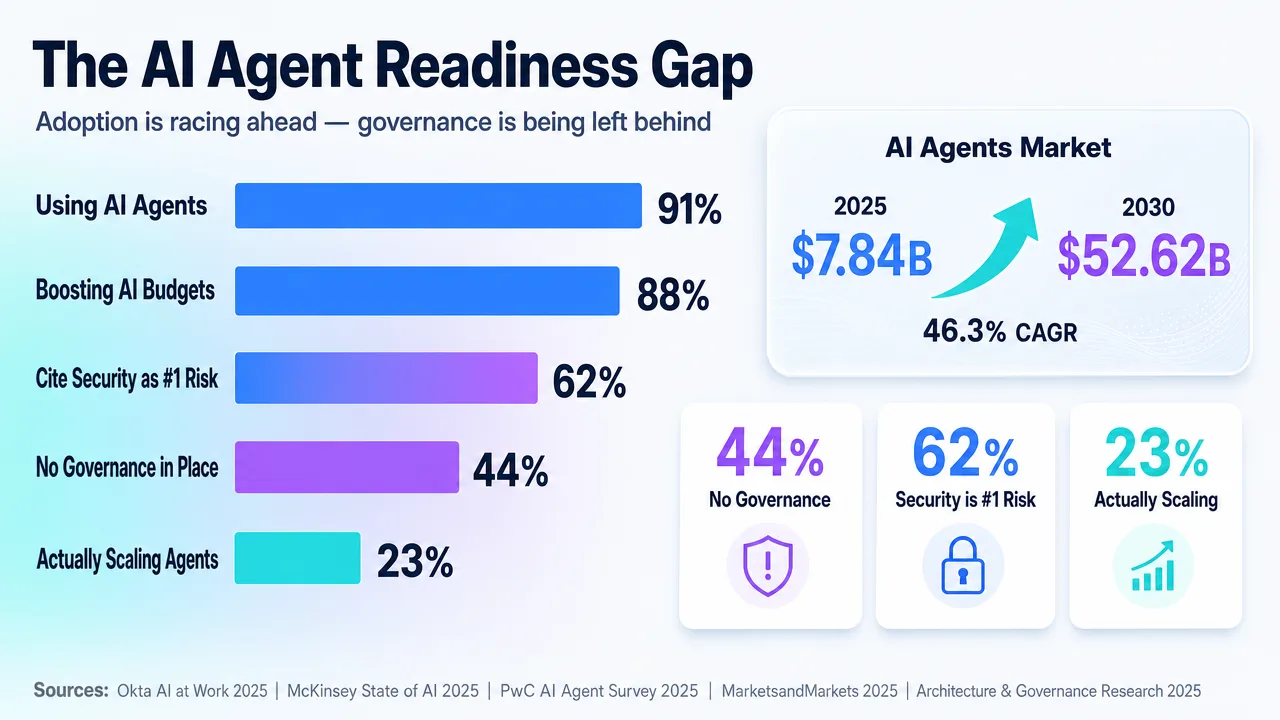
The real barrier to wider agent use is not model smarts but governance and ongoing checks. State management, safe secret handling during tool calls, and CI/CD pipelines that can test non-deterministic behavior are still well behind the core capabilities.
Deep Dive
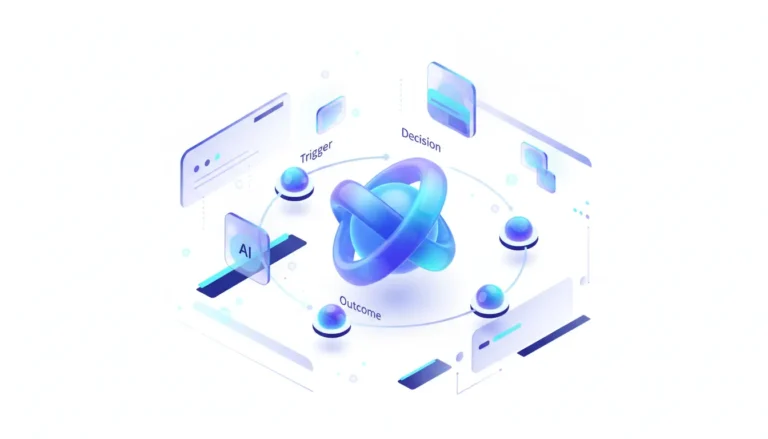
Have you ever watched a prototype that worked smoothly in testing suddenly look fragile once it touched live systems? That is where the move from Retrieval-Augmented Generation (RAG) to autonomous AI agents lands us. Instead of single-turn prompts, we now have continuous perception-action loops. Frameworks built on ReAct or Plan-and-Execute let agents break goals into steps, query data, run code, judge their own results, and adjust course.
From what I’ve seen, the field is splitting along two lines. Strategy firms like McKinsey and Forbes tend to call localized agents “technologies of abundance” ready for procurement or customer work, while Azure, IBM, and NVIDIA keep stressing the need for guardrails, role-based access, and hardware tuned to the latency spike from constant tool use.
One shift that stands out is the quick rise of Multi-Agent Systems. Rather than one large prompt, teams using CrewAI or LangGraph create small networks where researcher, planner, executor, and critic agents work together and check one another. The setup cuts hallucinations and adds some predictability, yet it also piles on new demands for observability and coordination.
Plenty of quick-start guides exist, but rolling agents into a real CI/CD pipeline still lacks clear patterns. Standardized evaluation harnesses are thin, so teams have little way to measure task success, track runaway costs, or safely test changes that might hit a production database. The next wave of infrastructure work, then, centers on security-by-design: Human-in-the-Loop (HITL) escalation paths, tighter sandboxes, and clearer permission rules for tools. Vendors that deliver those runbooks along with low-latency inference for function calling stand to lead.
Stakeholders & Impact
| Stakeholder / Aspect | Impact | Insight |
|---|---|---|
| AI / LLM Providers | High | Shifting focus to API reliability, function-calling accuracy, and fast-inference models explicitly optimized for agentic reasoning. |
| Cloud & Infra (Azure, AWS, IBM) | High | Racing to build the execution sandboxes, state-management layers, and secure orchestration primitives necessary to host autonomous workloads securely. |
| Enterprise Devs & CTOs | High | Pivoting from prompt engineering to building robust architectures that integrate Human-In-The-Loop (HITL) workflows and agent evaluation harnesses. |
| Regulators & Infosec | Significant | Grappling with the risks of prompt injection, autonomous tool abuse, and establishing liability when a multi-agent system acts autonomously on behalf of a human. |
About the analysis
Researched and written with AI assistance under the editorial responsibility of the i10X News team. The title image is an AI-generated illustration. Read our AI Use Policy. Spotted an error? Request a correction.
This independent analysis synthesizes architectural documentation, vendor strategies, and enterprise consulting frameworks—spanning OpenAI, LangChain, Azure, and McKinsey—to evaluate the market readiness of AI agents. It is designed for CTOs, product builders, and enterprise architects navigating the operational and governance hurdles of autonomous AI deployments.
i10x Perspective
The rise of AI agents points to a lasting split between digital execution and human oversight. Over the next five to ten years, as multi-agent coordination settles into operating systems and cloud platforms, advantage in AI will move. Training the strongest base model will matter less than building the safest, most auditable layer for ongoing autonomous work. In that setting, trust, verifiable checks, and secure API boundaries become the practical currency.