
The era of permissionless frontier model releases just hit a massive structural roadblock, as the U.S. government leverages national security powers to intervene directly in the commercial AI market.
Quick Take
- Summary: The administration has reportedly moved to curb the deployment of Anthropic’s newest AI model, broadly citing national security and safety risks. This unprecedented executive action has rattled AI supply chains, prompting swift backlash, market volatility, and an urgent scramble among enterprise users to secure their intelligence infrastructure.
- What happened: In a highly politicized intervention, executive leadership moved to ban or severely restrict Anthropic’s latest frontier LLM. While media outlets frame this as an early battle over AI governance between safety advocates and the administration, Anthropic has been forced into damage control mode, attempting to reassure enterprise clients that current API access and contractual commitments remain intact while legal and compliance paths are navigated.
- Why it matters now: This marks a radical shift in AI governance from theoretical guardrails to blunt, top-down enforcement mechanism. If executive authorities can halt a tier-one model mid-cycle, the fundamental calculus for AI development changes: vendors must now factor in sudden regulatory injunctions, fundamentally disrupting their GPU scaling, monetization pipelines, and competitive positioning against players like OpenAI and Google.
- Who is most affected: Enterprise CTOs and startup founders architecting apps around Claude face immediate existential risks. Hyperscalers and data center operators dealing in high-volume GPU compute allocations must also prepare for stranded infrastructure if AI workload demand is abruptly paused by federal fiat.
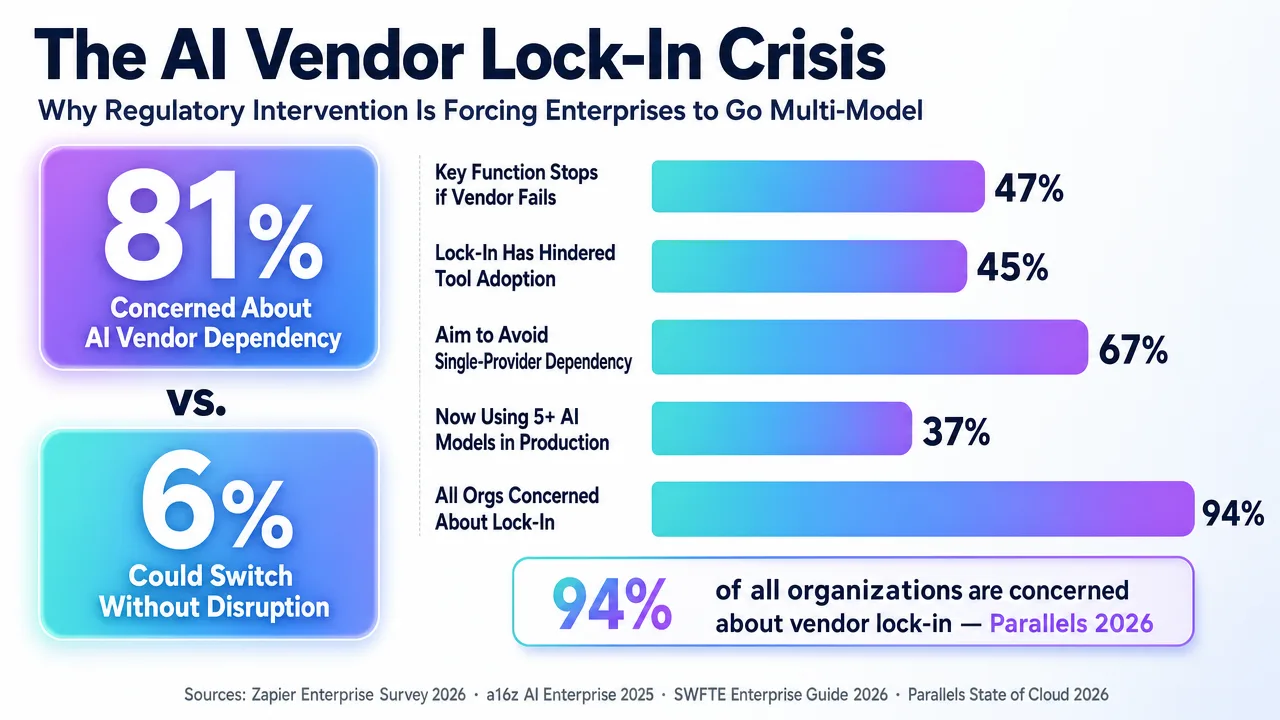
- The under-reported angle: While the public focuses on the constitutional clashes of free speech versus state security, the real crisis is taking place in corporate procurement. The threat of policy-induced vendor lock-in is forcing engineering teams to overnight adopt multi-model redundancy setups, transforming alternative open-weights models and competitive APIs from “nice-to-haves” into mandatory survival tools.
Deep Dive
Have you ever mapped out a full AI roadmap only to watch regulatory winds shift overnight? The reported move to restrict Anthropic’s newest model acts as a stress test for the entire artificial intelligence ecosystem. By drawing a hard line in the sand regarding national security and critical capability thresholds, the administration is transforming the AI battlefield. From what I’ve seen, the underlying message to the industry is clear: massive compute scaling and breakthroughs in model reasoning now invite direct, immediate government friction. This is no longer just about the technical challenge of building intelligence; it is about navigating geopolitical authorization.
Across the landscape, reactions are splintered, reflecting vastly different pain points. Mainstream and political media characterize the event as a clash of ideologies – innovation versus oversight. Meanwhile, Anthropic’s official communications are heavily grounded in pragmatism and damage control, seeking to assure enterprise buyers that SLA commitments and existing deployments are stable. But here’s the thing: behind closed doors, confidence in single-model architectures has fundamentally evaporated over a matter of hours.
The immediate fallout is a freeze in AI procurement. As highlighted by financial and tech analysts tracking the stock impact, businesses are awakening to the reality of sudden regulatory deprecation. If a government mandate can throttle an API overnight, businesses can no longer afford rigid dependencies. Migration playbooks – mapping out fallback solutions, evaluating feature parity, and integrating dynamic model routers – are shifting from theoretical exercises to operational imperatives for developers.
From an infrastructure perspective, this introduces profound economic inefficiencies. AI data centers and utility-scale energy projects are underwritten by the anticipated, uninterrupted demand for inference and training. If a top-tier lab’s flagship model is sidelined, GPU clusters risk sitting idle, disrupting the fragile ROI timelines of hyperscalers. Furthermore, this heavy-handed U.S. domestic policy risks massive jurisdictional divergence; if models restricted stateside are courted by European or APAC markets, global comity and technology export controls will face unprecedented strain.
Ultimately, this intervention accelerates the industry’s need for transparent evaluation standards and robust legal precedent. Without clear, metric-driven “red lines,” AI labs are left guessing whether their next training run will yield a product or a subpoena. As inevitable injunctions and First Amendment challenges loom, developers and enterprises are caught in the crossfire, tasked with building reliable production infrastructure on shifting geopolitical tectonic plates.
Stakeholders & Impact
| Stakeholder / Aspect | Impact | Insight |
|---|---|---|
| AI / LLM Providers | High | Unpredictable launch cycles. Forces competitors (OpenAI, Google) to reassess their own regulatory vulnerabilities and shift lobbying strategies. |
| Enterprise & Devs | High | Massive procurement risk. Accelerates the adoption of LLM orchestration tools, multi-model routing, and migration to open-weights fallbacks. |
| Hyperscalers & Infra | Medium–High | Regulatory bottlenecks threaten inference volume. Idle compute capacity directly impacts data center ROI and short-term GPU allocation planning. |
| Regulators & Policy | Significant | Sets a contentious precedent for executive power over commercial tech, likely triggering years of judicial review regarding AI as free speech vs. critical infrastructure. |
About the analysis
Researched and written with AI assistance under the editorial responsibility of the i10X News team. The title image is an AI-generated illustration. Read our AI Use Policy. Spotted an error? Request a correction.
This independent, research-based analysis synthesizes current SERP data, market reporting, and policy frameworks to provide tech leaders, procurement managers, and developers with an objective view of the AI regulatory landscape and its immediate technical fallout.
i10x Perspective
The reported Anthropic ban is the opening salvo in a new phase of the AI arms race, where the ultimate bottleneck is no longer just GPU supply or grid capacity, but sovereign authorization. As models approach deeper reasoning capabilities, executive intervention will likely become a recurring variable, disproportionately favoring closed models that tightly align with state defense and security architectures.
The golden era of monolithic model dependency is officially over; the future of AI scaling belongs to resilient, hyper-agile routing systems capable of shifting intelligence providers the exact moment the regulatory winds change.