Quick Take
- Summary: OpenAI is testing native advertising inside ChatGPT, a direct push to turn commercial queries into revenue. The plans surfaced at Cannes Lions, where the company described labeled sponsored content woven into responses. It marks a clear shift from relying solely on subscriptions and APIs.
- What happened: Instead of keeping ChatGPT purely conversational, OpenAI is embedding context-aware sponsored links. Early tests focus on clear labeling, brand safety checks, and fresh ways to measure whether these placements actually work.
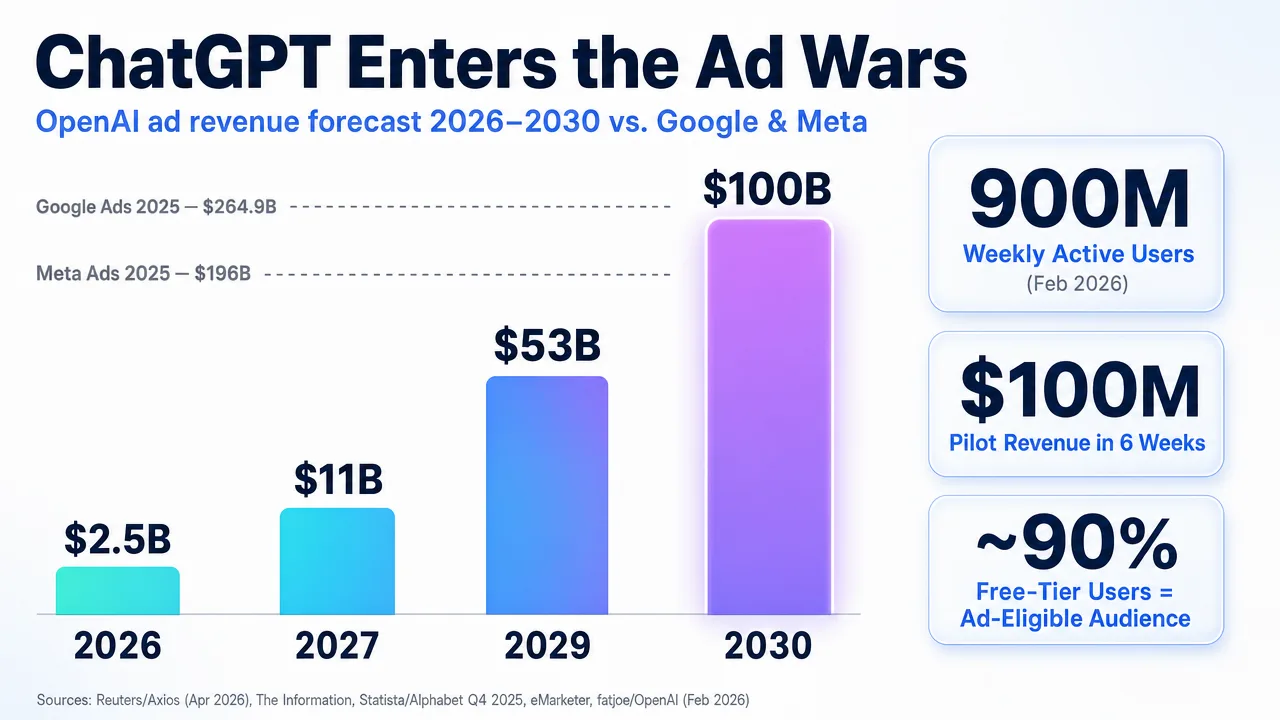
- Why it matters now: Training bigger models and running the enormous data centers they need costs far more than subscription revenue can cover. Advertising opens a path to the kind of scale Google has long enjoyed, and OpenAI appears ready to tap it.
Who is most affected: Marketers suddenly get another high-intent channel, Google faces pressure on its core business, and regular users will notice the conversation feels less neutral.
The under-reported angle: The real friction is not the ad format itself. It is how paid placements might quietly influence what the model chooses to say. Traditional search engines never had to solve that inside a single generated paragraph.
Deep Dive
Have you ever stopped to wonder what happens when an AI that used to answer for free starts weighing commercial incentives? OpenAI’s move into ads feels less like a choice and more like an infrastructure reality. Millions of people now ask ChatGPT questions that once went to Google, creating a steady stream of commercial intent the company was previously serving at a loss. The pilots announced at Cannes Lions are simply the first attempt to close that gap.
The technical side is trickier than most coverage admits. An ad cannot feel like an interruption, or trust evaporates. That means the system has to decide, in the same moment it generates an answer, whether a sponsored link fits naturally, whether the brand meets safety rules, and whether latency stays acceptable. From what I’ve seen in similar projects, this usually requires a second model running alongside the main LLM. It is delicate work.
Marketers are already voicing the next concern. Classic metrics like clicks and bounce rates lose meaning when the AI simply gives the user what they want. Some teams are experimenting with conversational incrementality tests, but everyone is still guessing at the right framework. That uncertainty is uncomfortable, yet it is the price of entering a channel that may eventually matter more than search.
The numbers behind the decision are straightforward. A twenty-dollar subscription has a ceiling. GPU clusters do not. Advertising, with its dynamic bidding against user attention, scales differently. The same logic that once built Google’s data-center advantage is now being applied to generative models.
Finally, the competitive geometry has flipped. Google is bolting AI summaries onto Search to defend its ad business. OpenAI is doing the reverse, threading search-style ads into pure AI. Publishers and SEO teams now have to think about two things at once: whether their content gets cited organically, and whether they should bid to appear in the same response. The ad-supported LLM has stopped being theoretical.
Stakeholders & Impact
| Stakeholder / Aspect | Impact | Insight |
|---|---|---|
| AI / LLM Providers | High | Unlocks uncapped, high-margin revenue necessary to subsidize the skyrocketing costs of GPU compute and next-gen model training. |
| Brands & Ad Tech | High | Opens a new frontier for performance marketing, demanding entirely new playbooks for intent triggering, conversational creatives, and KPI measurement. |
| Publishers & SEO | Significant | Further threatens site traffic as AI answers queries directly; forces teams to fight for both organic AI visibility and paid placement. |
| End Users | Medium–High | Shifts the purity of the conversational UX; raises questions about transparency, privacy, and how sponsored intent might subtly skew AI advice. |
About the analysis
Researched and written with AI assistance under the editorial responsibility of the i10X News team. The title image is an AI-generated illustration. Read our AI Use Policy. Spotted an error? Request a correction.
This independent, research-based analysis synthesizes current tech media coverage, official OpenAI guidance, and digital marketing frameworks to unpack the commercialization of ChatGPT. It is designed for CMOs, AI infrastructure strategists, and product leaders navigating the convergence of generative AI economics and global advertising markets.
i10x Perspective
The arrival of ads in ChatGPT closes the “research lab” chapter. As these systems move from answering questions to taking actions on a user’s behalf, the sponsored pathways will shape which products and services get recommended. The decisive question over the next decade is not only how capable the models become, but whose commercial interests they are trained to favor.