NVIDIA GB300 in Azure: Anthropic Deploys Secure Enterprise AI Agents
⚡ Quick Take
Summary: NVIDIA’s highly anticipated GB300 (Blackwell Ultra) GPUs have officially landed in Microsoft Azure, with Anthropic serving as the marquee tenant to run secure enterprise AI agents.
What happened: In a strategic signaling move, NVIDIA confirmed that Anthropic is actively deploying its frontier models on Azure’s GB300 compute instances, specifically optimizing for hyper-secure, agentic workflows in the enterprise cloud.
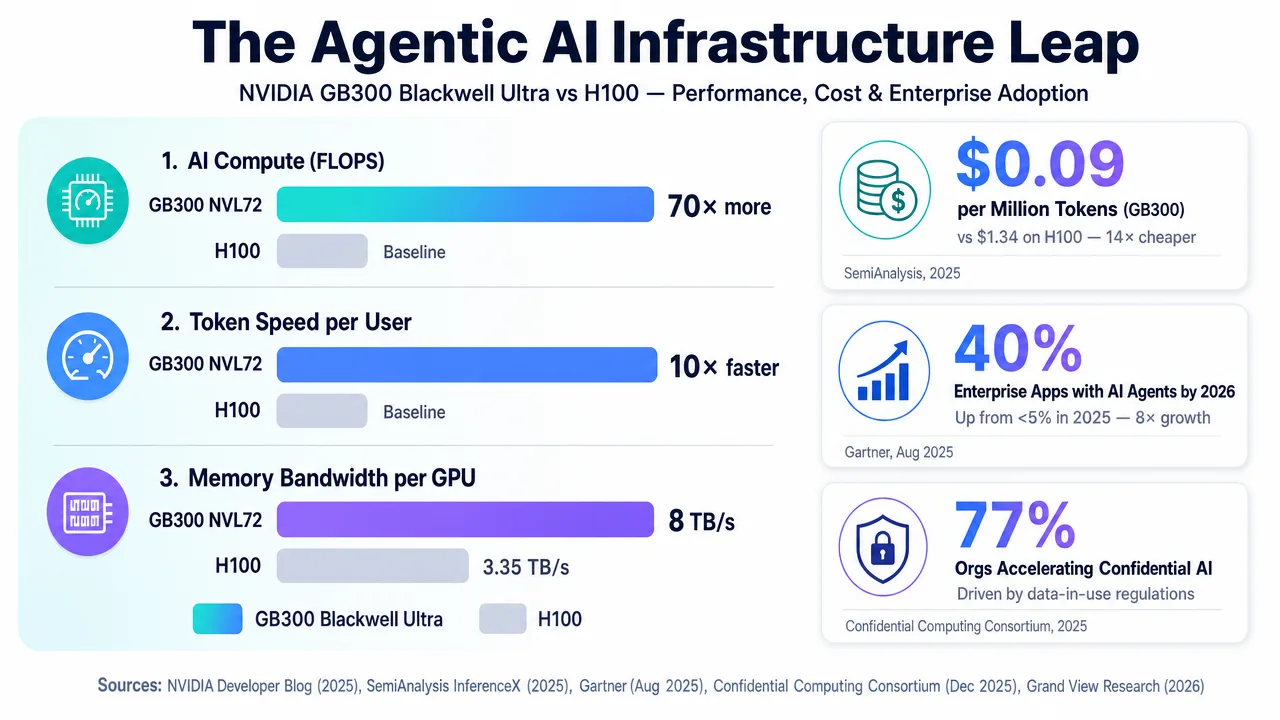
Why it matters now: This marks a critical transition in the AI infrastructure lifecycle: shifting from the raw, brute-force training cycles dominated by the H100 generation to hyper-efficient, latency-optimized inference operations required to make AI agents economically viable at scale.
Who is most affected: Enterprise CIOs planning AI deployments, cloud infrastructure capacity managers fighting for GPU allocations, and AI developers engineering long-context autonomous agents.
The under-reported angle: While financial headlines focus on the tripartite partnership (NVIDIA, Azure, Anthropic), the deeper technical story is the convergence of the GB300’s massive memory bandwidth with Azure’s confidential computing fabric—solving the primary adoption blocker for regulated enterprise AI: data isolation.
🧠 Deep Dive
Most market coverage treats the arrival of the NVIDIA GB300 in Microsoft Azure as standard cloud provider PR. But framing this merely as the availability of new hardware misses the ecosystem shift. By explicitly naming Anthropic models and “secure enterprise AI agents” as the primary workload, NVIDIA and Microsoft are declaring that the next frontier of the AI race isn’t just about training larger models—it is about securing, serving, and driving down the cost of real-time agentic reasoning.
To understand the impact, consider the structural limits of current agentic AI. Autonomous agents require continuous API calls, long-context retrieval (RAG), and step-by-step reasoning sequences. This hammers memory bandwidth and spikes $/token latency. The GB300 (Blackwell Ultra) architecture fundamentally changes this math compared to the previous H100/H200 Hopper generations. By expanding NVLink fabric specifics and maximizing memory throughput, the GB300 natively unblocks the localized inference bottlenecks that have made running complex Anthropic Claude architectures prohibitively expensive at scale.
I’ve noticed how deployments like this quietly highlight a major evolution in AI cloud architecture: the necessity of confidential computing. Regulated industries—finance, healthcare, and defense—will not deploy enterprise AI agents if they risk exposing internal data pipelines. Azure’s emerging ND-series instances for GB300 are positioned to tightly integrate with Azure’s zero-trust networking guardrails, role-based access control (RBAC), and tenant isolation, effectively creating a computing silo where Anthropic’s models can securely process proprietary corporate data without crossover risk.
That said, this sets the stage for a new supply chain bottleneck. Just as the H100 sparked a quota war for model builders, the GB300 on Azure will spark a capacity war for model deployers. Enterprises looking to transition from basic chatbots to multi-node intelligent agents will quickly realize that access to these next-gen instances is not guaranteed out of the box. Procurement strategies, waitlists, and cloud capacity reservations for these specific SKUs are about to become highly strategic assets for CIOs.
Ultimately, this tripartite stack—NVIDIA silicon, Azure security infrastructure, and Anthropic reasoning models—serves as the new blueprint for enterprise AI. It effectively bridges the gap between hardware scaling laws and tangible business integration, forcing developers to look beyond model capability and start optimizing for deployment hardware, instance mapping, and advanced MLOps pipelines built explicitly for Blackwell.
📊 Stakeholders & Impact
| Stakeholder / Aspect | Impact | Insight |
|---|---|---|
| AI / LLM Providers | High | Validates the strategy of co-optimizing frontier models (like Claude) specifically for next-gen silicon to reduce the inference tax of agentic AI. |
| Cloud Infrastructure (Azure) | High | Cements Azure’s position as a premier, enterprise-compliant platform for Blackwell deployment, challenging AWS and Google Cloud to accelerate their rollout timelines. |
| Enterprise CIOs & CISOs | High | Provides a compliant, hardware-backed solution (GB300 + Azure Confidential Compute) to safely launch AI agents interacting with sensitive enterprise data. |
| Platform Engineers / DevOps | Medium | Shifts architectural focus toward optimizing TensorRT-LLM and multi-node inference setups strictly around Blackwell’s enhanced memory fabric and TCO models. |
✍️ About the analysis
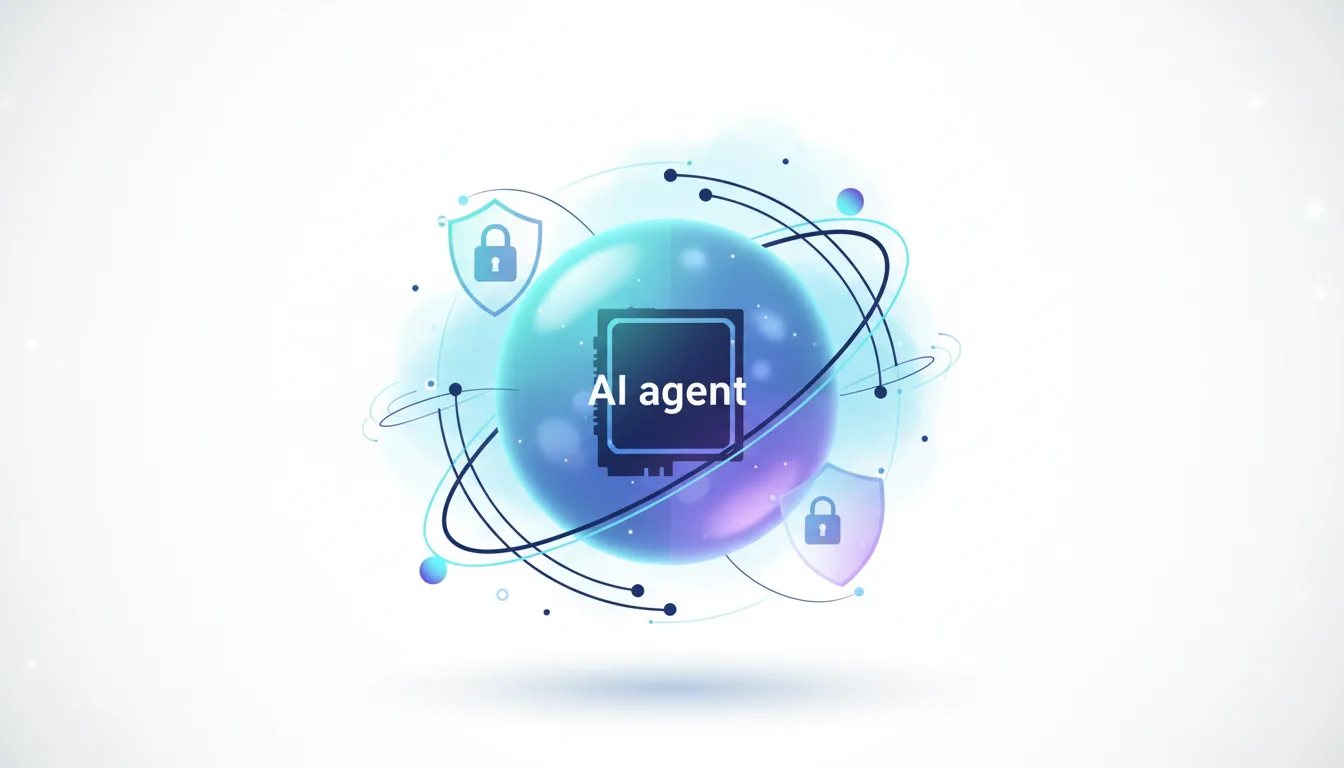
Researched and written with AI assistance under the editorial responsibility of the i10X News team. The title image is an AI-generated illustration. Read our AI Use Policy. Spotted an error? Request a correction.
This is an independent, research-based analysis synthesizing market signals, cloud computing architectures, and silicon supply chains. It is designed for CTOs, IT leaders, and AI developers navigating cloud infrastructure shifts and optimizing deployment strategies for next-generation large language models.
🔭 i10x Perspective
The deployment of Anthropic models on GB300 instances inside Azure proves that the market is graduating from the “raw intelligence” phase to the “secure deployment” phase. We are witnessing hardware and foundational models co-evolving to serve the highly-regulated enterprise layer—where efficiency, data isolation, and inference latency matter far more than baseline benchmark scores.
Moving forward, the true competitive moat for hyperscalers won’t just be having the most GPUs; it will be offering the most tightly governed, cost-optimized environments for agentic reasoning at scale. Keep a close eye on how this pressure forces AWS and GCP to accelerate both their custom silicon timelines and competing hyperscale hardware integrations to woo the lucrative enterprise AI market.