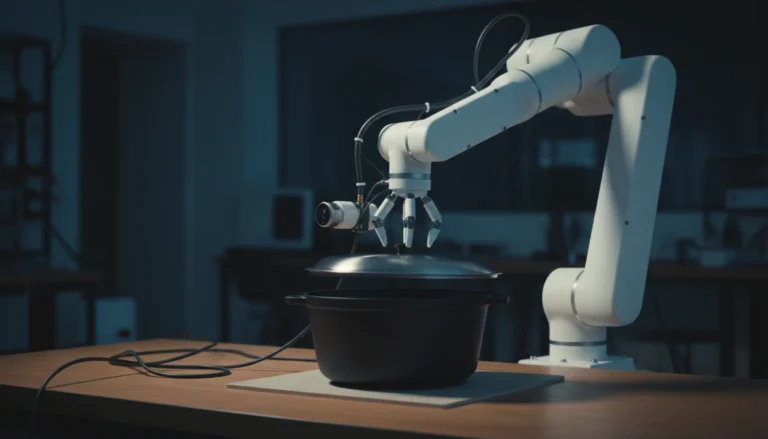
XPENG used its eighth AI Day in Guangzhou on November 25 to present a three-layer control stack it calls the Turing Physical AI Architecture, shared by its cars and its humanoid robot, and to put new dates on IRON: training as a store assistant in XPENG’s own retail stores from Q1 2027 and an official public release targeted for Q2 2027, according to XPENG’s AI Day announcement. The architecture gets the headline. The more useful read is how the robot plan compares with what XPENG promised a year ago.
Three speeds of control in one stack
XPENG splits the system by reaction time. The slow layer, which it calls System 2, plans: a vision-language planner works with an agent runtime state machine to turn a goal into a sequence of tasks. The fast layer, System 1, runs XPENG’s existing VLA 2.0 model and converts what the sensors see into actions within the moment. The new part is System 0, which brings low-level body control (power, energy, communication and actuators) into the AI loop, so the planner knows what the body can safely do right now.
The company also says the newest VLA 2.0 build, version 6.4.0, trains itself in an agent-driven closed loop, which it credits with 10 to 12 times faster training, and it describes this as a route to recursive self-improvement and self-distillation. XPENG published no benchmark or outside measurement for either claim, so read them as a statement of direction rather than evidence.
What a year did to IRON’s promises
Lining up XPENG’s own announcements shows how far the humanoid plan has moved since the robot was unveiled:
- November 2025: at the previous AI Day, the next-generation IRON was shown with 82 degrees of freedom (22 in each hand) and three Turing chips rated at 3,000 TOPS of effective compute. He Xiaopeng named large-scale mass production of high-level humanoids by the end of 2026 as the goal.
- September 2026: when the first unit walked off XPENG’s new robot line, the company listed 76 degrees of freedom (21 per hand) and up to 2,250 TOPS, kept the year-end mass-production target and pointed to a market launch in 2027.
- November 2026: the robot still has 76 degrees of freedom and now more than 1,500 tactile sensing points. The dates are training in XPENG stores from Q1 2027 and a public release in Q2 2027. The new release no longer mentions mass production in 2026.
By our count, that is six fewer degrees of freedom and a quarter less quoted compute than the robot shown in 2025 (3,000 down to 2,250 TOPS). XPENG has not explained the changes, and trimming specs between showcase prototype and production unit is common. But anyone who planned around “mass production by the end of 2026” should now plan around a narrow store pilot first.
Where IRON sits among other humanoids
In our Humanoid Robot Price Tracker, which follows 36 humanoids, IRON is listed as not for sale with no public price, and only four models can be ordered today, with six more on preorder. XPENG is not alone in shifting to 2027: as we reported on Tesla’s plans, Optimus deliveries to outside customers are now aimed at around the end of 2027. The two most visible humanoid programmes run by carmakers have both landed on 2027 for real customers.
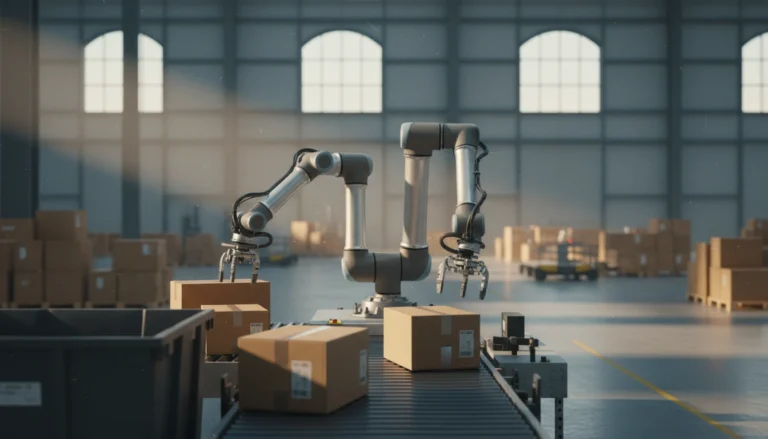
What XPENG adds this time is industrial detail. It says its Robot Data Factory covers more than 250 scenarios across 15 job categories, reusing data and evaluation tools from the car business, and that a dedicated assembly line runs more than 600 AI-based quality-inspection items and over 1,000 tests on finished robots and key parts. The planned business model mixes hardware sales with software subscriptions and an open platform where partners download capability packages and build their own skills, with token-based subscriptions also under consideration. That last point matters for buyers: the price of a humanoid may end up looking more like a software contract than a one-off machine purchase.
The car side brings harder numbers
The vehicle announcements are more concrete than the robot ones. A feature called VLA Adaptive Deceleration uses scene understanding to manage braking and energy recovery when the driver lifts off the accelerator, and XPENG says it delivered 12.4% more usable range in congested city tests. Note the baseline: the comparison is against energy recovery switched off, not against a standard recovery setting, so everyday gains will likely be smaller. The over-the-air rollout starts in December 2026. XPENG also reports 13.93% fewer accident claims in China since VLA 2.0 arrived, a company figure without a published method.
On autonomy, XPENG says its Robotaxi programme went from staffed to driverless road testing in eight months and holds an L4 demonstration operation qualification in Guangzhou, with demonstration service in selected areas planned by the end of 2026. Its first purpose-built robotaxi, the YOYO-01, is due in 2027. A year ago the plan was three Robotaxi models plus trial operations in 2026.
What to take from it if you build or buy robots
If you run retail, logistics or a factory and are watching humanoids, IRON will not be something you can order before Q2 2027, and its first real job is a narrow one inside XPENG’s own stores. Ask three things when the commercial terms appear: which tasks come with the base unit and which need paid capability packages, what the subscription covers, and what uptime and safety data XPENG shares from the store pilot. Developers interested in the open platform should note that XPENG first promised an IRON SDK at the 2025 AI Day; this year’s release describes downloadable capability packages but gives no developer timeline.
i10x Perspective
XPENG’s real asset is the shared stack, not the robot on stage. Its cars already generate the data, revenue and chip volume that a stand-alone humanoid startup has to raise money for, and the three-layer architecture is a sensible way to reuse that across products. The quiet spec trimming and the move from “mass production in 2026” to “store pilot, then release” are the kind of honest engineering reality the humanoid field needs more of. The test for 2027 is simple: how many IRONs are doing paid work outside XPENG’s own buildings by the end of that year.